Ask about access needs before choosing the cottage
Ask about the features each guest needs before choosing the cottage, and let the person using those features judge the information.
Make room for a private answer
Begin with an invitation to share practical requirements, not an assumption based on age or appearance. Someone may need information about steps, a bathroom, sound, lighting or the position of a bedroom. They may prefer to tell the organiser privately rather than describe personal circumstances to the whole group. Respect that choice and pass on only the property questions needed to make the booking.
Use the person's own description of what matters. An organiser trying to be helpful can still make the wrong judgement by deciding that a single step is small or a short distance is easy. Measurements and clear descriptions let the guest decide for themselves. The purpose is to remove uncertainty, not to ask someone to prove that their requirement deserves attention.
Agree which features are essential and which are preferences. This gives the property search a useful order. There is little value in falling in love with a view before confirming that the entrance and bathroom arrangement work. A clear brief also makes it easier to explain why an otherwise attractive cottage is not the right choice without reopening a personal discussion each time.
Ask for factual information
Look for a current accessibility guide or detailed access information. VisitEngland provides accessibility planning resources, but an individual property's suitability still depends on the guest and the actual features. A general accessible label does not describe every route or facility. Read the available details and follow up on the gaps rather than treating the label as a complete answer.
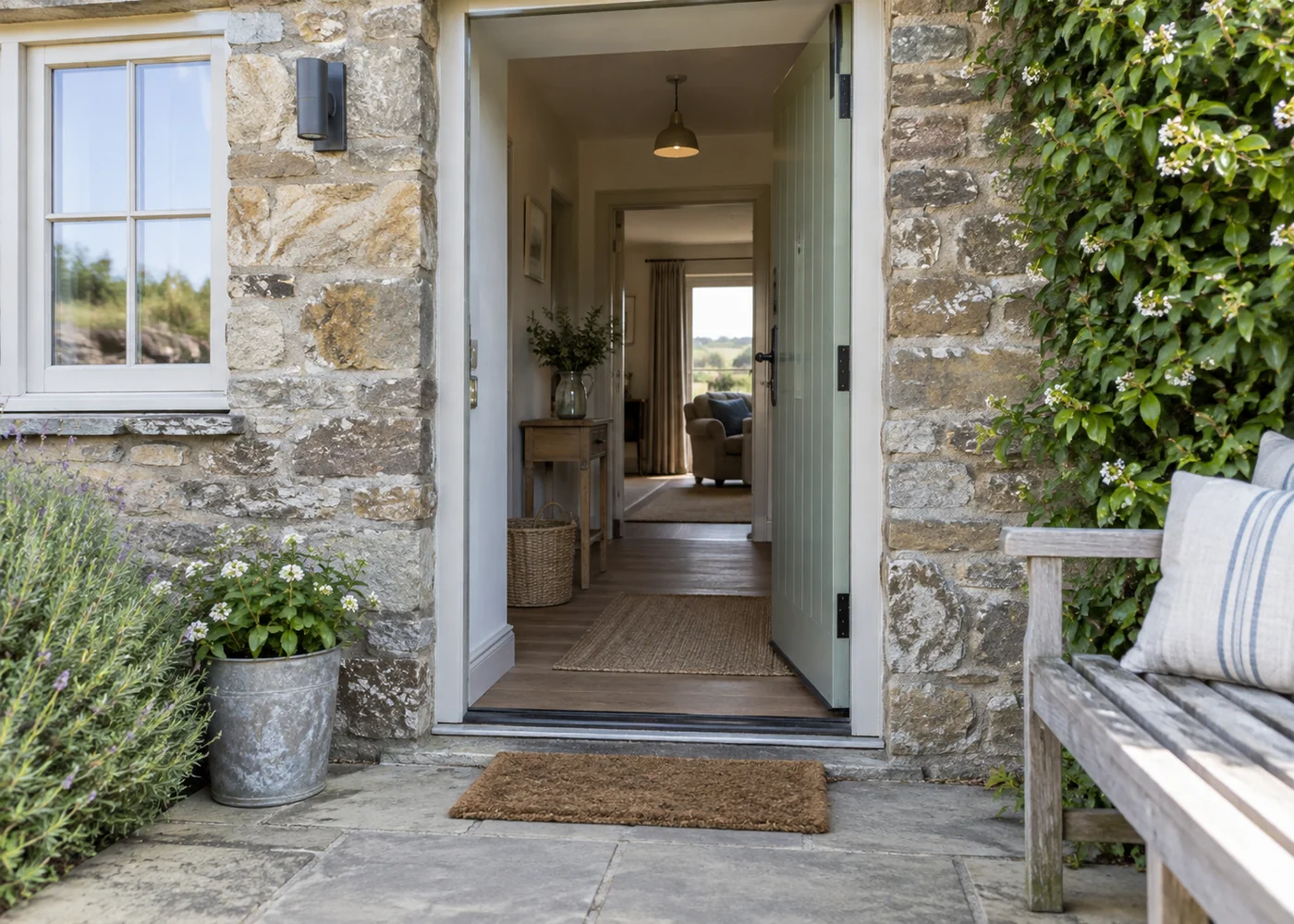
Trace the journey from the parking or drop-off point to the entrance, then through the rooms the guest will use. Ask about surfaces, steps, thresholds and doorways where relevant. A ground-floor bedroom can still be reached by a difficult entrance or separated from the bathroom by a change of level. A photograph of one room cannot establish the route to it.
Request dimensions in a clear, usable form when needed. Explain which opening or space you mean so the host measures the right thing. For example, the width of a room is not the same as the clear space beside a bed. If equipment is involved, the guest should use their own knowledge or appropriate professional advice to assess compatibility. Do not make a promise on the basis of a rough visual estimate.
Ask about the actual bathroom arrangement rather than its general size. Photographs from several angles can help establish positions and available space, while specific measurements may still be necessary. Avoid treating a handrail, shower seat or other feature as suitable for everyone. Confirm what is supplied, its intended use and any information relevant to the guest's assessment.
Consider more than mobility
Quiet, lighting, contrast, layout and communication can matter too. Ask the person what information would help instead of producing an assumed checklist on their behalf. A bedroom away from the main sitting area, clear written arrival instructions or the ability to control particular lights may be important. These details are often easier to clarify early than to change during the stay.
Think about the household plan alongside the building. A suitable room may become less useful if bags block its route or every group meal takes place in an area the guest cannot comfortably use. Agree how shared spaces will remain usable. This is a practical responsibility for the whole group, not something the person with the requirement should have to monitor repeatedly.
Keep transport and outings in the same conversation. The cottage may work well while the planned restaurant or day trip does not. Let guests choose which activities they want to join and check the relevant venue information. Avoid presenting staying behind as the default solution to a plan made without them, especially when a different shared activity could suit everyone.
Discuss evacuation and emergency information where it is relevant to the guest's needs, using the property's actual arrangements and appropriate specialist advice. Do not assume that an easy route into a room answers every situation in which it might need to be left. The host should explain the information they provide, while the guest can assess what further clarification is necessary. Raise this before travel when it affects suitability, rather than leaving it as a question to investigate after the group has unpacked.
Confirm the details that matter
Before booking, save the host's replies and ask for clarification of any contradiction between photographs, descriptions and messages. If a critical feature cannot be verified, keep looking rather than relying on optimism. No one should arrive to discover that an essential requirement was treated as a minor preference because the booking organiser liked the property.
Where equipment or a particular arrangement has been agreed, confirm how it will be provided and whether any action is needed before arrival. Do not assume that mentioning it once guarantees availability for every date. Equally, avoid asking the host to provide services they have not offered. A clear account of what is and is not available supports a realistic plan.
On arrival, check the relevant arrangement before unpacking everything. Raise discrepancies promptly with the host and involve the guest in deciding what response is appropriate. Do not improvise ramps, move heavy fittings or alter equipment to make an unsuitable setup work. The value of a careful conversation is that the holiday begins with known arrangements, leaving more attention for the time together.