The first hour in a holiday cottage
The first hour works best when you settle the essentials in a sensible order, then leave the rest of the unpacking for later.
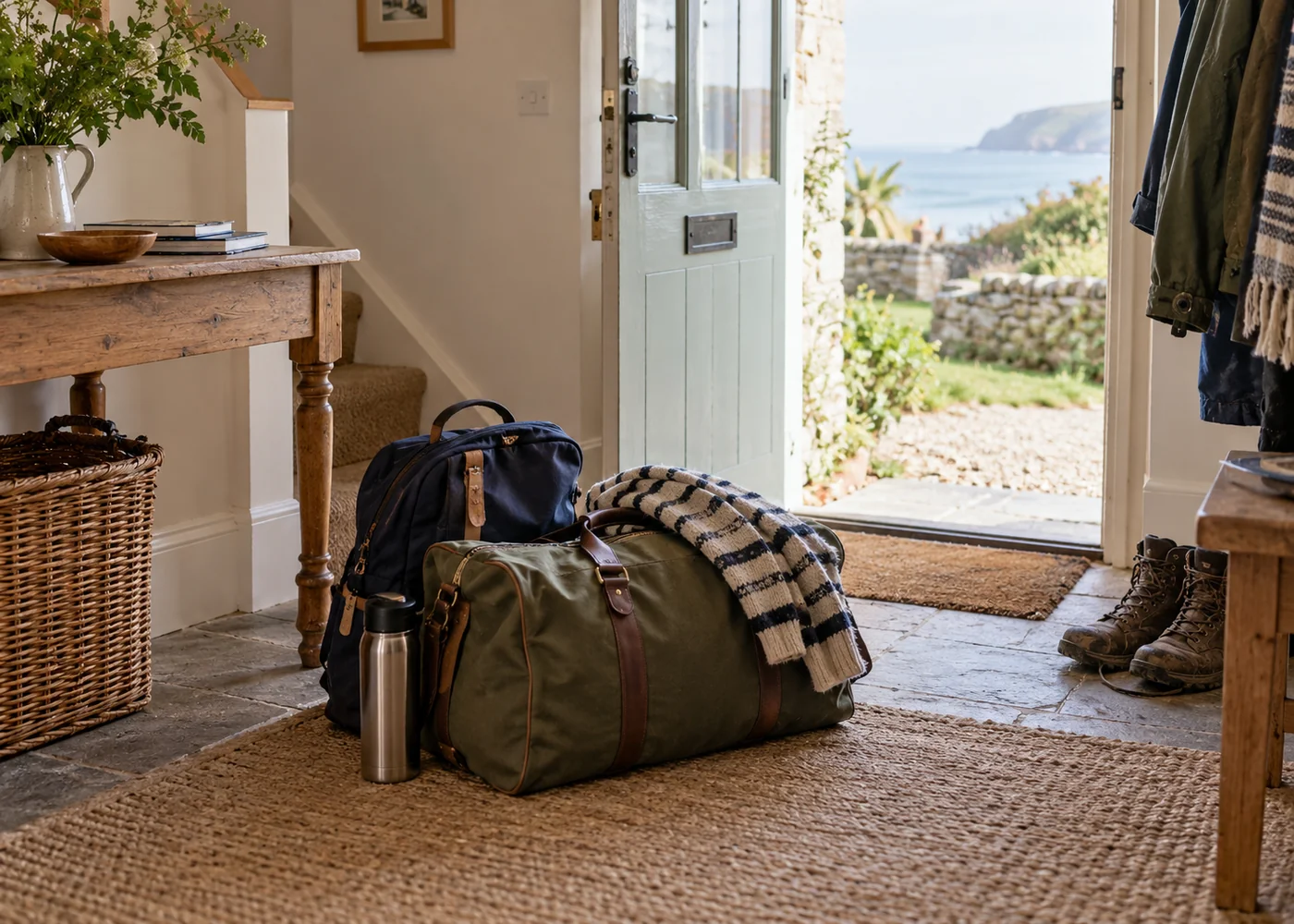
Get everyone through the right door
Use the supplied arrival instructions and park in the designated place before unloading. On a shared property, make sure you have identified the correct cottage. If access does not work, contact the stated support rather than trying neighbouring doors or forcing a lock.
Bring in the people and items that need immediate attention first. Keep luggage from blocking the entrance or a shared route. One person can check where bags belong while another handles the next load, rather than everyone standing in the doorway at once.
If several vehicles arrive, follow the parking arrangement and move out of any temporary unloading position promptly. A short pause to organise this makes the rest of the hour calmer for your group and anyone nearby.
Put food away before exploring
Deal with chilled or frozen groceries according to their storage requirements. Locate the appropriate appliance, check that it appears to be operating and put food away before touring every room. If there is a concern about refrigeration, contact the manager and use an appropriate alternative storage plan.
Set aside the ingredients for the first meal so they do not disappear among a week's shopping. Keep cleaning products and other household items separate from food. A clear section of counter is more useful at this point than perfectly organised cupboards.
If a delivery is due, make sure someone is available and the driver has suitable directions. Avoid leaving the cottage immediately to explore while an order is expected.
Find the information that matters now
Locate the emergency information, manager's contact details and any important property-specific instructions. Show another adult where they are. You do not need to memorise the whole folder, but everyone should know how to find help.
Read the guidance for anything you need straight away, such as heating, the oven or a supplied stove. Do not repeatedly press unfamiliar controls in the hope of discovering their function. A short question is preferable to creating an accidental setting or fault.
Note the checkout time and key-return process while the folder is open. This is not an invitation to think about leaving all evening; it simply prevents a surprise on the last morning.
Check the arrangement you booked
Walk through the rooms you will use and confirm the bed configuration and other essential features. If something specifically agreed is missing or different, contact the manager early, when there may be time to resolve it.
This need not become an exhaustive inspection. Focus on significant practical issues and anything visibly damaged or not working. Report factual observations rather than guessing at their cause. For an immediate safety problem, use the appropriate emergency route.
If children or pets are travelling, establish the relevant boundaries and supervision arrangements before everyone disperses. Check the actual garden or shared routes rather than relying solely on the listing description.
Give daily belongings somewhere to go
If the property supplies more than one set of keys, decide who will carry them and test the arrangement before splitting up. Some doors lock behind you, while others need a particular action. Use the owner's instructions and avoid experimenting in a way that could leave everyone outside. The person staying in should know whether others can re-enter without a call.
Choose a place for keys, coats and footwear that follows the property's guidance and keeps routes clear. A simple agreed spot prevents repeated searches. Find the intended drying area before the first wet outing creates a more urgent need.
Unpack bedroom essentials and leave other items in bags if that is easier. Check guest storage before using it, and leave locked or reserved cupboards alone. Keep a bag for laundry so worn clothing does not spread across the room.
For a group, clarify rooms and bathrooms now rather than allowing people to assume different arrangements. The conversation can be brief and friendly, especially if the layout was discussed before booking.
Make one room ready to relax in
Clear enough of the sitting or dining area that people can stop travelling. Put the first meal into motion or make a drink, using the equipment as instructed. There is no need to unpack every charging cable before anyone sits down.
Let each person settle at a reasonable pace. Some will want a short walk around the garden; others may need food or a quiet moment. A little space can be more helpful than announcing a full programme for the evening.
If the journey was tiring, keep dinner simple and postpone non-essential shopping. A small missing preference can usually wait until you know the area better.
Finish with the next small decision
Before the evening takes over, agree only what needs deciding: whether a shop is necessary, when the delivery arrives, or what time people hope to leave tomorrow. Avoid turning arrival into a planning meeting for the entire week.
Check the forecast and any current information needed for the next day through the relevant providers. Keep plans flexible enough that the first morning can reveal how everyone feels.
By the end of the hour, the cottage does not need to look as though you have lived there for years. It needs food stored, routes clear, essential instructions understood and somewhere comfortable to sit. Once those things are done, the holiday can begin without waiting for the last bag to be perfectly unpacked.