Build a drying routine into an autumn stay
A little space for coats, shoes and damp bags keeps autumn outings from taking over the cottage's main room.
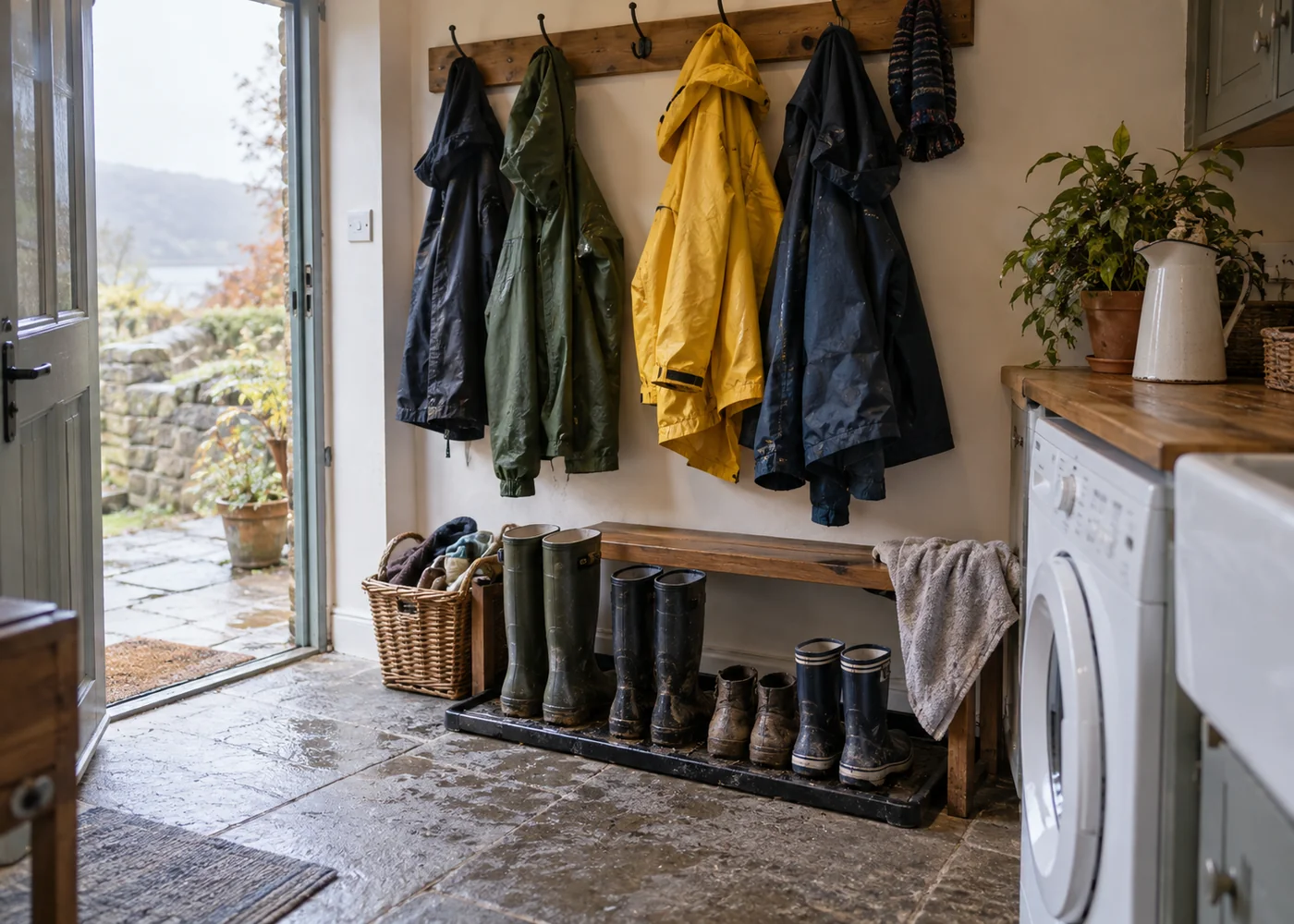
Check the facility behind the photograph
Look for a utility room, suitable rack or other stated drying arrangement, then ask if the description is unclear. A washing machine does not imply a tumble dryer, and a porch may be decorative rather than a practical wet-kit area. Match the amount of equipment you bring to what the property can accommodate. If several guests plan outdoor days, this detail deserves attention before booking.
Read the host's instructions on arrival and use only appropriate places. Do not cover heaters, place clothing close to a fire or hang wet items on furniture to speed things up. Follow the garments' care instructions too. A drying routine should work with the building and equipment provided, not require an improvised setup that creates another problem.
Ask what happens when the drying space is shared with other accommodation. A rack available to several cottages is different from one reserved for your group, particularly after a wet day when everyone returns together. Pack and plan on the basis of the actual arrangement. You may prefer fewer bulky items, a suitable spare or a property with private facilities if daily drying is central to the trip.
Give the return from an outing a sequence
Leave suitable shoes and a bag for used items where you can reach them. Deal with the wet outer layer near the permitted entrance, then move clean belongings into the room. If the group returns together, let people take turns rather than filling a narrow hall with open bags. Keep the door and route through the house clear while equipment is being sorted.
Separate items that need drying from things that are merely ready to put away. A pile described as wet kit can quickly include maps, chargers and food containers that do not belong there. Empty bags as appropriate and store their contents correctly. This also makes it easier to find the same essentials the following morning without turning the sitting room into a sorting area.
Assign each person's equipment a recognisable place where possible. Several similar dark coats can be hard to distinguish once they are draped together, and one guest should not need to handle everyone else's belongings to reach their own. Use the available space without crowding it. If there is not enough capacity, reduce the load or ask the host about an appropriate alternative.
Reset before the next day
Check items later rather than leaving them unnoticed until the morning departure. Move dry things back to their proper place and leave the drying area available for what still needs it. Do not pack damp fabric away for the rest of the stay simply to make the room look tidy. Keep the arrangement functional rather than decorative.
Plan the final outing with checkout in mind. You may need to take damp equipment home in a suitable separate bag and deal with it promptly there. Starting a wash or trying an unsuitable heat source shortly before leaving is unlikely to make the morning easier. A little space in the luggage is more useful than a last-minute drying experiment.
Before locking up, check the porch, hooks, rack and any permitted outdoor area. Wet-weather items tend to be left where the main packing does not reach. A repeatable routine makes this final search quick, and preserves the reason for renting the cottage: a comfortable place to return after being outside.
Keep clean clothes out of the drying area's overflow. A spare bed can quickly become a surface for damp bags if no one has agreed where they belong. Use only an appropriate permitted arrangement, and speak to the host if the facility described is unavailable. Do not solve the shortage by transferring wet equipment onto household linen or upholstered furniture.