Look beyond the number of bedrooms
The useful question is not simply how many bedrooms a cottage has, but how those rooms work for the people travelling.
Assign people before admiring rooms
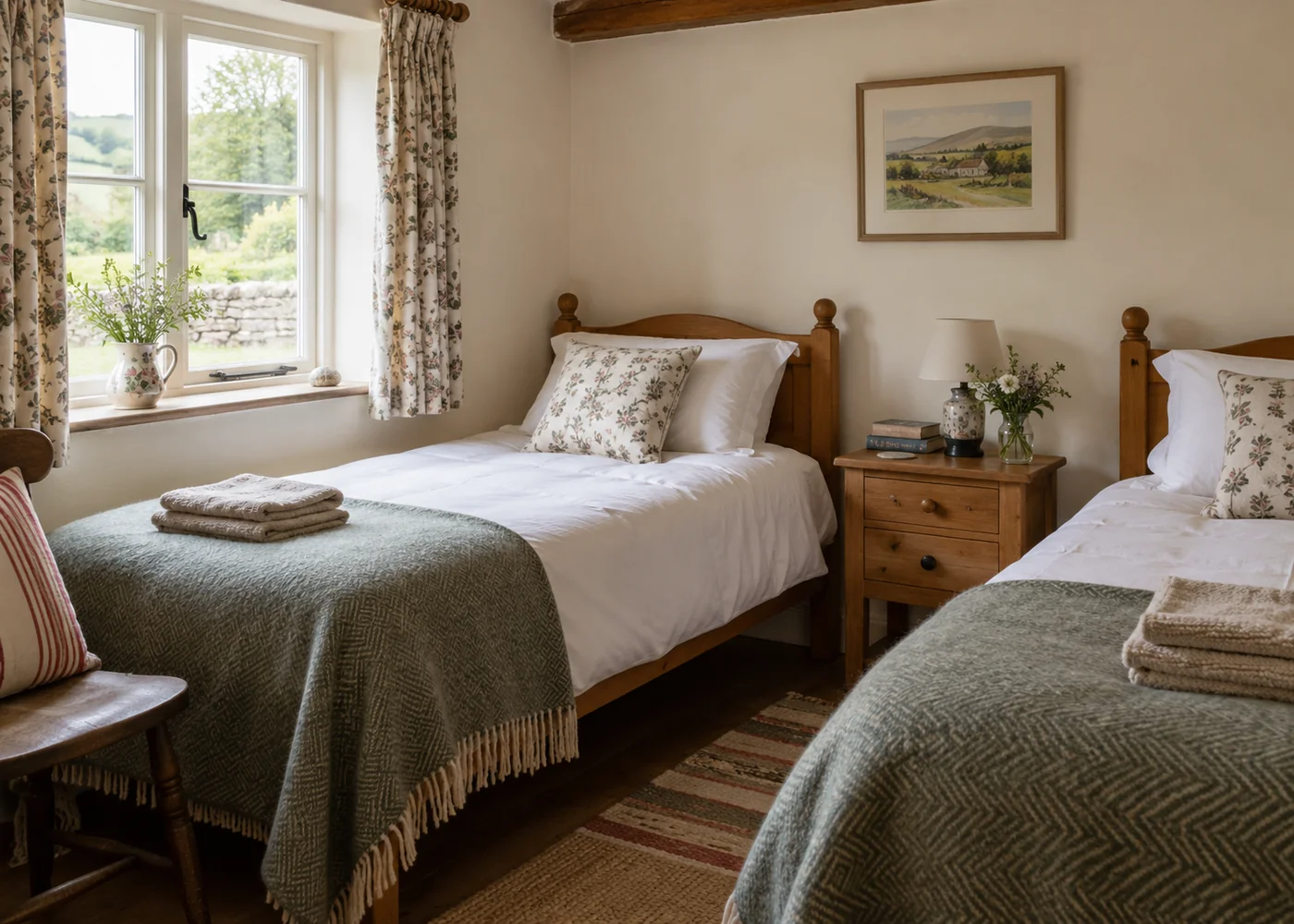
Make a tentative sleeping arrangement while looking at the listing. This often reveals a mismatch that the headline capacity hides. Three bedrooms might mean two doubles and a small single, which is different from three rooms suited to couples. A sofa bed adds sleeping places without necessarily adding privacy or somewhere to keep belongings.
Be clear about who is willing to share and which combinations of beds are essential. Do not leave that conversation until after booking. For friends travelling together, separate beds may be a requirement even when sharing a room is comfortable. For a family, a child might need to be close to an adult rather than across a separate landing.
Check whether any room configuration must be requested. Zip-and-link beds may offer flexibility, but changes usually need arranging before arrival. Record the requested arrangement with the booking and confirm it through the property's stated process. Moving beds yourself can damage furniture or leave an unsuitable setup.
Read the connections
Look for rooms reached through other rooms. A bedroom described as adjoining may have an ordinary door from the landing or may only be accessible through another bedroom. Those arrangements create very different levels of privacy. Ask directly if the floor plan is unclear.
Bathrooms deserve the same attention. An en suite does not necessarily serve the rest of the group conveniently, and a downstairs bathroom may involve a night-time journey for upstairs sleepers. Draw a simple route from each bedroom to the bathroom it will use. This is not elaborate planning; it is a quick way to notice an awkward arrangement.
A separate annexe can be welcome for people who want independence, but check how separate it really is. Is it reached outdoors? Does it have its own bathroom? Can occupants contact the main house easily? Consider weather and the needs of the actual guests rather than treating “annexe” as an automatic benefit.
Look beyond the bed
In each room, look for space to stand, dress and put a bag down. A large mattress can occupy most of a compact cottage bedroom. Sloping ceilings may leave the centre comfortable while making the sides awkward. Ask about the low points if height or mobility makes them relevant.
Storage needs depend on the length of the stay. For two nights, living from a bag might be entirely reasonable. For ten days, a usable drawer and hanging space make more difference. Check whether the wardrobe is available to guests rather than filled with spare bedding.
Consider windows and lighting. One shared central light may be less convenient than bedside lamps if people have different sleeping routines. Window coverings matter to anyone sensitive to early daylight. These are concrete questions an owner can answer, unlike a general promise that everyone will sleep well.
Fit the group, not an idealised version
Talk about early risers, late readers and anyone who needs a quieter position. A room over the kitchen may not be the best choice for the person who wants to sleep through breakfast preparation. The bedroom nearest the entrance may hear arrivals, while an attic room may feel more removed from communal activity.
Do not assign a difficult room to someone simply because they are unlikely to complain. Sharing the photographs and layout lets people express practical needs before the booking becomes a commitment. The conversation can be brief: which room works, what would be awkward, and whether the group is happy with the trade-off.
If the cottage only fits by relying on several optimistic assumptions, keep looking. A property with a slightly less dramatic view but a workable sleeping arrangement may support a much better holiday. Bedrooms are where the group stops being a group for a few hours; the layout should allow each person enough comfort and privacy to enjoy being together again in the morning.