Keep children's mealtimes manageable away from home
A familiar meal rhythm and a workable kitchen can make family self-catering easier without reproducing every detail of home.
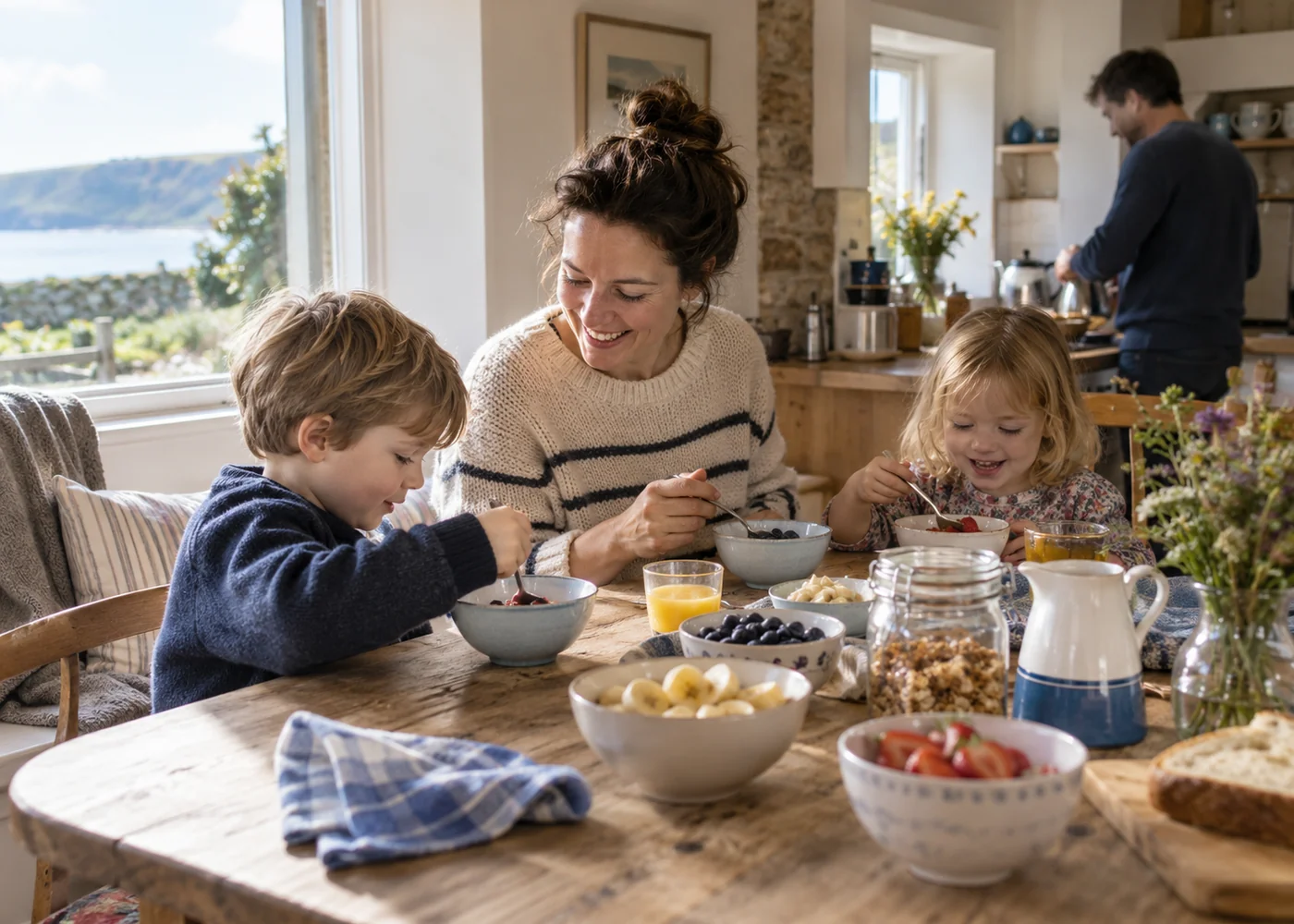
Plan the first meal, not the whole week
Bring or arrange something straightforward for arrival, allowing for a delayed journey and an unfamiliar kitchen. Check what equipment is available before choosing food that needs a particular appliance or several pans. The first evening is a good time for a meal you already know how to manage. You can explore local shops and adjust the rest of the week's food once you understand the space.
Ask about suitable seating where it matters and confirm any equipment supplied. A listing's family-friendly description is not enough to establish that an item suits a particular child. Follow the relevant manufacturer's guidance and do not improvise a seat or other safety equipment from household furniture. If you need something specific, arrange it before travelling rather than leaving the question for the first hungry evening.
Keep a small set of first-meal items together in the luggage so you can begin before everything is unpacked. Check where the appropriate utensils and crockery are stored, then leave the kitchen clear for the next task. A hungry arrival is easier when you are assembling something familiar rather than searching through every cupboard to learn how the whole room works.
Keep the kitchen easy to use
Find a place for everyday cups, bowls and snacks that is convenient for the adults responsible for them. Keep the worktop clear enough to prepare food without moving a line of holiday bags. In a shared cottage, explain what belongs to the family and what is communal. This avoids using an ingredient someone else was relying on for dinner or repeatedly searching several cupboards for the same item.
Choose meals that fit the kitchen's capacity and the time you want to spend cooking. A smaller oven or limited fridge may call for more modest shopping than at home. Follow appropriate food-storage guidance and any dietary advice relevant to your family. A holiday is not a useful time to guess about an allergy or change an established care requirement because a preferred ingredient is unavailable.
Let the timing support the day. Children may need to eat before a late restaurant booking that suits adults, or prefer an ordinary lunch after a morning outing. Discuss this with the group so nobody is surprised when plans divide briefly. You do not need every person eating the same dish at the same minute for the meal to feel shared.
Share the work around the food
Give other adults specific useful tasks, such as clearing breakfast, collecting a shopping item or preparing the table. Saying that someone can help often leaves the main organiser still deciding and directing everything. A small division of responsibility can make the break feel more like time away for everyone, including the person who usually manages meals at home.
Keep one easy fallback available for a day that changes. It should suit the actual kitchen and your family's needs, not become a large reserve of food that fills every cupboard. Knowing there is a workable meal at the cottage makes it easier to shorten an outing or leave a crowded venue without creating another problem.
At the end of the stay, follow the host's instructions for remaining food and kitchen cleaning. Let children help with simple appropriate jobs, such as gathering their cups or packing unopened personal snacks. A clear finish prevents mealtimes from spilling into a frantic checkout and leaves the final morning with room for the ordinary breakfast everyone still needs.