A cottage kitchen you can actually cook in
A beautiful kitchen photograph cannot tell you whether dinner for six will be straightforward. Start with the meals you expect to make, then look for the space and equipment they need.
Picture an ordinary dinner
The most useful kitchen test begins before you inspect the appliance list. Think of a meal you might genuinely cook on the second evening: pasta and salad, a tray of vegetables, a roast, or something assembled after a long walk. Each asks different things of the room. A two-ring hob might be entirely adequate for one couple and frustrating for a group trying to boil potatoes, make sauce and cook vegetables at once.
Write down the few things your plans depend on. This is not an inventory of your kitchen at home. It might be an oven large enough for a roasting tray, a colander, one substantial saucepan and a table everyone can use together. If baking is part of the holiday, ask about the particular tins or scales you need. A listing that promises cookware does not necessarily promise equipment for every kind of cooking.
Consider breakfast as well as dinner. Six people making toast, coffee and packed lunches can put more pressure on a compact kitchen than a simple evening meal. The number of mugs, the kettle, the toaster and the available working surface become surprisingly relevant when everyone wants to leave at the same time.
Read the working space
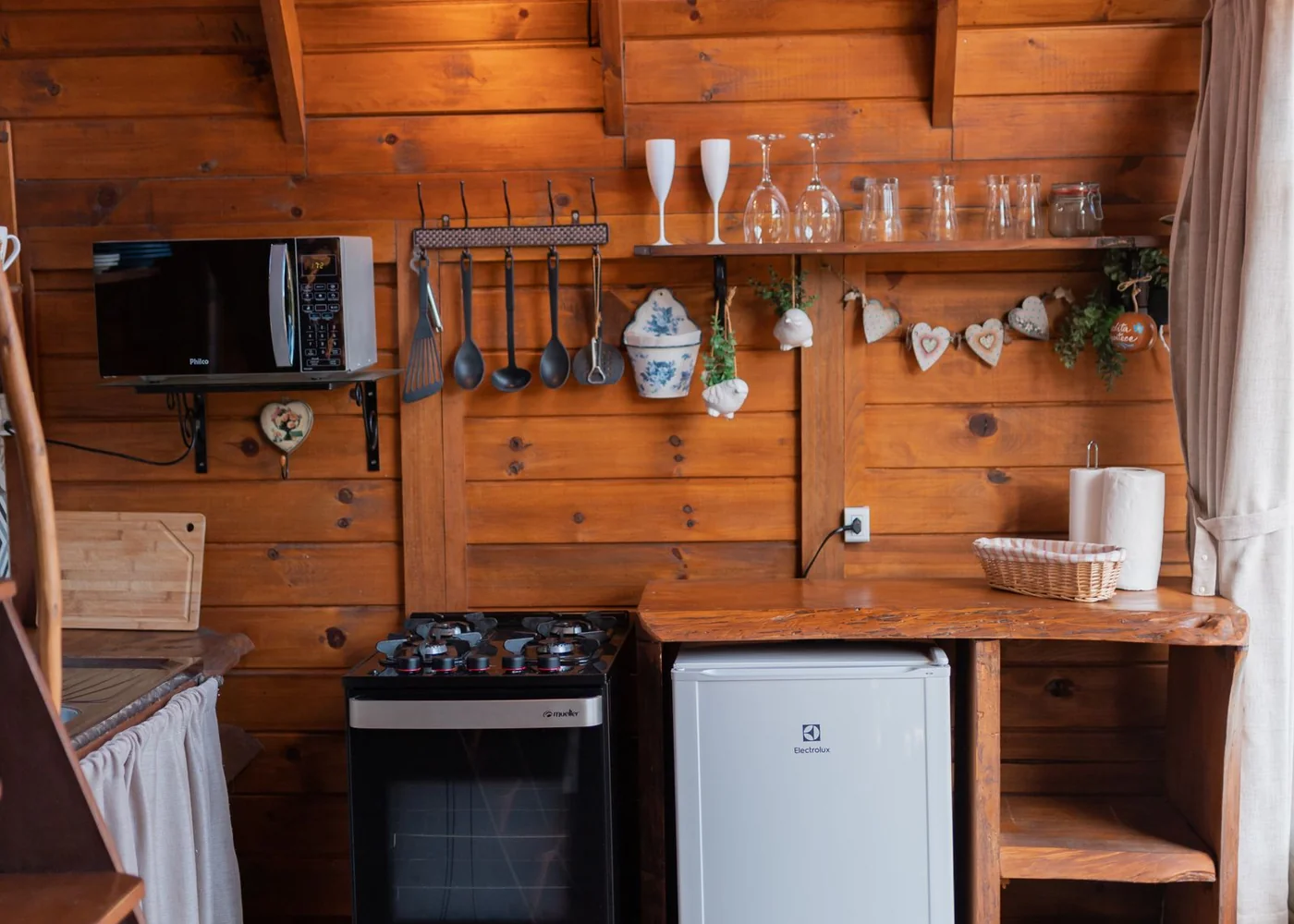
Look for an unoccupied stretch of counter rather than counting the total length of the worktop. A microwave, coffee machine and decorative arrangement may take up most of what appears in a wide photograph. Somewhere to put a chopping board, a bowl and the ingredients is usually more helpful than a large collection of gadgets. Check whether the dining table could comfortably take some preparation without blocking the route through the room.
Follow the likely movement between fridge, sink and cooker. You are not assessing a professional kitchen; you are working out whether two people can make a meal without constantly asking the other to move. In a narrow galley, one person cooking and another setting the table may work better than sharing every task. An open-plan room can make this easier socially, although cooking smells and appliance noise will also reach the sitting area.
Photographs rarely show all the storage. For a longer stay, ask whether guests have an empty cupboard or shelf for food. Countertop space disappears quickly when bread, cereal and groceries have nowhere else to go. Fridge capacity matters too, particularly if the plan is one large shop rather than frequent visits to a village store.
Confirm the equipment that changes your plans
An appliance name can conceal an important difference. A microwave with a grill is not necessarily a conventional oven. A small freezer compartment is not the same as a separate freezer. If the wording is unclear, ask the owner or manager to describe the appliance or send its model details. That gives you something more definite than an assumption based on the shape of a door in a photograph.
Ask a short, specific question about pans if you expect to cook for the full occupancy. A cottage sleeping eight may have eight plates but only modest saucepans. You might ask whether there is a large pot suitable for pasta for eight, rather than requesting a complete utensil list. Where an induction hob is supplied, the pans provided should be suitable; if bringing a favourite pan, check its compatibility yourself.
Think about the washing up as part of the meal. A compact dishwasher can be useful but may not hold all the pans and place settings from a group dinner. Look for a draining area and consider who will clear the table while someone else uses the sink. None of these details automatically rules out a property. They help you choose meals and divide the work sensibly.
Leave room for an easier option
Do not build the whole stay around an unconfirmed specialist item. If the cottage has a basic kitchen in a location you love, simpler meals may be a better adjustment than rejecting it. Bring a small amount of a particular spice or your preferred coffee equipment when it is easy to carry, but avoid packing half a kitchen to compensate for a property that does not meet the group's essential needs.
Save the answers to your questions with the booking details, then make the first food shop fit what is actually available. Keep the arrival meal uncomplicated and allow the first evening to reveal the room's rhythm. A cottage kitchen earns its place in a good holiday by making everyday meals manageable; it does not need to reproduce the one you left at home.