Check the cottage kitchen before planning Christmas dinner
Build the meal around the cottage kitchen you have booked, then confirm the few pieces of equipment that genuinely determine what you can cook.
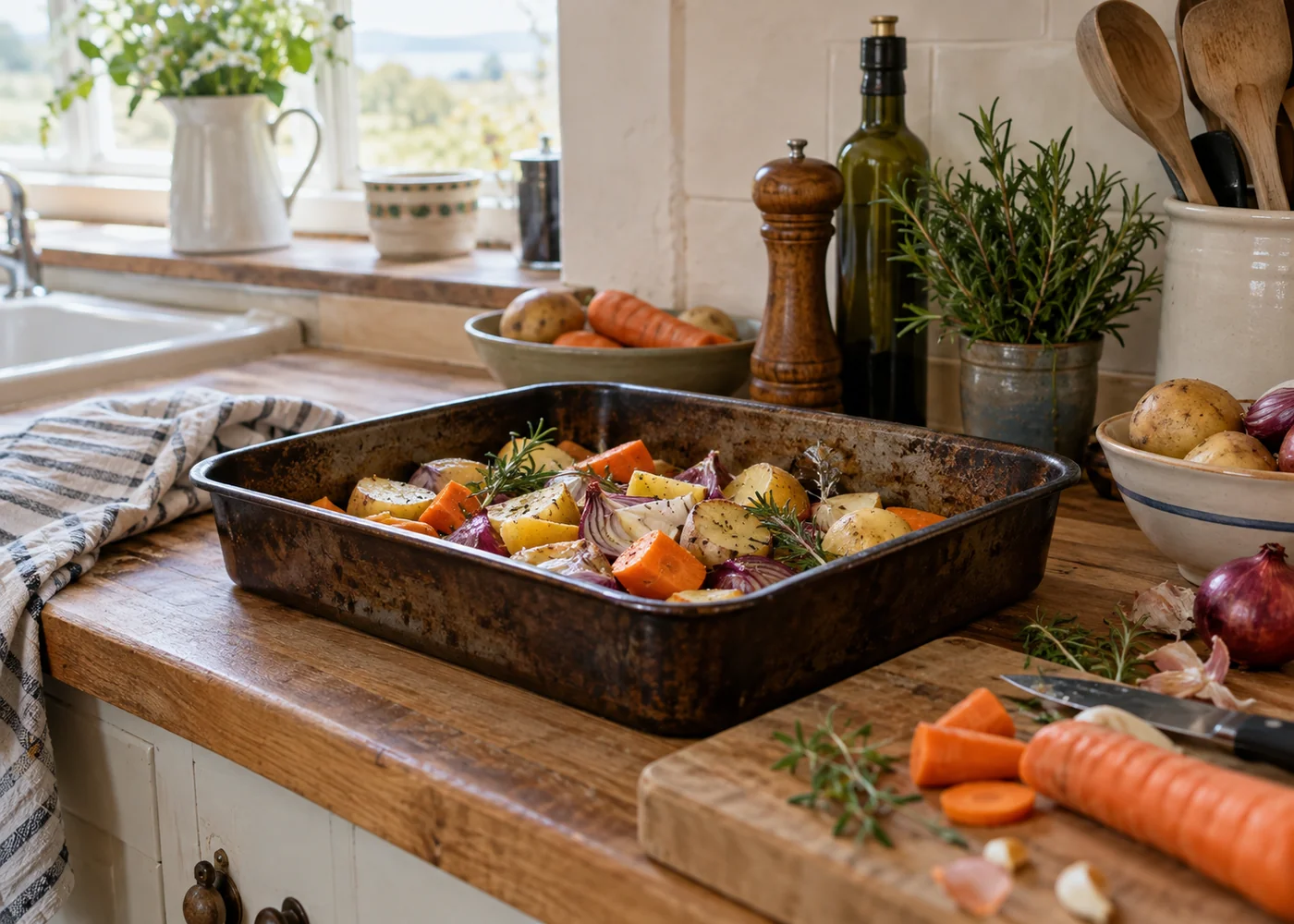
Choose the meal before buying the food
Start with the number of people eating and the dishes that matter most to them. A Christmas meal does not need to reproduce every tradition from every household. Agree a manageable version before shopping, allowing for dietary requirements and the time people want to spend cooking. A smaller menu served comfortably can feel more generous than several dishes competing for space and attention.
Read the kitchen description and ask the host about the essentials. Oven arrangement, usable hob space, fridge capacity and a suitable roasting tin may determine the plan. Avoid sending a long list of preferred gadgets when only two or three items are necessary. Explain what you intend to cook so the host can give a relevant answer, and be prepared to change the menu if the equipment does not suit it.
Check the dining arrangement too. There should be enough appropriate places for the booked group and somewhere for serving dishes. A property with many beds may use several tables or have a compact dining area. If sitting around one table is central to the occasion, confirm this before booking rather than assuming furniture can be moved from other rooms.
Map the cooking space honestly
Look at which dishes need the oven at the same time and whether their requirements are compatible. Follow recipe, product and appropriate official food-safety guidance; do not improvise cooking or storage methods to make a crowded schedule fit. This article is about organising the kitchen, not providing temperature or timing instructions for a particular food. If the plan depends on uncertain handling, simplify it or seek the relevant authoritative guidance.
Consider pan and tray sizes as well as the appliance itself. A large ingredient may not fit the supplied equipment, and two trays may not sit as you expect. Ask about essential dimensions where needed. Bringing a familiar suitable pan can be an option if it is compatible with the appliance, but should be a deliberate choice rather than a last-minute attempt to transport half the home kitchen.
Keep some clear worktop space for preparation and serving. Decorations, drinks and snacks can occupy every surface before cooking begins. Give them another appropriate place and keep the kitchen route usable. A room with several people trying to help can be slower than one with a clear cook and separate tasks elsewhere, such as setting the table or preparing a simple cold item.
Plan shopping around storage
Coordinate ingredients across households using one list. Record who is bringing each item and what the cottage supplies, without assuming that ordinary cupboard staples will be present in sufficient quantities. Buy sensible amounts for the actual menu. Duplicated jars and oversized packages can fill the available storage while the ingredient everyone expected someone else to bring remains missing.
Confirm current shop, collection or delivery arrangements for the dates if you rely on them. Do not assume ordinary opening hours apply. If using a delivery, make sure the timing is compatible with the booking and that you will be there to receive it. The host should not be expected to store a large order before arrival unless that has been explicitly agreed.
Leave appropriate fridge and freezer capacity for items that require it, following their instructions and official guidance. A cold-feeling porch or garden is not an assumed alternative to proper storage. If the appliance cannot hold the plan safely, reduce the shopping or change the meal. The fact that the occasion happens once a year does not make an unsuitable arrangement workable.
Share the occasion as well as the jobs
Assign useful responsibilities before the day: preparing part of the meal, arranging the table, clearing equipment or handling drinks. Avoid leaving the person most familiar with the kitchen to manage every task. Someone can take ownership of washing up without waiting for a request after each dish. Shared work gives the cook a chance to enjoy the meal and the company they came for.
Keep the rest of the day's plan modest. A tightly timed outing before a large meal can create pressure if anyone returns late. Allow people to take a shorter appropriate walk or spend time at the cottage, with clear care arrangements for children or dogs. There is no need to fill the hours before dinner simply because the meal itself has a schedule.
Think about clearing up before serving. Know where waste belongs, what can go in the dishwasher and where used cookware can stand without blocking the kitchen. Follow the host's appliance instructions. A tidy preparation area makes the after-dinner work easier and avoids someone discovering that every useful surface has become a holding place for dirty pans.
Give the following day a simple plan
Decide how remaining food will be handled using the relevant storage and reheating guidance, rather than treating leftovers as an automatic second menu. Keep appropriate containers and labels where useful, and avoid preserving quantities the group will not realistically use. If departure follows soon afterwards, consider the journey as well as the cottage fridge.
Return borrowed kitchen items to their proper places and follow the host's checkout instructions. Take your own equipment home and check the oven, cupboards and fridge for forgotten belongings. A successful Christmas meal in a cottage is one that fits the room, feeds the group comfortably and leaves enough energy for the rest of the holiday. The kitchen should support the occasion rather than become its main challenge.