Choosing a beach for a walk rather than a swim
A beach chosen for walking may need different qualities from one chosen for a long sit. Surface, access and an easy return matter more than facilities for a full beach day.
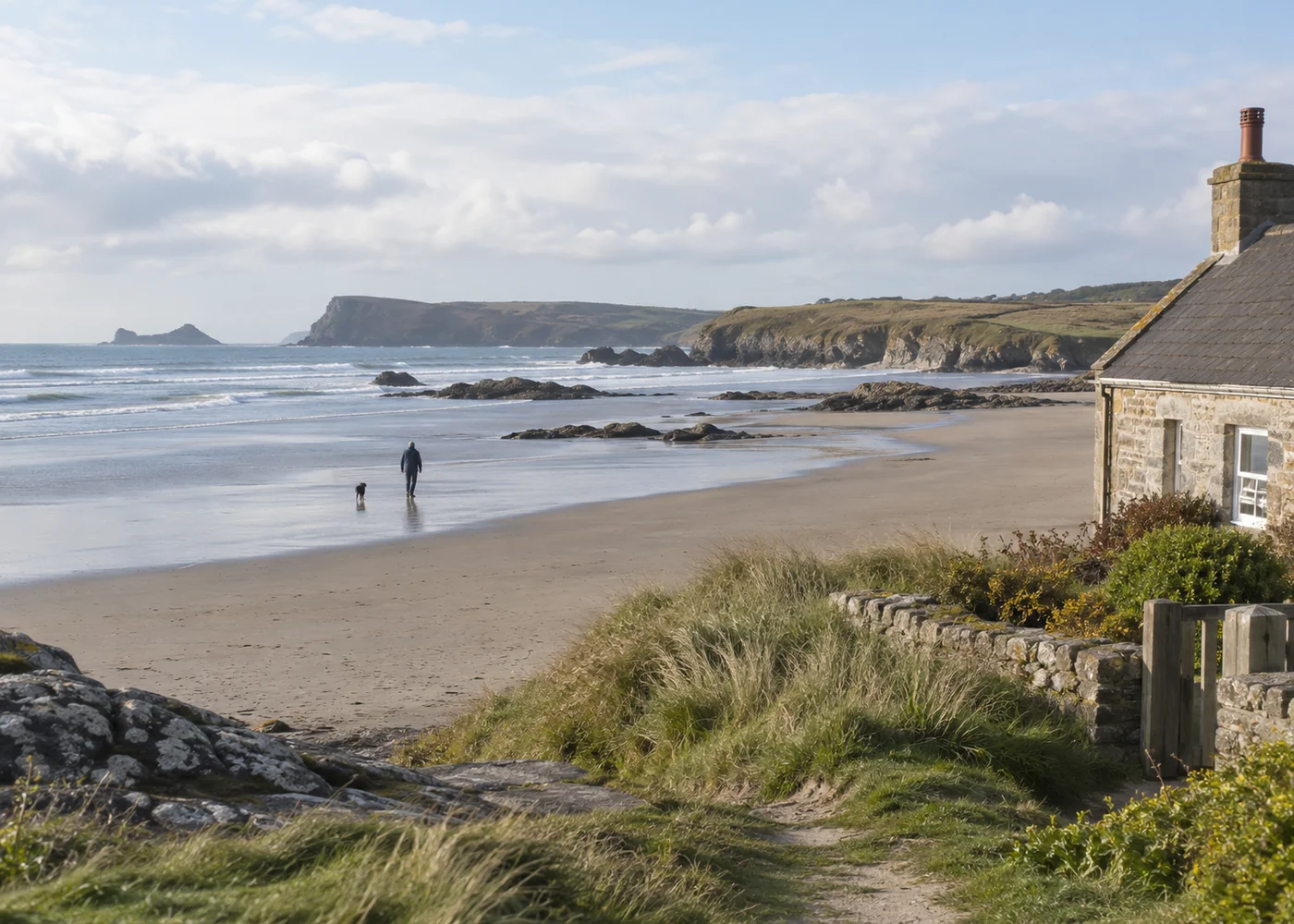
Look along the shore
A wide photograph can hide a short usable stretch. Find out where an established beach walk begins and ends, and whether the route depends on the tide. For an easy outing, choose a place where you understand the access and can turn back without needing to negotiate unfamiliar rocks or headlands.
Surface affects pace. Soft sand, sloping shingle and wet patches can make a modest distance feel longer. If you want a steady walk, a promenade or suitable path beside the shore may be a better choice than the beach itself. You can still have the sea alongside you.
Look for a practical starting point, including parking or transport and any facilities you need. A long approach through dunes may be enjoyable, but it should count as part of the outing. Do not judge the day only by the distance once you reach the water.
Walk out with the return in mind
An out-and-back route makes it easy to shorten the day, provided you keep track of how far you have gone and conditions remain suitable. Choose a rough turning point before tiredness decides it for you. The return may feel different with wind in your face or softer ground underfoot.
Carry what you need for the conditions without packing for an all-day beach camp. A comfortable layer, water and a way to keep belongings dry are more useful than several items you will never put down. Keep valuables secure so that a pause to look at the sea does not become a search in the sand.
If a café is part of the plan, check it is open. Otherwise, finish the walk at a convenient place for a drink or return to the cottage. A beach outing does not need to include a meal on the shore to feel complete.
Notice the changing view
Walking gives you time to see patterns that are easy to miss while sitting: the line of seaweed, the colours of stones and the way buildings recede behind you. Leave natural material in place and avoid disturbing wildlife for a closer look.
Turn back with enough time for a comfortable return, including any uphill approach from the beach. Keep dry footwear or a bag for sandy shoes ready where appropriate. Those small arrangements make the journey home easier and leave the cottage entrance free of an improvised pile of wet belongings.