Deciding whether a boat trip suits your day
A passenger boat trip can add a different perspective to a coastal stay. Choose it for the actual journey and boarding arrangements, not just the view promised in a photograph.
Understand the trip being offered
A short harbour cruise, a coastal sightseeing trip and a crossing to another place are different outings. Read the operator's current description carefully, including duration, route and whether passengers go ashore. A destination shown in photographs may be viewed from the water rather than visited.
Consider what you want from the trip. If the aim is simply to experience the coast from a boat, a shorter sailing may be enough. If reaching a particular place is essential, understand the return arrangements and how much time is available there. Avoid turning a pleasant boat outing into a rushed sequence of connections.
Wildlife sightings should be treated as possibilities, not promises. Choose an operator whose approach and trip suit you even if the hoped-for animal does not appear. Look for clear information about responsible viewing and do not reward claims that depend on getting unnecessarily close.
Ask about boarding before paying
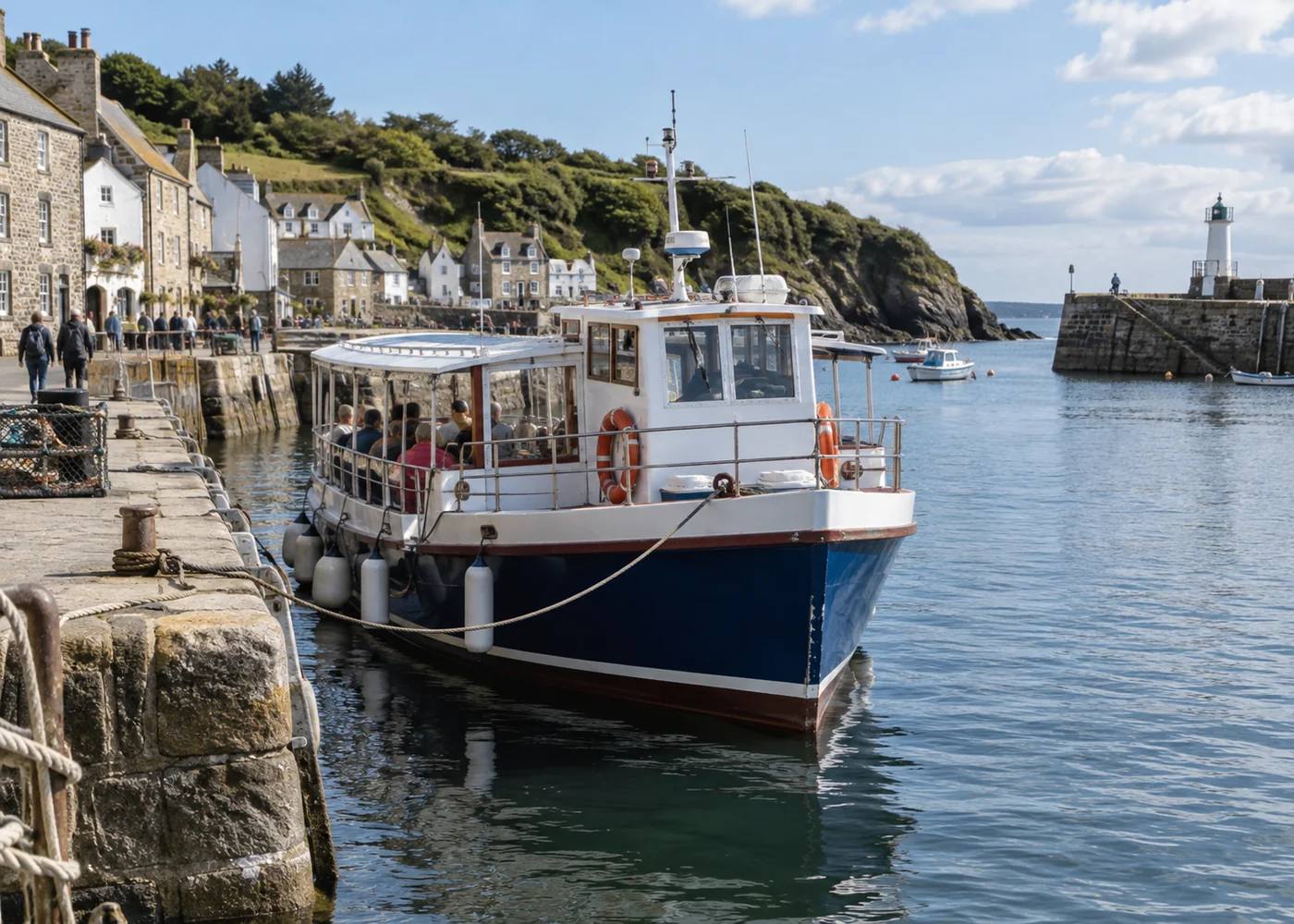
The step from quay to boat can matter more than the distance travelled. Ask the operator about the exact arrangements if anyone has limited mobility, uses an aid or finds uneven steps difficult. Tide conditions can affect the boarding position, so a photograph of one departure may not describe every sailing.
Check seating, shelter and toilet provision where those are important. A vessel may have less protected space than expected, or a short trip may not offer the facilities of a larger ferry. Specific answers are more useful than broad descriptions such as suitable for everyone.
If travelling with children, ask about the operator's age rules and arrangements. If bringing a dog, check the current policy rather than assuming it matches another boat service. Keep the questions focused on the people actually travelling.
Leave room for conditions
Boat trips can be altered or cancelled because of weather or operational circumstances. Read the operator's policy before booking and keep the rest of the day flexible where possible. A shore-based alternative prevents a cancellation from leaving a large gap.
Do not interpret a sailing going ahead as a promise that every passenger will find it comfortable. If motion is a concern, discuss the nature of the trip with the operator and seek appropriate professional advice about any medication rather than improvising. A shorter, more sheltered route may suit your preferences better, but conditions still matter.
Dress for the actual forecast and the operator's advice. Being on the water can feel different from waiting in town. Keep belongings secure and manageable, and follow crew instructions about where to sit or move. The trip is more enjoyable when you are not continually rearranging loose bags.
Make departure unhurried
Check the precise departure point, not just the harbour name. Allow time for parking, walking to the berth and any required check-in. A large harbour can contain several passenger operators, and arriving at the wrong quay creates unnecessary stress.
Bring booking details in a form you can access easily. If the operator sends an update, read it before leaving the cottage. Avoid scheduling an elaborate meal immediately before departure if that risks a rushed journey to the boat.
Once aboard, let the trip have your attention. Take photographs from permitted positions without blocking others or leaning into unsafe places. Listen to instructions before concentrating on the view. A good outing is one in which the practical arrangements fade into the background because you prepared for them.
Keep the cost clear
Check the full fare for the people travelling and what is included. A landing charge, separate return arrangement or optional extra can change the total. Use the operator's current information and read the booking conditions before committing.
If the trip is a substantial part of the holiday budget, discuss it with the group before reserving. Someone who dislikes boats may prefer a shore-based activity, and the arrangement can still be sociable if everyone meets afterwards. A shared holiday does not require every person to buy every experience.
Keep the confirmation accessible and note how the operator communicates changes. That avoids arriving at a departure point without having seen an important update.
Keep the afternoon proportionate
After the sailing, a simple meal or a short town walk may be enough. A boat trip can be surprisingly absorbing, and there is no need to attach several more attractions to make it count as a full day.
If the available trips do not fit your needs, watching the harbour from shore is a perfectly good alternative. The holiday is not incomplete without going afloat. Choose the boat when its actual experience appeals, and leave it when the practical details suggest another outing would be more comfortable.