The quieter appeal of an estuary
An estuary offers changing water, boats and wide views without the same atmosphere as an open beach. Its quieter appearance still deserves careful planning.
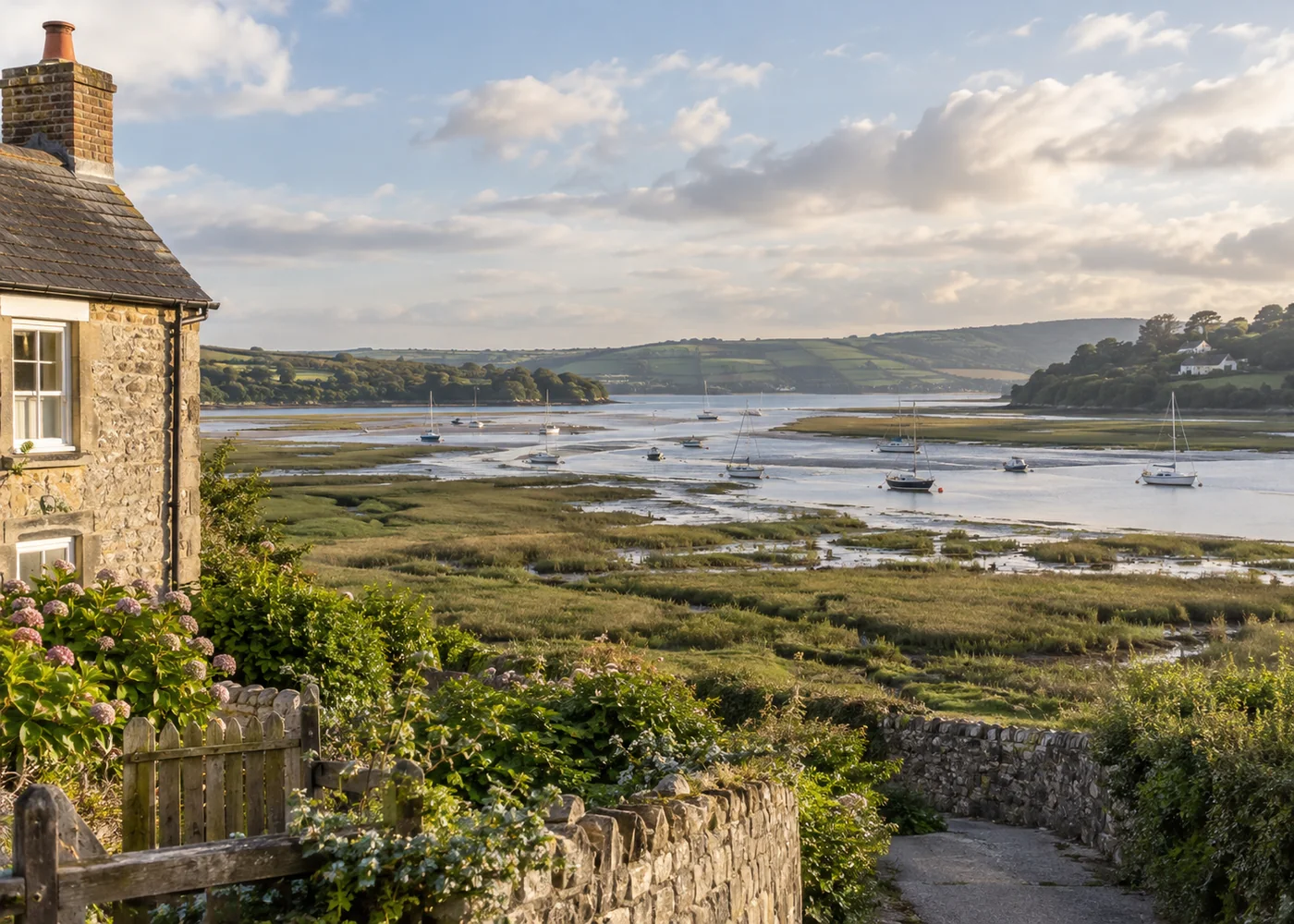
Watch a landscape that changes
An estuary can look very different over the course of a day. Water may fill the foreground at one time and reveal broad areas of mud or marsh at another. If you are choosing a cottage for the view, look at more than one photograph and understand that the scene will not remain fixed.
That variation is part of the attraction. A morning coffee can come with a different pattern of channels and reflections from the previous evening. People who enjoy watching rather than constantly doing may find plenty of interest in a small area.
The shore is not necessarily a place to wander freely. Use established public routes and current local guidance. Exposed mud and marsh should not be treated as extra walking space simply because water has receded. The view can be enjoyed from appropriate paths and viewpoints.
Choose the right settlement
Some estuary villages have shops, cafés and busy boating activity; others are much smaller. Look at the practical facilities around the cottage and the routes between them. A waterside setting can still involve steep streets or a drive for groceries.
If beach days are important, check the journey to the beach you actually want to use. An estuary location may be close to the coast in broad terms while offering a different shoreline experience. It can make a good base for varied outings, but not if everyone expects sand outside the door.
Keep weather and tide information part of the day's planning, especially for any outing near the water. A sheltered-looking scene is not a promise of unchanging conditions.
Use the view at more than one time
If you are staying close enough, return to the same suitable viewpoint at another part of the day. The channels and reflections can look sufficiently different that you do not need to travel elsewhere for variety. Keep any tide-dependent route out of the plan unless you have appropriate local guidance.
A small notebook or a few photographs can record those differences without turning observation into a project. Note what is visible from your safe position rather than trying to get closer to every feature. The scale of an estuary often reads better in a wide view.
For meals, a place overlooking the water can be enjoyable, but choose it for the food and comfort too. A view through rain-streaked glass may be atmospheric; it does not make an unsuitable table or inconvenient journey worthwhile. Balance the water with the ordinary details that determine whether you relax.
Let the quiet be enough
A short walk, a place to sit and a modest meal can fill an estuary afternoon comfortably. Binoculars may add interest, but there is no need to chase wildlife or approach it. Give animals space and use designated viewing areas where available.
Choose this setting for its own qualities: a broad sky, the changing relationship between land and water, and the life of a small waterside place. It is most satisfying when you are not asking it to behave like a conventional seaside resort.