Finding a gentler route to the shore
A gentler route to the shore depends on the whole journey, from parking or transport to a comfortable place to stop. Look for specific details rather than reassuring labels.
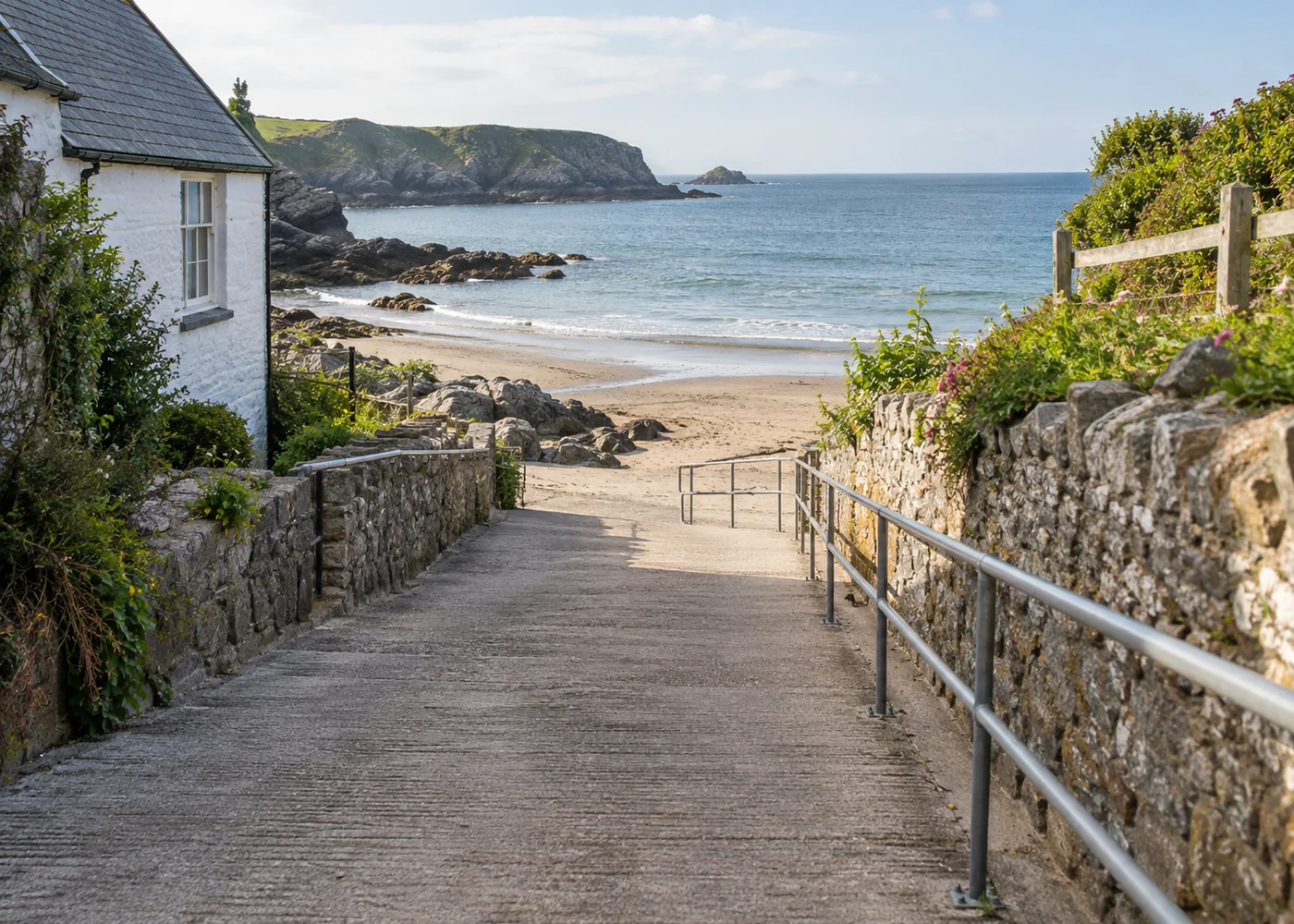
Describe what would help
Accessible and easy mean different things to different people. Before researching a beach, identify the features that matter to your group: a firm surface, limited gradient, step-free access, seating or a short distance. Someone who can manage a few steps may still find a long soft-sand approach difficult.
Use those needs to ask focused questions. Is the route paved all the way? Where does the slope begin? Are there places to rest? How far is the nearest toilet? Clear answers make comparison possible in a way that a general phrase such as family friendly does not.
If a wheelchair or mobility aid is involved, look for detailed current access information from the site manager and contact them where necessary. Photographs can help explain a layout, but they are not a substitute for measurements or reliable descriptions when those are needed.
Follow the route from its true start
Begin with the arrival point, whether that is a car park, bus stop or drop-off area. A beach ramp may be convenient while the journey to it includes an awkward crossing or steep street. Trace the whole connection rather than focusing only on the final entrance.
Check parking arrangements relevant to the traveller, including availability and the route from the space. Do not assume a designated bay guarantees that every onward surface is suitable. If using a taxi, agree on a practical drop-off and collection point rather than asking simply for the beach.
For public transport, the return stop may be in a different position or require crossing the road. Include that in the plan. A comfortable outward journey is only half the outing.
Decide whether the sand is essential
A promenade, viewpoint or firm seating area can provide an excellent coastal visit without travelling onto the beach itself. Ask what everyone wants from the day. Seeing the water, spending time together and eating lunch may not require reaching the sand.
Where beach access equipment is offered, check the current arrangements directly, including booking, suitability and any assistance required. Do not assume it will be available on arrival or appropriate for every person. Make the decision with the traveller rather than treating equipment as a reason they should attempt an outing they do not want.
If the beach surface is part of the plan, understand how it changes with conditions. Tide, weather and maintenance can affect the usable area. A route that suited someone on a previous visit may need reassessing for this one.
Build a comfortable pause into the outing
Identify a place to sit or stop before leaving. A route can be manageable while continuous standing is not. Check café and toilet opening hours if they are important, and keep an alternative that does not require a long additional journey.
Carry only what the group needs. Excess bags can make it harder for someone to use a handrail or manage an aid. Share tasks sensibly, while preserving the person's own preferences about assistance. Ask rather than taking control of their pace or equipment.
Leave time for the return. A small slope can feel more demanding after an afternoon outside, and waiting for transport may require another comfortable place to pause. A shorter outing with an easy finish often produces a better day than using every available minute at the shore.
Test the smallest version first
If staying nearby for several days, begin with a short visit rather than a full beach afternoon. You can learn how the route feels, where a pause is comfortable and whether the facilities suit the traveller. A later outing can then be planned with experience rather than optimism alone.
Listen to the person's account afterwards. A route may have been technically possible while still feeling tiring or undignified. That feedback should guide the next choice. The goal is a pleasant holiday, not evidence that a particular access route can be completed.
A different entrance or a promenade visit may offer a better experience without changing the destination entirely.
Let the traveller define success
Ask the traveller what they would like to repeat and what they would change. A shorter route, a different seat or an earlier return may make the next outing more enjoyable. Keep those preferences with the practical access information so that future plans reflect their experience.
When choosing a cottage, a nearby suitable route may matter more than a sea view. It can make repeated small outings possible without a major logistical effort. Prioritise the connection that supports the person travelling, then let the scenery become part of an enjoyable routine.