What changes on a coast out of season
The coast outside its busiest months can be spacious and absorbing. It helps to choose it for what remains, rather than expecting a summer holiday with fewer people.
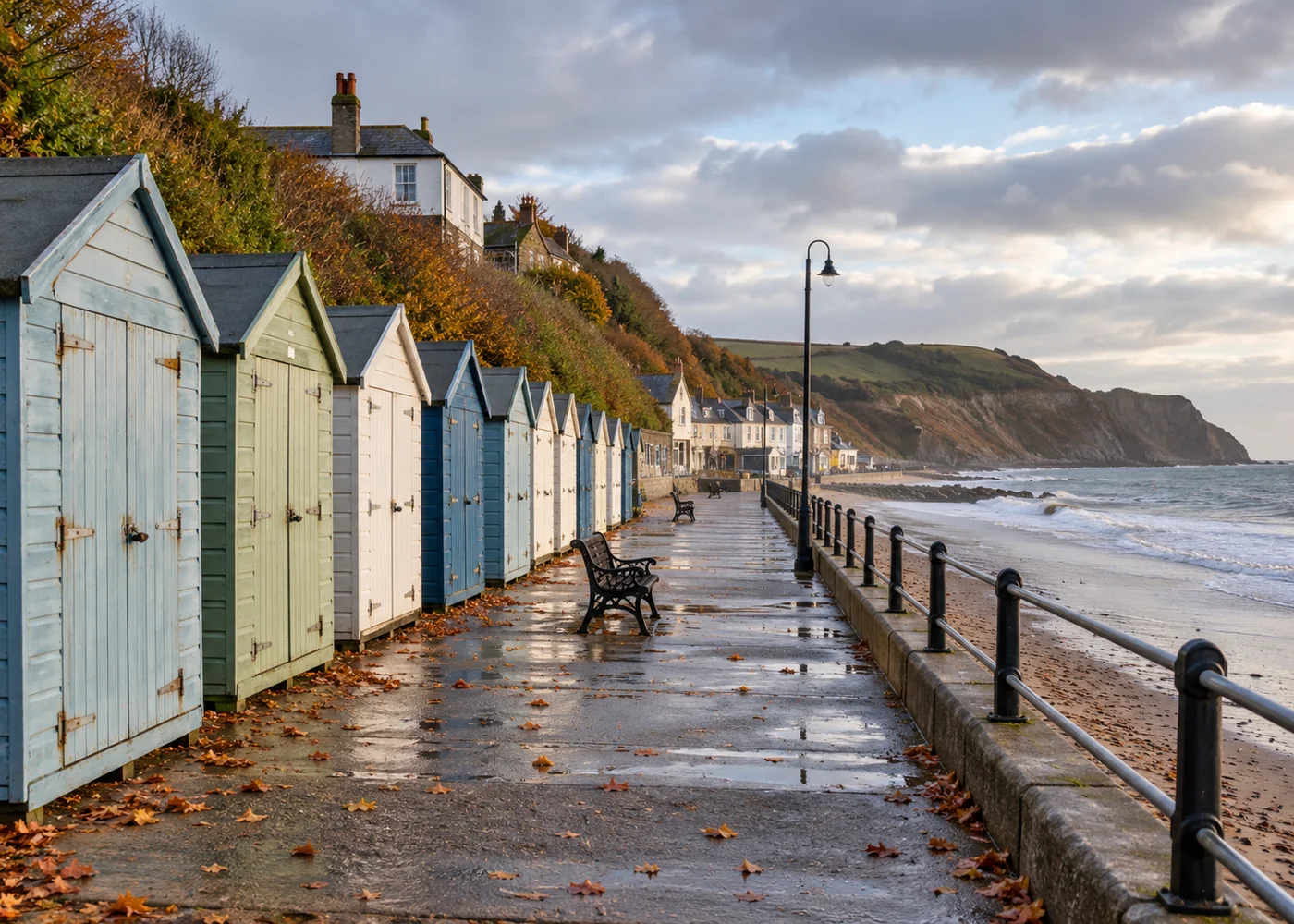
Find the permanent life of the town
A seaside place with a year-round community can make an appealing off-season base. Shops, ordinary cafés and local routines give the stay a shape even when some visitor businesses are closed. Look at the particular town rather than assuming that every coastal settlement becomes either deserted or wonderfully quiet after summer.
Check the services you will actually use. A beach kiosk, passenger boat or seasonal attraction may not operate on your dates. That is only a problem if the holiday depends on it. A short list of confirmed options is more useful than a long list of summer possibilities copied from a general tourism page.
Think about the evenings as carefully as the days. If you want to eat out several times, establish what is open and when food is served. If you prefer the cottage kitchen, make sure groceries are convenient. The off-season atmosphere becomes more enjoyable when dinner is not a nightly puzzle.
Choose a comfortable daily radius
Shorter daylight and mixed weather can make a nearby promenade, harbour or village circuit particularly valuable. You can go out when conditions suit and return without committing to a major drive. A base that requires travelling for every small outing may feel more limiting in this season than in summer.
Look at the route from the cottage in practical terms. Pavements, lighting and gradients matter if you plan to walk for supper. A lovely coastal path is not necessarily the right route after dark. Separate the daytime scenic walk from the ordinary evening journey.
If you enjoy driving to different places, keep the radius manageable. A short visit to a neighbouring town can provide variety without using the best part of the day in the car. There is no need to cover the entire coastline during one break.
Let weather influence the order
Keep the most weather-dependent outing flexible where possible. A suitable walk may fit best on the first morning, while a museum or town visit can move to a wetter day. Avoid booking every hour if the main attraction is being outdoors.
Check current local advice before heading to exposed places. Strong wind and rough seas are not simply more dramatic versions of a summer view. Respect closures and keep clear of places affected by waves. A comfortable indoor view can be the right way to appreciate unsettled weather.
For an ordinary damp day, a smaller plan often works well: a short walk, lunch somewhere open and an afternoon at the cottage. Bring things you enjoy doing inside, rather than relying on the weather to provide permission to relax. A book is more useful when it is one you want to read.
Enjoy space without expecting emptiness
Quieter does not mean private. Residents, walkers, workers and other visitors share the same places. Keep access clear and remember that harbour or town activity continues even when holiday crowds thin. A working morning can be part of what makes the coast interesting.
Some weekends and holiday periods remain busy. Check for local events if crowd levels affect your choice, but avoid assuming that a particular month guarantees a certain atmosphere. The weather, school calendar and individual town all influence how a place feels.
If photography is part of the appeal, look for ordinary details as well as empty beaches. Closed shutters, winter light on railings and boats at their moorings can tell the season's story. You do not need to seek dangerous conditions for an image that feels different from summer.
Check the shape of the week
A Monday arrival can feel different from a Friday arrival if nearby businesses concentrate opening hours around weekends. Before choosing dates, check the handful of places that matter to you. Moving an outing by one day may solve the issue more easily than changing the whole destination.
Budget for the holiday you will have
Compare the full cost of the stay rather than assuming an off-season date is automatically a bargain. Travel, meals and the facilities you value still matter. A comfortable cottage in a useful location may be worth more to you than a larger place requiring repeated drives.
The strongest reason to go is that the season itself appeals: more time indoors, brisk outings and a different pace in the town. If you mainly want long beach days and extensive seasonal services, choose dates that support those expectations instead.
An off-season coastal break can feel generous precisely because it asks less of the itinerary. One good outing and a warm return can fill the day. Choose a base that makes those simple things easy, and the quieter months become a holiday in their own right.