Planning a gentle rock-pooling outing
Rock pools reward patient looking at close range. A gentle outing needs suitable access, local tide knowledge and care for the small habitat in front of you.
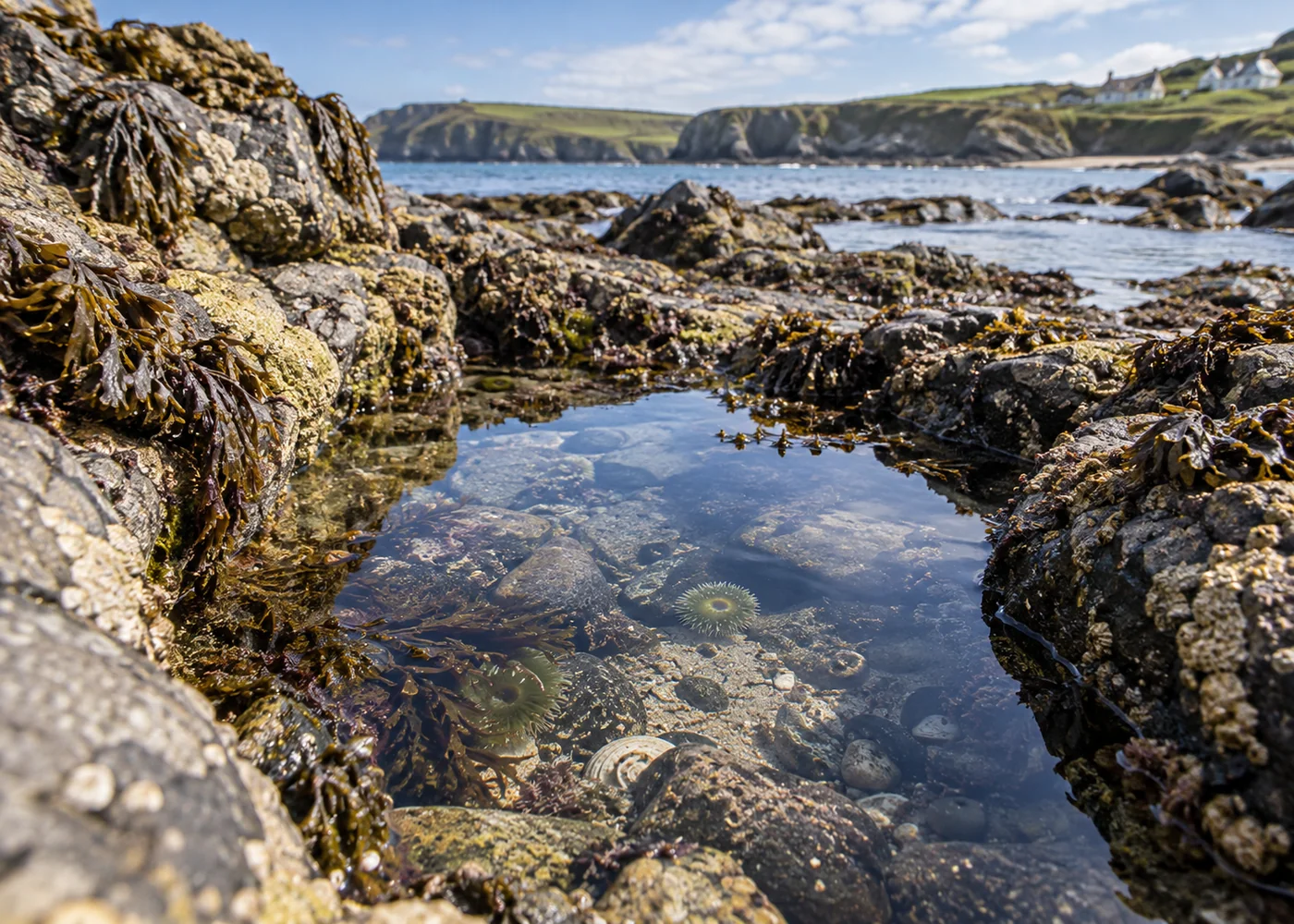
Choose a place before choosing a bucket
Start with a recognised rock-pooling location and current local advice. The most useful information concerns access, tide conditions and where visitors can safely explore. Do not wander onto unfamiliar rocks because they happen to be exposed when you arrive.
Check weather and tide information for the date, and know how you will return. Keep the outing within a comfortable area rather than moving farther out in search of a more exciting pool. Slippery and uneven surfaces can demand attention even when the distance is small.
Wear footwear appropriate to the site and keep children closely supervised. Bring only what you can carry without making movement awkward. An observation-focused visit needs little equipment, and less to manage can mean more attention for footing and the water.
Wait for the pool to reveal itself
A pool can look empty at first. Pause and watch rather than immediately stirring the water or lifting things. Tiny movement becomes easier to notice once the surface settles. You may see more by spending time at one suitable pool than by hurrying between many.
The National Trust encourages careful exploration that leaves creatures and their habitat unharmed. Looking without collecting is a simple approach for a holiday outing. Avoid pulling attached animals from rocks or removing them as souvenirs. If local guidance gives particular instructions, follow it.
Use a guide to identify what you see afterwards if needed. An uncertain description is better than handling an animal repeatedly to obtain a photograph. You can enjoy colour, movement and shape without naming every species.
Give children a looking task
Ask them to watch one pool for movement or notice two different colours, rather than find the biggest creature. A small observation task rewards patience and keeps the emphasis on looking. Adults can join in without turning the outing into a lesson that needs a correct answer at every moment.
Take a photograph of the pool as a whole if it is practical from a secure position. Later, at the cottage, compare it with a reliable guide. This separates identification from the slippery, distracting environment where the observation happened.
Finish before attention and footing become careless. Children who are cold or tired may still resist leaving an absorbing activity, so make the next part of the day clear in advance. A snack in a suitable place and time to talk about discoveries give the outing a natural ending without collecting animals.
Keep the visit short enough to stay attentive
Rock-pooling can absorb attention, which is another reason to keep checking the surroundings and time. Do not let an interesting discovery distract from changing water or the planned return. Leave with margin rather than waiting for a visible problem.
Finish with a simple pause somewhere suitable away from the rocks. A snack or a look through photographs gives children and adults time to talk about what they noticed. The success of the outing is not measured by the number of creatures caught. A few observations, with the pool left as it was, are enough.