What a sea view adds to a cottage break
A sea view can shape breakfast, rest days and evenings. Work out what the view actually offers before making it the deciding feature of a cottage.
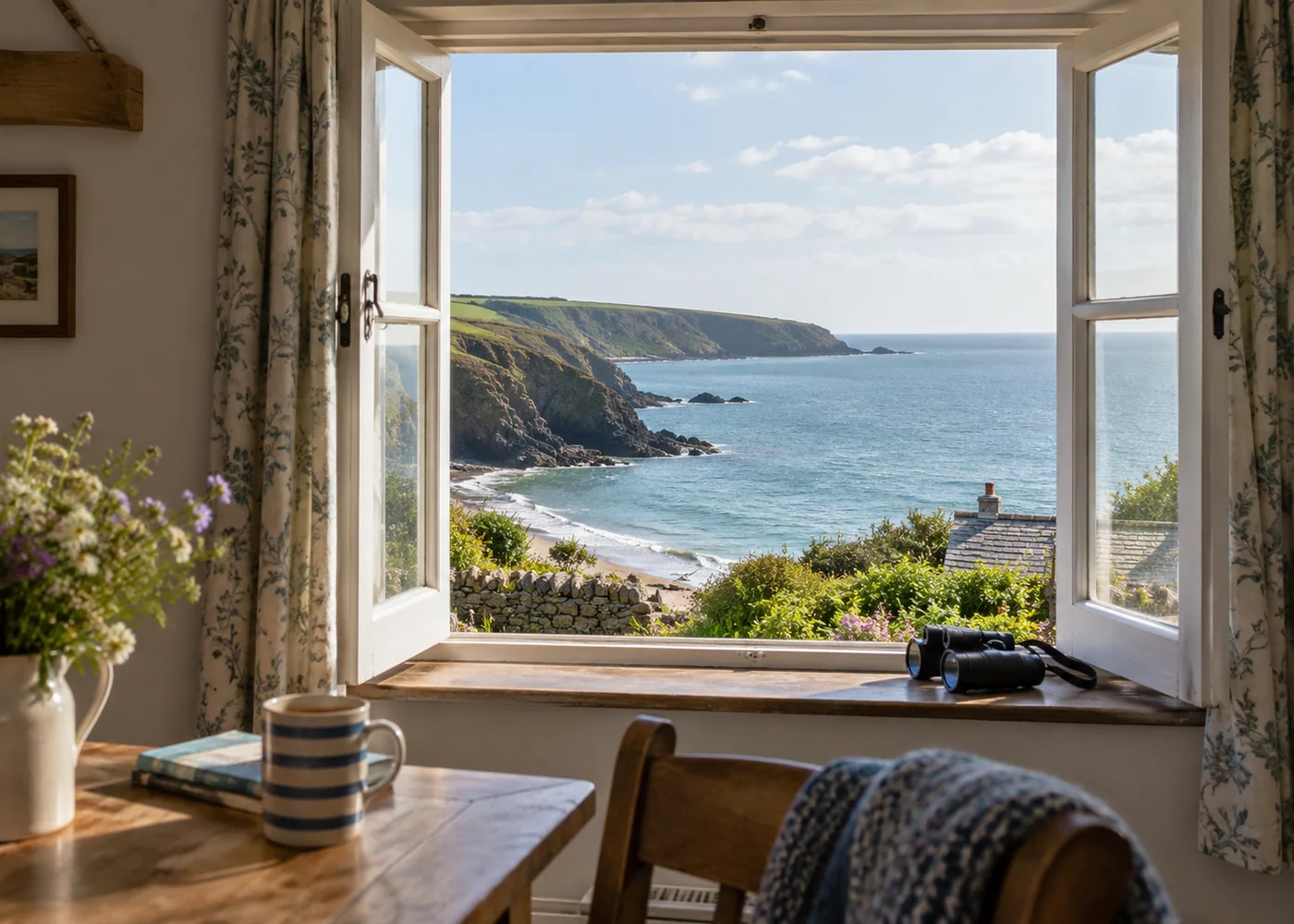
Find the view in the floor plan
The phrase sea view can describe several experiences: a broad outlook from the main room, a glimpse from an upstairs bedroom or a view available only while standing in one corner. None is inherently misleading if described clearly, but they have different value to a guest. Look at photographs and ask which rooms face the water.
Think about where you will spend time. If long breakfasts and afternoons reading are part of the plan, a view from the sitting or dining area may matter most. A bedroom view can be lovely but less useful if you leave early each day. Match the feature to your routine rather than treating the phrase as a universal upgrade.
Notice what lies between the property and the sea. A road, public path, car park or neighbouring roof may be part of the outlook. Those features can also bring activity close to the windows. A broad photograph may minimise them, so use several views to understand the position.
A view and access are separate things
Seeing the water does not mean reaching it easily. A high location may involve a long journey to the beach, while a cottage without a sea view may be a short level walk from the shore. Decide which matters more for the holiday you want.
For frequent brief outings, convenient access can be more valuable than a dramatic panorama. For someone who expects to spend substantial time indoors, the panorama may be exactly the point. There is no need to choose the same priority as everyone else.
Check the ordinary connections too: the route for groceries, a meal out or arrival with luggage. The view is easier to appreciate when the practical parts of the stay do not become a daily frustration.
Imagine mixed weather
A sea view can be especially rewarding when conditions keep you indoors. Changing cloud, light and colour give a familiar room something to watch. But make sure the room itself is comfortable and suits the group. A window does not compensate for a layout that makes relaxing difficult.
Outdoor seating should be considered separately. A terrace with a wide outlook may be exposed, while a smaller sheltered area gets more use. If sitting outside matters, look for information about the actual seating space rather than assuming the best photograph shows a comfortable everyday arrangement.
Avoid expecting a sunset simply because the property faces the sea. Orientation and the shape of the coast matter. If a particular light is central to your choice, investigate it rather than letting a generic coastal image supply the assumption.
Compare the rooms at an ordinary hour
Listing photographs are often made when light is favourable and the space is carefully arranged. Imagine using the room with coats drying where permitted, books on the table and several people choosing seats. The view should work within ordinary occupation, not only in an empty room.
If you plan to work briefly during the stay, decide whether that will take place in the same prime space. A laptop at the only dining table can change how others enjoy the room. Agree on the practical arrangement so that the view remains a shared pleasure rather than a contested workstation.
For a group staying several nights, consider whether everyone benefits from the feature. A sea-facing bedroom may reward one pair while the communal room looks elsewhere. That might be entirely acceptable, but it should be understood when comparing cost and room choices.
Finally, picture the last morning. If the thought of a slow breakfast by that window is a major part of the appeal, the view is likely to matter throughout the visit. That is a more useful test than how impressive the first photograph will look.
Decide what the extra cost buys you
Compare the complete stay with an alternative nearby. Would you use the view enough to value it, or would the budget be better spent on a longer visit or a more convenient base? This is a personal trade-off, not a rule about what a coastal cottage ought to provide.
The strongest reason to choose a sea view is that you can picture enjoying it during ordinary moments. If it will make breakfast slower, a rest day richer or an evening more comfortable, it adds something real. If it is mainly a photograph you want to take once, a nearby public viewpoint may meet that wish just as well.