Life on a seafront street
A seafront address makes the coast part of an ordinary errand. It also places you close to the activity that gives a seaside town its character.
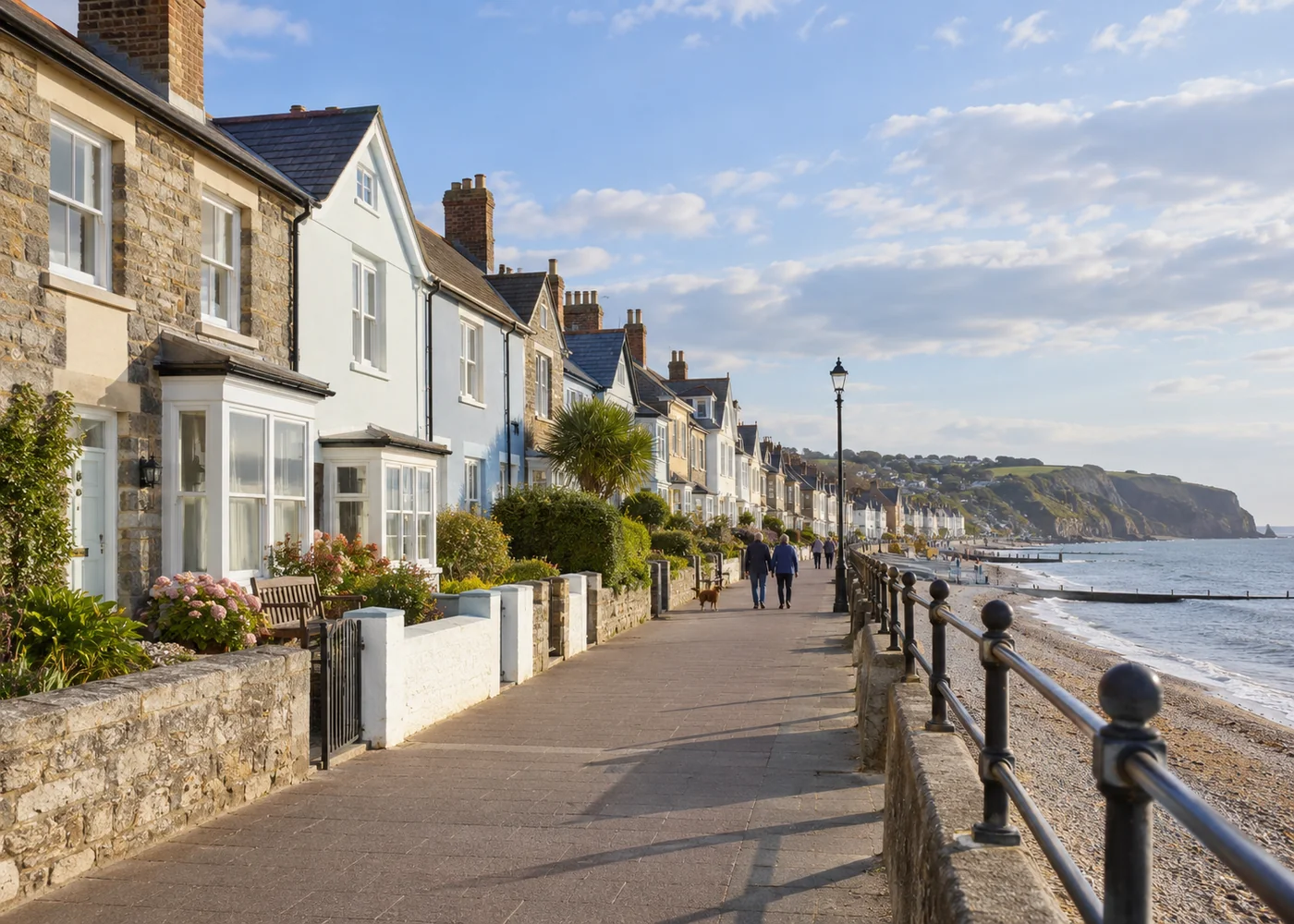
Look at the street as well as the sea
The view from a seafront cottage can be the first thing you notice and the only thing a listing photograph emphasises. Look in the other direction too. A road, promenade, café terrace or public seating area may sit between the property and the water. Those details shape privacy and noise as much as the view shapes the appeal.
Think about when you expect to be at home. Someone spending most days out may care mainly about breakfast and evening light. Someone planning to read indoors for long afternoons may be more sensitive to passing activity. Neither preference is unusual; the useful step is to match it with the actual position.
Check which room faces the sea. A glimpse from an upper window is different from a broad view from the sitting room. If the outlook is the main reason for choosing the property, ask for clarification rather than supplying the best interpretation yourself.
Enjoy the easy connection
One advantage of a seafront base is the possibility of a short outing without preparation. You may be able to walk on the promenade, sit outside for a few minutes or look at the weather before deciding on the day. Confirm the route from the door, including crossings and steps, so that this convenience is real.
Daily errands can be part of the pleasure. A walk for bread or a return after dinner lets you see the seafront at different times. You do not have to spend a whole day on the beach to benefit from staying nearby.
At the same time, avoid assuming that every waterside area remains pleasant in all conditions. Follow local advice when weather affects access, and choose another route if waves or wind make the promenade unsuitable.
Think about the quieter rooms
Look at the whole layout rather than only the front-facing photograph. A rear bedroom or a separate sitting area may provide a useful contrast to a lively frontage. Ask factual questions about the arrangement instead of seeking a promise that the location will always be quiet.
Consider privacy during the day. If pedestrians pass close to the main window, you may keep blinds partly closed, which changes how you use the view. A higher position can feel different, though it may introduce stairs. The right choice depends on the people staying.
On a longer visit, try a morning walk in one direction and an evening look in the other. You need not use the busiest section every time. A little local knowledge helps you find the version of the seafront that suits your pace, including a place to stop without the bustle of the main entrance.
Find a retreat
For a longer stay, it helps to have a quieter option close by: a side street café, a garden or simply a comfortable room away from the busiest frontage. That gives the holiday a balance between watching the town and stepping back from it.
If uninterrupted quiet is essential, a street behind the seafront may offer a better compromise. You can keep the short walk to the sea while changing the immediate atmosphere. The best coastal address is the one that suits your routine, not necessarily the one nearest the railing.