Keeping a coastal day flexible
A flexible coastal day has one clear idea and room to change its order. Keep alternatives close enough that a shift in weather does not become a long drive.
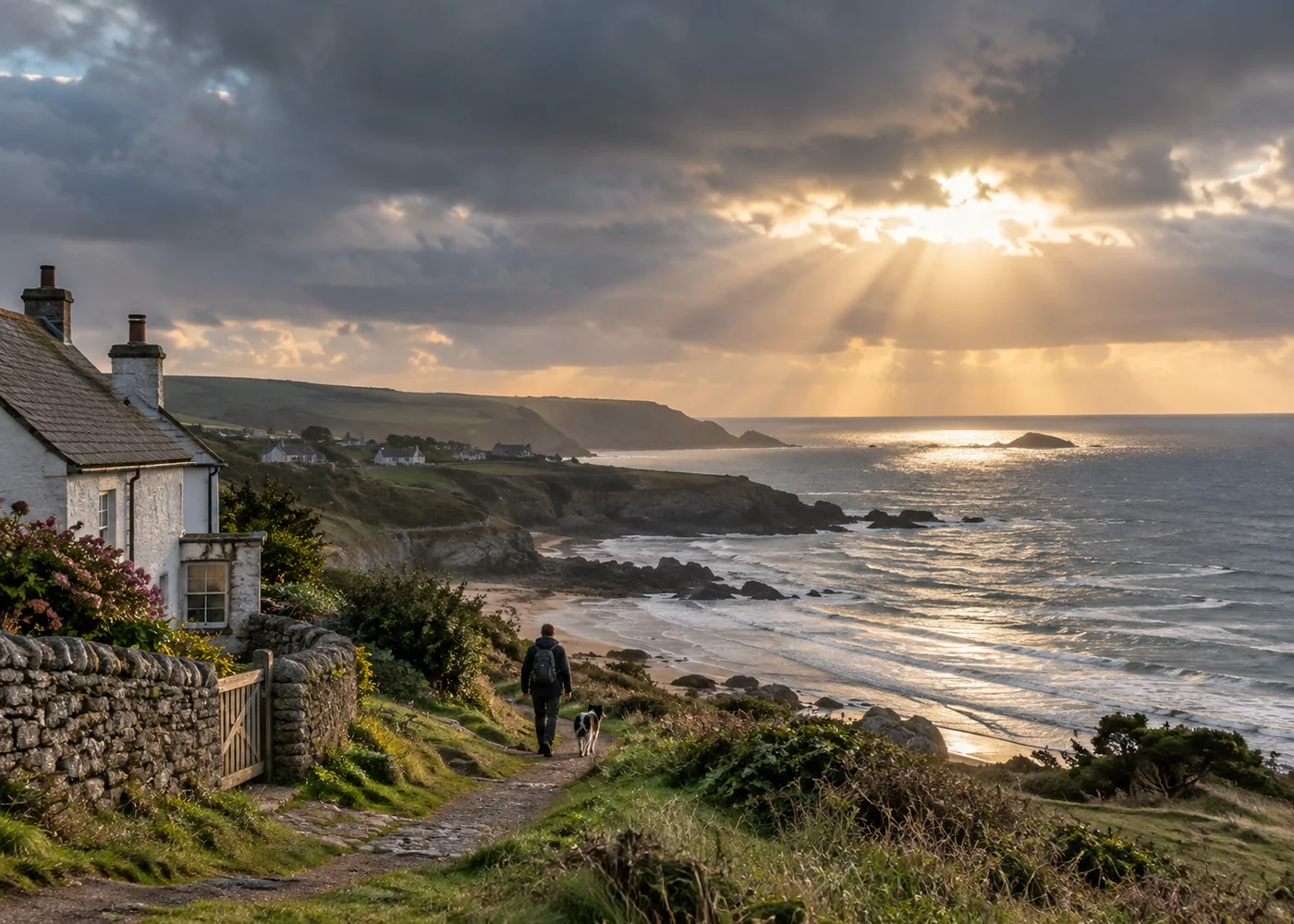
Separate the essential from the movable
Before leaving the cottage, decide what matters most about the day. It may be a walk, a meal with friends or simply seeing the sea. The rest can often move. That distinction makes it easier to adapt without feeling that the whole plan has failed.
Check a current forecast for the specific area, including wind and any warnings relevant to your outing. Look at local notices too. A broad regional sunshine symbol does not describe every exposed stretch of coast, and conditions can differ from the sheltered place where you are staying.
Choose an alternative you would enjoy in its own right. A town visit or indoor attraction works better than a vague promise to find something if it rains. Confirm the practical details once, then keep the option available rather than repeatedly searching on the day.
Use the first suitable window sensibly
If conditions suit the main outdoor plan in the morning, consider doing it then and moving lunch or shopping later. Avoid postponing it automatically because the original schedule said afternoon. At the same time, do not rush into an outing without the preparation it needs simply because the sky has brightened.
Keep the scale manageable. A short local walk is easier to fit around changing conditions than a long drive followed by a substantial route. Staying in a cottage gives you the option of returning between outings, which can be more comfortable than carrying everything for the whole day.
For a group, explain the change clearly and early. People adapt more easily when they know whether the new plan is a brief stroll or a different destination altogether. Give anyone who needs particular preparation time to make it.
Know when to stop adjusting
Sometimes the best decision is to abandon the outdoor idea for that day. Repeatedly driving towards brighter sky can consume the afternoon and leave everyone tired. Choose the indoor or local option, then enjoy it without checking the forecast every few minutes.
Respect closures and local advice even if conditions appear to improve. A visible change in the sky does not necessarily remove the reason a route or frontage is restricted. Let the responsible local information guide the decision.
Back at the cottage, use the time well in an ordinary sense: cook, read or rest. Flexibility is not only the ability to fit in more activities. It is also the ability to recognise when a smaller day is the right one.
Keep practical bookings in proportion
Where an activity requires advance booking, understand its change arrangements and the conditions under which it operates. Do not assume every provider will alter a reservation because your preferred weather has not appeared. Choose fixed commitments carefully and keep the rest of the day lighter.
A meal booking can provide a useful anchor if the route to it is straightforward. A chain of timed activities is harder to adapt. One well-chosen commitment often gives enough structure while leaving room for the coast to influence the hours around it.
Keep tomorrow separate
Do not automatically overload the next day with everything postponed. Reassess what you still want to do and choose the most worthwhile option. A holiday becomes hurried when every changed plan creates a debt to be repaid.
The coast will offer a different combination of light, water and weather each day. Work with that variation, and the stay can feel varied without needing a rigid schedule or a succession of emergency alternatives.