Compare two cottages without losing the important details
Two appealing cottages can be difficult to compare because each photographs its strongest feature. Give the ordinary parts of the stay equal attention.
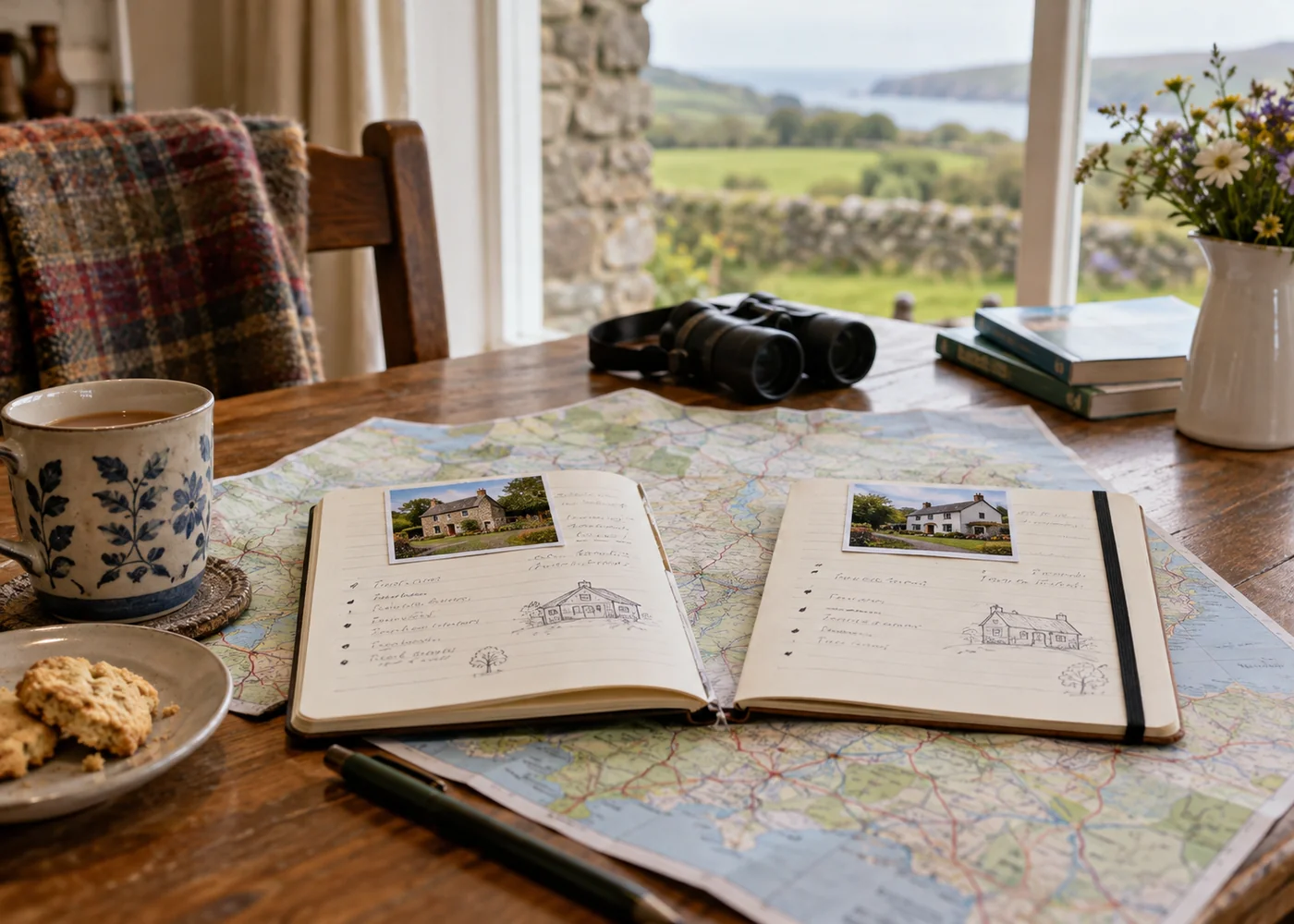
Make a small set of priorities
Begin with the things that would genuinely change the booking. These might be a workable bedroom arrangement, a particular access requirement, room for a dog, or a location that avoids daily driving. Keep essentials separate from attractive extras.
Ask everyone whose needs affect the choice before producing a shortlist. A beautiful sitting room cannot compensate for a sleeping arrangement someone finds uncomfortable. A quick conversation at this stage is easier than discovering after payment that different people imagined different holidays.
Limit the number of priorities you compare closely. If every feature receives equal attention, a minor decorative preference can obscure an essential practical difference. You need enough structure to make a decision, not a spreadsheet that becomes another project.
Compare the same stay
Use the same dates, guest numbers and intended room configuration for both properties. Check the complete quoted amount and what it includes, rather than comparing an introductory nightly figure for one with the final amount for another.
Read the booking terms directly for each property. Note any conditions that could affect your plans and ask the provider about unclear wording. Do not assume two cottages on the same platform use identical arrangements.
Compare arrival and departure times as well. A lower price may accompany timings that leave less useful time on a short break, while a farther location may add travel expense or effort. These are practical differences to weigh, not reasons one property is automatically better value.
Run an ordinary day through both
Imagine breakfast, a day out and an evening indoors. Where does everyone sit? How far is the first shop? Where do wet coats go? Can people who want quiet separate from those watching television?
Then imagine a day of poor weather. The cottage with the larger garden may lose some of its advantage, while the one with a comfortable second room becomes more appealing. This does not mean booking only for rain; it means checking that the stay works without its most photogenic condition.
Consider the final evening and departure too. A very small kitchen, limited luggage space or awkward parking can affect the routine repeatedly. Those details may matter more than a special feature used once.
Mark uncertainty rather than filling it in
If one listing clearly describes parking and the other says only “available”, leave the second point unresolved until you ask. Do not give an unknown feature the benefit of an imagined ideal arrangement.
Send focused questions to both providers where needed. Keep the responses with your comparison so that a friendly tone or a particularly attractive photograph does not replace the actual facts.
A missing detail is not evidence of a bad property. It is simply a gap that needs filling if the detail matters. If the answer remains unavailable, account for that uncertainty honestly in the decision.
Choose the compromise you prefer
Most comparisons end with a trade-off. One cottage may have more space and require more driving; another may have a better location and a smaller kitchen. State the choice in those plain terms.
Consider who bears the inconvenience. A difficult sleeping arrangement affects one person every night, whereas a modestly longer shared drive affects everyone occasionally. Treating all drawbacks as equal can hide an unfair distribution.
Once the essentials are met, personal preference is a reasonable deciding factor. A view, a room's atmosphere or a place you have wanted to visit can be enough. You do not need to prove that the winning cottage is objectively best.
Save the details that influenced the decision and stop reopening the comparison unless something material changes. The purpose of comparing is to choose a place where the group can relax, not to spend the holiday wondering whether the other sofa would have been slightly more comfortable.