Check where the cottage sits, not just the nearest town
A cottage's nearest named town is an introduction, not a precise description of where you will stay.
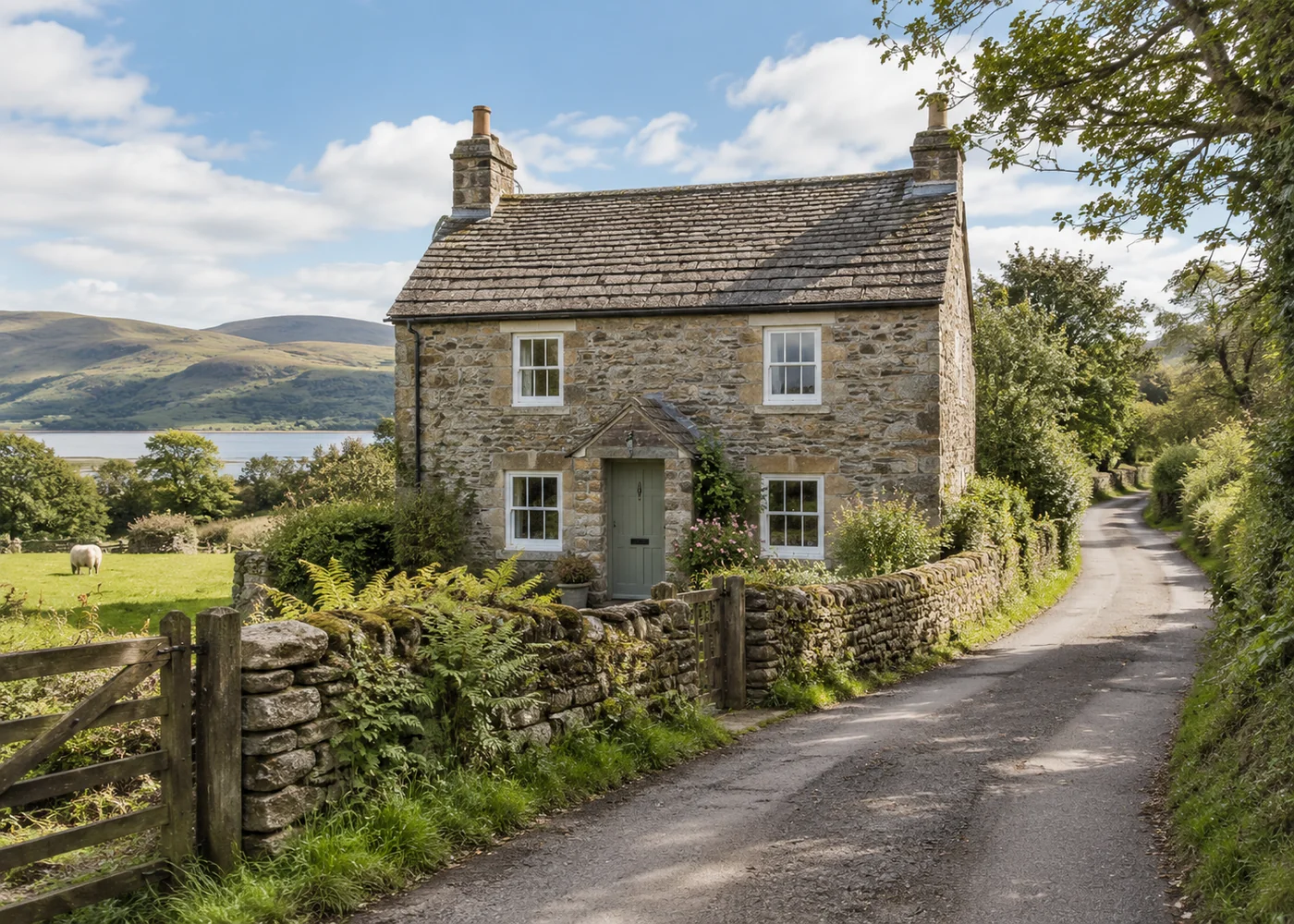
Pin down the setting
Establish whether the property is in the village, on its edge or several miles away. A familiar place name in the listing may describe the wider area rather than the immediate surroundings. Ask for enough location information to understand the setting before booking, while respecting any limits on publishing a private address.
Use the supplied map carefully. Check whether the marker is exact or approximate, and do not assume a broad circle identifies a particular lane. If the exact address is only released later, ask concrete questions about distances and routes that matter to you.
Look at the relationship to roads, neighbouring buildings and open land. A cottage surrounded by countryside may still sit beside a busy route. A village property may have a quieter rear garden than its frontage suggests. Neither can be judged from the regional label alone.
Choose your daily radius
List two or three things you are likely to do repeatedly: buy food, walk, reach the coast, or visit family. Consider the journey to those places from the cottage rather than from the centre of the nearest town.
Driving distance and driving time are not interchangeable. Narrow lanes, seasonal traffic and the final approach can make a short-looking journey less convenient. Use mapping as a planning aid, then allow sensible margin instead of building the day around an exact estimated arrival.
For a stay without a car, verify current transport services and the complete route between stops and the cottage. A nearby railway station is only helpful if the last part of the journey is workable with luggage. Do not rely on a taxi being available without checking.
Decide how isolated you want to feel
Seclusion can be a pleasure when you bring food and intend to stay close to the property. It may feel different when every forgotten item requires a drive. Ask about the nearest practical shop and check its current opening arrangements directly if you expect to depend on it.
Mobile reception and broadband also deserve attention in a remote setting. Save arrival details offline regardless, but make connectivity an explicit requirement if someone must remain contactable. The landscape does not tell you whether a particular network works indoors.
Consider evenings. If you imagine walking out for dinner, check the actual route and return conditions rather than just the distance to a pub. A country lane that is manageable by car does not automatically make a suitable walk after dark.
Read the immediate environment
Farm activity, shared courtyards, public paths and nearby holiday units can all shape a stay. Ask about them where they affect your expectations. A working setting can be enjoyable without matching the silence implied by a carefully framed landscape photograph.
Outdoor space also needs context. A garden may face open fields in one direction and a neighbour's entrance in another. If privacy is important, request a wider view or description. A property's location includes what happens just beyond its boundary.
For particular access needs, focus on the parking surface, path and doorway as well as the wider destination. A convenient town location does not resolve an awkward final few metres.
Make the trade-off explicit
No location gives every advantage at once. A central village cottage may offer easy shopping and less privacy; a secluded property may offer quiet surroundings and more driving. Decide which compromise suits this trip rather than comparing each place against an impossible combination.
Share the choice with the group in ordinary terms: groceries require a drive, the beach is a planned outing, or the village can be reached on foot by a confirmed route. Those facts help everyone arrive with the same expectations.
The right setting is the one that supports the days you want to have. A famous area name can begin the search, but the cottage's actual position is what determines whether those days feel relaxed or repeatedly inconvenient.