Pack for the cottage you booked
The most useful packing list begins with the property you chose and the days you expect to have.
Read before adding
Review the listing and arrival information for what is supplied. Check bedding, towels, kitchen essentials and any requested equipment. Resolve important gaps with the owner rather than packing duplicates of every household item.
Separate definite needs from things you might use in an imagined version of the holiday. Walking clothes for planned walks deserve space; several specialist cooking tools for meals nobody has agreed to make may not.
Keep the list short enough to use. A few headings for clothing, personal essentials, food and practical items can be more effective than a borrowed list containing every possible travel accessory.
Pack for the building
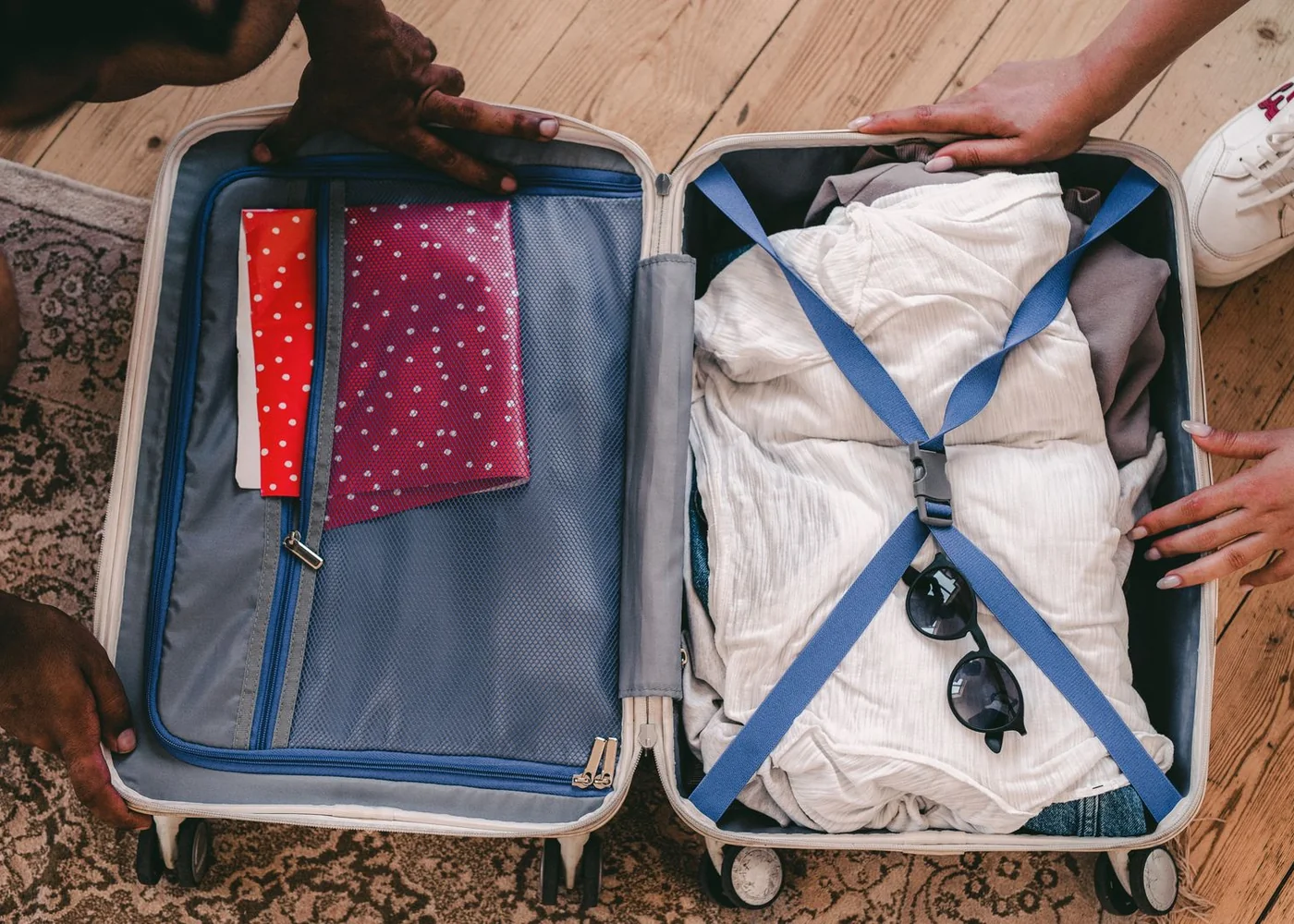
Consider the route from parking to the bedroom. Stairs, a gravel path or limited storage may influence the kind of bag you bring. Choose luggage you can handle comfortably, and avoid overloading one case merely to reduce the number of bags.
For a compact room, soft bags may be easier to store when empty, but they are not always the right choice for protecting belongings. Match the luggage to what it carries as well as where it will go.
Bring normal indoor footwear or layers if they suit you, especially for a cool-weather stay. These are comfort choices, not a substitute for a property that meets essential heating or access requirements.
Make the first evening accessible
Put overnight essentials and the first meal where they can be reached without unpacking the entire car. Keep arrival directions, keys or codes available offline and separate from a bag that may end up at the bottom of the boot.
Transport food according to its requirements, including suitable cold storage where needed. Plan around the actual journey and stops rather than assuming everything will remain fine until you happen to unpack.
A few breakfast essentials can remove the need for an early shopping trip. Do not count on an unconfirmed welcome supply, but avoid carrying a week's groceries before you understand the cottage's storage.
Choose clothing around activities
Look at the planned outings and current weather information, then pack useful combinations rather than a separate complete outfit for every possibility. Include whatever footwear and outer layers are appropriate to your own activities and experience.
Check laundry and drying arrangements before reducing spare clothing too aggressively. A washing machine does not guarantee quick drying, especially during wet weather. Keep a sensible margin for essentials if a wash is delayed.
Give wet or dirty clothing a way to travel separately. Reusable bags can help organise the return journey, though damp items still need appropriate care rather than being left sealed indefinitely.
Bring personal essentials deliberately
Keep necessary medicines and personal care items in the way appropriate to their instructions and your usual needs. Do not depend on a nearby shop for something essential or specific. For medical storage or travel questions, use appropriate professional guidance.
Pack chargers for the devices you will actually use, and check that they are suitable for the destination's supply. Avoid bringing a collection of adaptors or leads without a clear purpose. Use electrical equipment according to its instructions and the property's arrangements.
A small selection of books, games or other quiet activities can be useful in poor weather. Choose things that fit the group's interests and the available space, rather than treating indoor entertainment as another large suitcase.
Keep kitchen additions modest
Consider portion size for small consumables. A clearly labelled, appropriate container of something you use daily may take less space than a new family-sized package, provided it is safe to transport and retains the information you need. For anything with important storage, ingredient or safety instructions, keep those instructions available. Saving a few centimetres in a bag is not worth losing information that helps people use a product correctly.
If a particular coffee method, spice or small utensil matters, confirm whether it is provided and bring it if practical. Label and contain food appropriately. Do not bring hazardous or poorly contained supplies simply because they are familiar from home.
Avoid packing large pans or appliances to compensate for a kitchen that does not support your intended stay. That may be a sign to simplify the meals or reconsider the property. The accommodation should do most of the work of being equipped.
For group travel, agree who brings shared items. Several people independently packing the same basics adds weight without improving the stay.
Leave room for the return
Allow some space for groceries, purchases or clothing that will not repack as neatly. Keep a separate place for rubbish during the journey and follow appropriate disposal arrangements.
Make a brief list of easily forgotten items you brought, especially chargers, specialist equipment and things left in a drying area. That list becomes useful on departure without requiring a full inventory of every sock.
Before leaving home, check the true essentials once more: arrival information, required personal items, appropriate clothing and the means to contact the property. Many minor omissions can be handled during the stay. Packing well is about protecting the important parts and reducing effort, not proving that nothing could ever be missing.