What the photographs tell you about the stairs
An old staircase can be part of a cottage's appeal and an important practical limitation. Look at the whole route, not just the attractive banister.
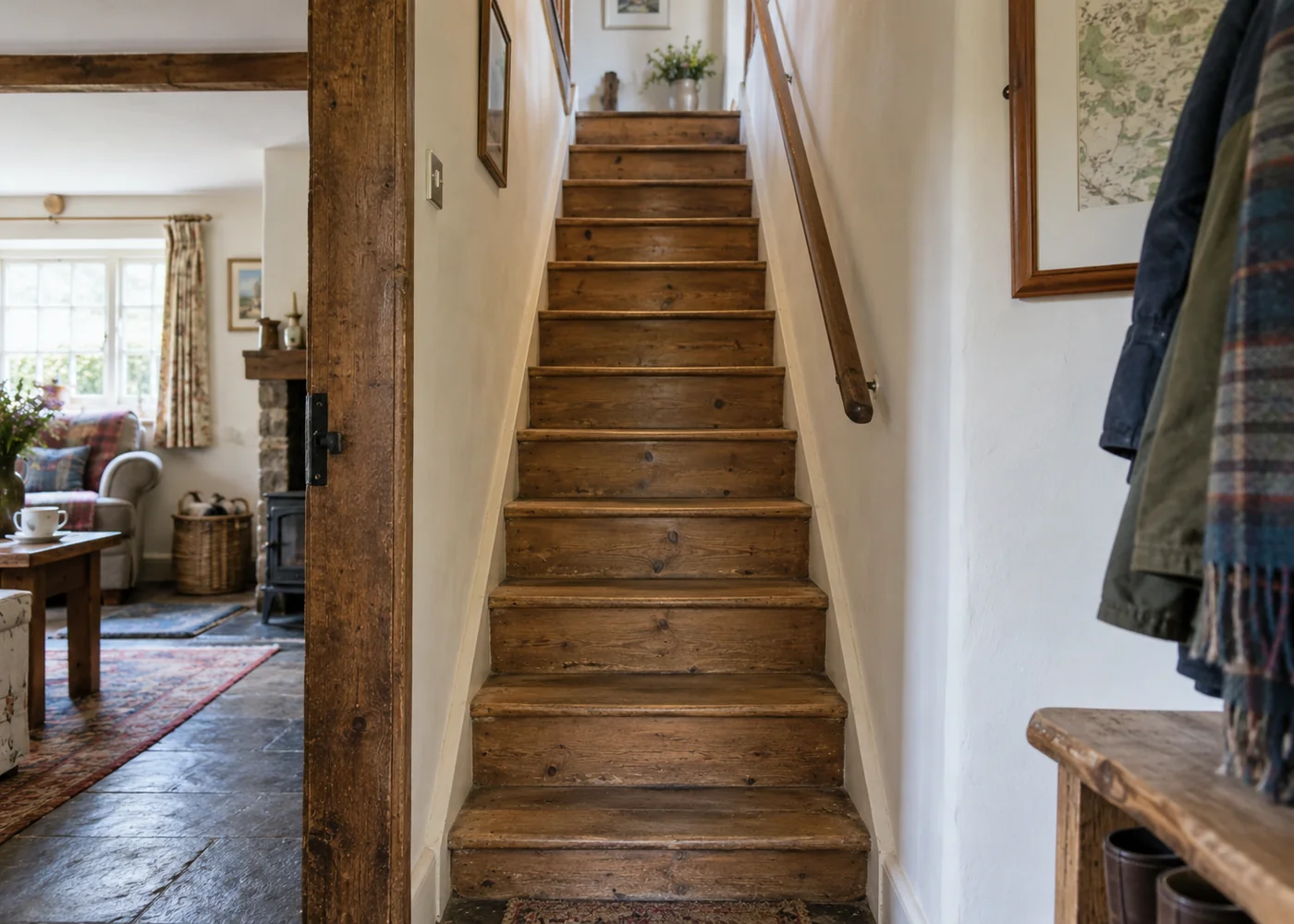
Find the staircase in the layout
Establish which rooms are upstairs before judging whether the stairs suit your group. Bedrooms above a ground-floor bathroom create a different routine from bedrooms with a bathroom on the same landing. A downstairs bedroom may help one guest, but only if the other rooms they need can also be reached comfortably.
Look for photographs that show the bottom, the turn and the top. A close-up of timber steps may conceal a tight bend or limited headroom. If the stairs barely appear in the listing, ask for a clear photograph from each end. The intention is not to diagnose a building from pictures; it is to identify questions that need a factual answer.
Open treads, narrow sections and steep-looking flights deserve clarification when they affect your needs. Ask about the handrail, lighting and any particularly low point. Avoid relying on broad descriptions such as “traditional stairs”, which can cover many arrangements.
Think about repeated journeys
Ask where a stair gate, if supplied, is meant to remain when not in use. A loose barrier leaning on a landing can obstruct the very route it is intended to help manage. Follow the owner's arrangement, keep the stairs clear and do not attach or alter fittings without permission. Practical questions about storage are worthwhile alongside questions about the staircase itself.
Imagine carrying a bag upstairs on arrival, then using the same route when tired or half awake. The first journey is not the only one that matters. Someone who can manage a flight once may not want to use it several times every evening.
Consider footwear and luggage as practical planning choices. Smaller bags may be easier to handle than one large rigid case, although luggage should never become an excuse for booking an unsuitable layout. Leave the route clear once you unpack, and do not use steps as convenient storage for shoes, toys or bags.
For young children, ask about any supplied stair gate and its intended location before travelling. Do not assume a gate can be safely fitted to every older staircase or bring one expecting it to fit without permission and proper compatibility. The presence of a gate does not replace supervision or make the rest of the layout suitable automatically.
Make the decision before booking
If precise dimensions are needed, request them. Photographs are useful for context but cannot establish tread depth, width or headroom reliably. Explain which part of the route matters so the owner can respond to the actual concern rather than guessing what “easy stairs” means.
A cottage can be lovely and still be the wrong choice for a particular group. Where the answers leave an essential issue unresolved, a different property with a simpler layout may make the whole stay more relaxed. This is especially true for a longer visit, when an awkward daily route is less easily dismissed as a brief inconvenience.
Keep the relevant reply with your booking information. On arrival, locate the light switches and check the route before taking luggage upstairs. If the actual arrangement differs materially from what was described, contact the manager rather than trying to improvise a solution with furniture or temporary barriers.