Watching garden birds from a cottage window
A cottage window can be a good place to notice birds without organising a separate outing. Let the garden's ordinary activity set the pace.
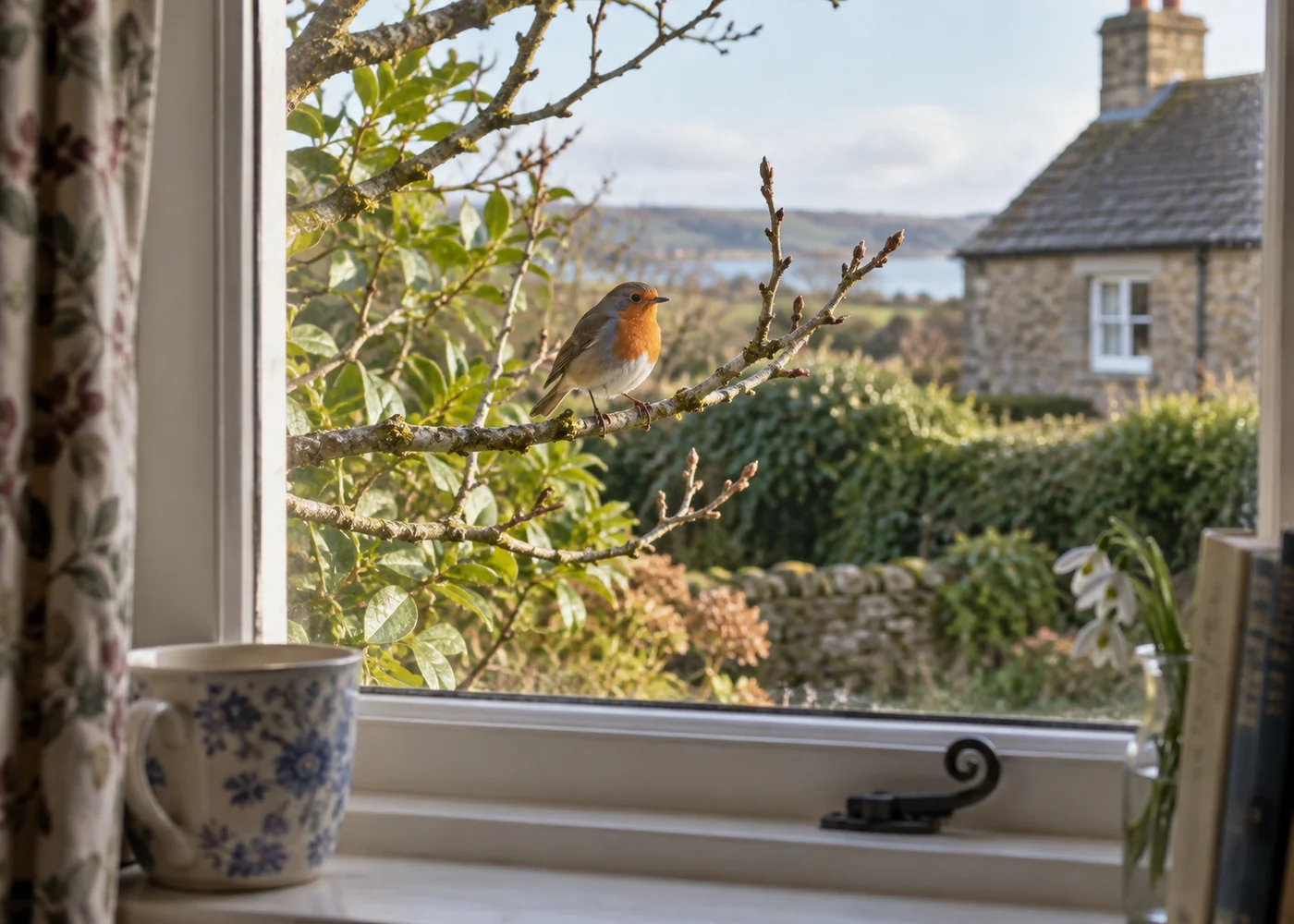
Find a comfortable view
Choose a window that looks onto vegetation, a wall or another place where birds naturally pause. Sit a little back from the glass and give the view time. Constant movement from room to room can mean missing the small pattern of arrivals and departures that makes watching interesting.
There is no need to begin with identification. Notice size, shape and behaviour: whether a bird works along a branch, searches the ground or waits before approaching a feeder. If you have binoculars, keep them nearby rather than turning the session into a search for equipment every time something appears.
A simple field guide can help later. Make a brief note of what you saw instead of trying to force an immediate answer from a distant glimpse. It is perfectly reasonable to leave an identification uncertain. The pleasure does not depend on producing a complete list.
Use what is already there
Do not introduce food or alter feeders without the host's permission. A property may have its own routine, or there may be reasons not to feed birds there. Watching existing activity avoids changing the garden simply to improve a holiday view.
Keep the observation gentle. Avoid tapping the glass, calling birds closer or following them around outside. If you take photographs, accept the limits of the view rather than opening a window suddenly for a better shot. A slightly distant image can still record the moment.
Mornings may be convenient because you are already sitting with breakfast, but watch whenever the garden is active. Different weather and times of day can change what you notice. Returning to the same window for a few minutes can be more rewarding than waiting for a dramatic sighting.
Let it remain an ordinary pleasure
Birdwatching from the cottage suits a rest day, a rainy pause or someone who prefers to stay behind while others walk. It gives the setting a life beyond the view itself. Share an observation if others are interested, but do not turn every movement outside into an announcement that everyone must attend.
By the end of the stay, you may recognise a favoured perch or a regular visitor. That small familiarity can make a temporary place feel known, without needing to travel anywhere at all.