A slow afternoon beside a canal
A canal outing offers boats, bridges and a changing view at a gentle pace. Choose a suitable stretch and leave time to watch rather than cover distance.
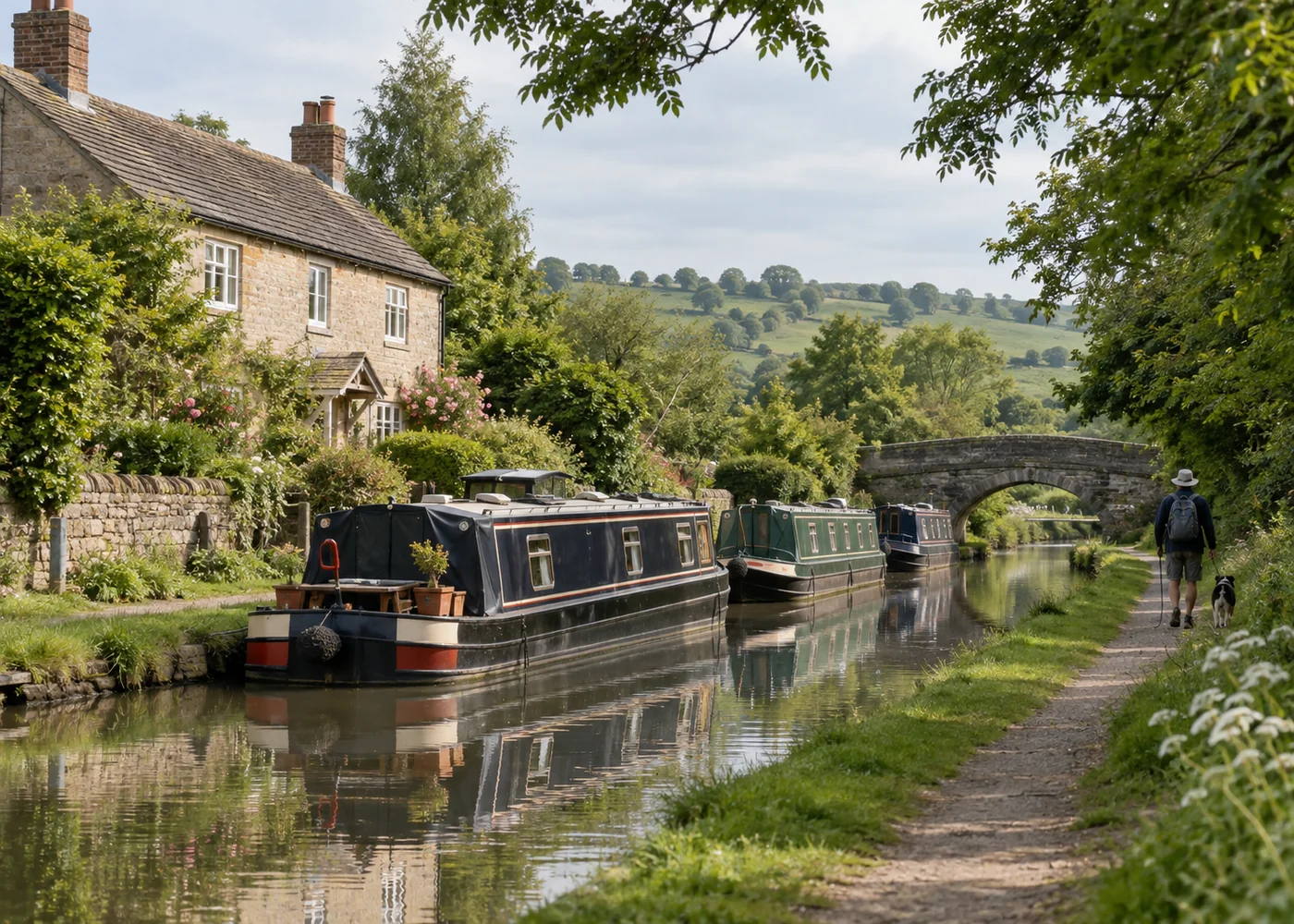
Pick a useful starting point
A canal on the map does not tell you everything about its towpath. Surfaces, width and access points vary, and a bridge approach can be steeper than the path itself. Look for current information from the waterway manager if level access or a particular surface matters to your group.
Choose a start with a clear way onto the path and a realistic place to park or arrive by public transport. A nearby village can add a café or shop without requiring a second long journey. Make sure the connection to the water is actually available to visitors rather than assuming every bridge has public steps.
An out-and-back walk works well here. You can turn around when the group is ready and see the same boats and buildings from another angle. A circular route that adds an unappealing road section is not necessarily an improvement.
Watch the working details
Locks and bridges can give the afternoon a focus. Watch from a suitable place without obstructing the people operating boats or using the path. The process is interesting precisely because it is part of ordinary waterway activity, not a performance arranged for visitors.
Allow room for other towpath users. Stop to look at a boat or take a photograph where people can pass comfortably. Moored boats are often people's homes, so avoid peering through windows or stepping onto equipment. A friendly greeting does not make a private boat part of the attraction.
Stay attentive near the water and keep children appropriately supervised. A relaxed pace should still be an aware one. If the path becomes too narrow, muddy or busy for comfort, turning back is a sensible way to preserve the outing.
Use a bridge as a turning point
A visible bridge can give a modest walk a clear shape, but confirm the route before assuming it is reachable along the towpath. If it is farther than expected, turn back earlier. The landmark is a planning aid, not a target that overrides comfort.
At a lock, watch the sequence from an appropriate public position without touching equipment. If somebody explains what is happening, enjoy the conversation while allowing them to concentrate on their task. Avoid gathering a group where it blocks the route.
Waterways often bring together people moving at different speeds. Keep belongings close when stopping, and allow space rather than spreading across the path. This makes the afternoon more pleasant for everyone and gives you a better chance to observe quietly instead of repeatedly stepping out of the way.
A café stop near the beginning or end can be simpler than depending on one halfway along. You retain control of the distance and can finish whenever the group is ready.
Finish before it becomes a march
A canal walk can be deceptively easy to extend because the next bridge always looks close. Decide roughly where you might turn around and remember that the return takes time too. A pause at a bench or a café can be more enjoyable than adding another mile.
Back at the cottage, the remembered details may be small: painted boat names, reflections under a bridge or the sound of a lock filling. A short stretch often supplies plenty to notice. There is no need to follow the canal far for the afternoon to feel different from a country walk.