A day near the cottage without the car
Leaving the car parked for one day can change the pace of a cottage holiday. First make sure the immediate area offers a day you would actually enjoy.
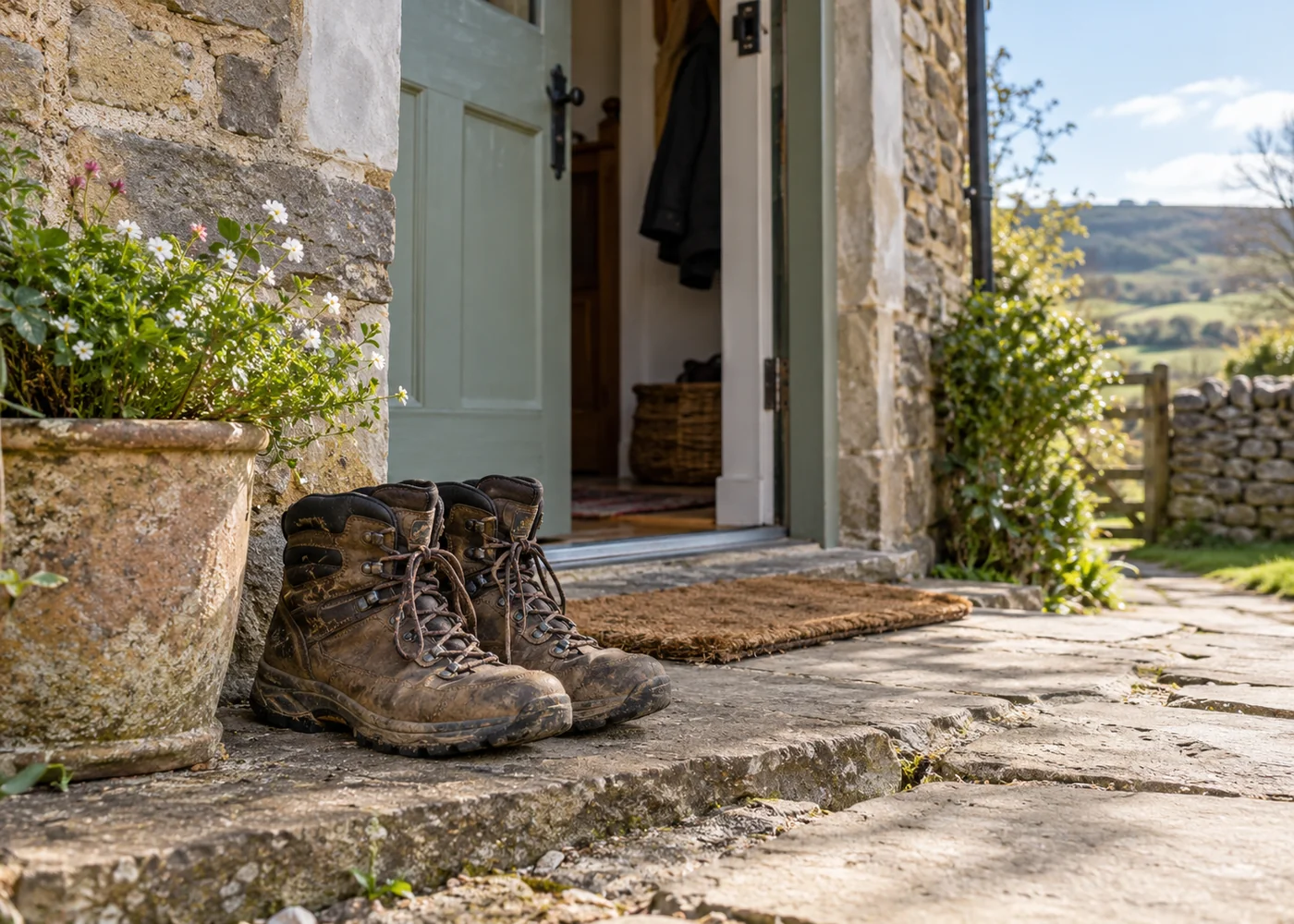
Start at the door
A car-free day works best when it is based on the routes around the cottage, not on an idealised picture of village life. Look at what can be reached comfortably on foot. A shop, a public path and a pleasant place to sit may be enough. A cottage surrounded by roads without suitable walking connections may call for a different plan.
Check the whole route to your main destination. The final short section matters as much as the attractive middle. If there is an awkward road crossing or a long climb back, decide whether it suits everyone before setting out. Keeping the car parked should not require making a day unnecessarily difficult.
Do any essential shopping in advance so that the day is not derailed by a missing ingredient. That leaves local errands as pleasant options rather than obligations. You can still buy bread or something for lunch if the nearby shop is open.
Give the day one anchor
Choose one modest outing, perhaps a village circuit or an established walk, and leave the rest open. Without driving, there is less need to make a journey justify itself through several stops. You can return for lunch, read for an hour and go out again later if you wish.
For a group, agree whether everyone wants to do the same thing. Someone may prefer to stay at the cottage while others take a walk. A day without transport logistics can make separate choices easier, provided everyone has keys and knows the plan.
Keep a practical fallback. A bus or taxi may be available, but do not assume a rural service can appear on demand. If transport becomes necessary, use current local information and accept the change rather than treating it as a failed experiment.
Try a loose morning and afternoon rhythm
An easy pattern is to make the morning the more active part, return for lunch and leave the afternoon open. That avoids carrying a day's supplies and gives anyone who wants a rest a natural stopping point. Others can take another short suitable walk later without making the whole group start again.
If you intend to read, draw or play a game, put the relevant things somewhere ready to use before leaving. Otherwise the afternoon can disappear into searching bags or browsing for something to do. A quiet day works best when its simple pleasures are available.
Keep essential items with the person who needs them, particularly if the group separates. Keys, contact details and any required personal supplies should not all leave with one walker. The freedom to do different things depends on those practical arrangements being clear.
Notice the smaller radius
Walking the same lane twice can reveal more than driving through several villages. The light changes, a shop opens, people return home. Those ordinary shifts are part of the appeal of staying somewhere rather than merely passing through.
Afterwards, note which nearby route and shop hours worked well. You may use them again on a day with a larger outing, fitting a short local walk around it. Keep the details handy by the door so that the next small excursion takes less preparation.