The appeal and the practicalities of an isolated cottage
A cottage away from other houses offers a particular kind of freedom. It also moves small everyday tasks further from the front door.
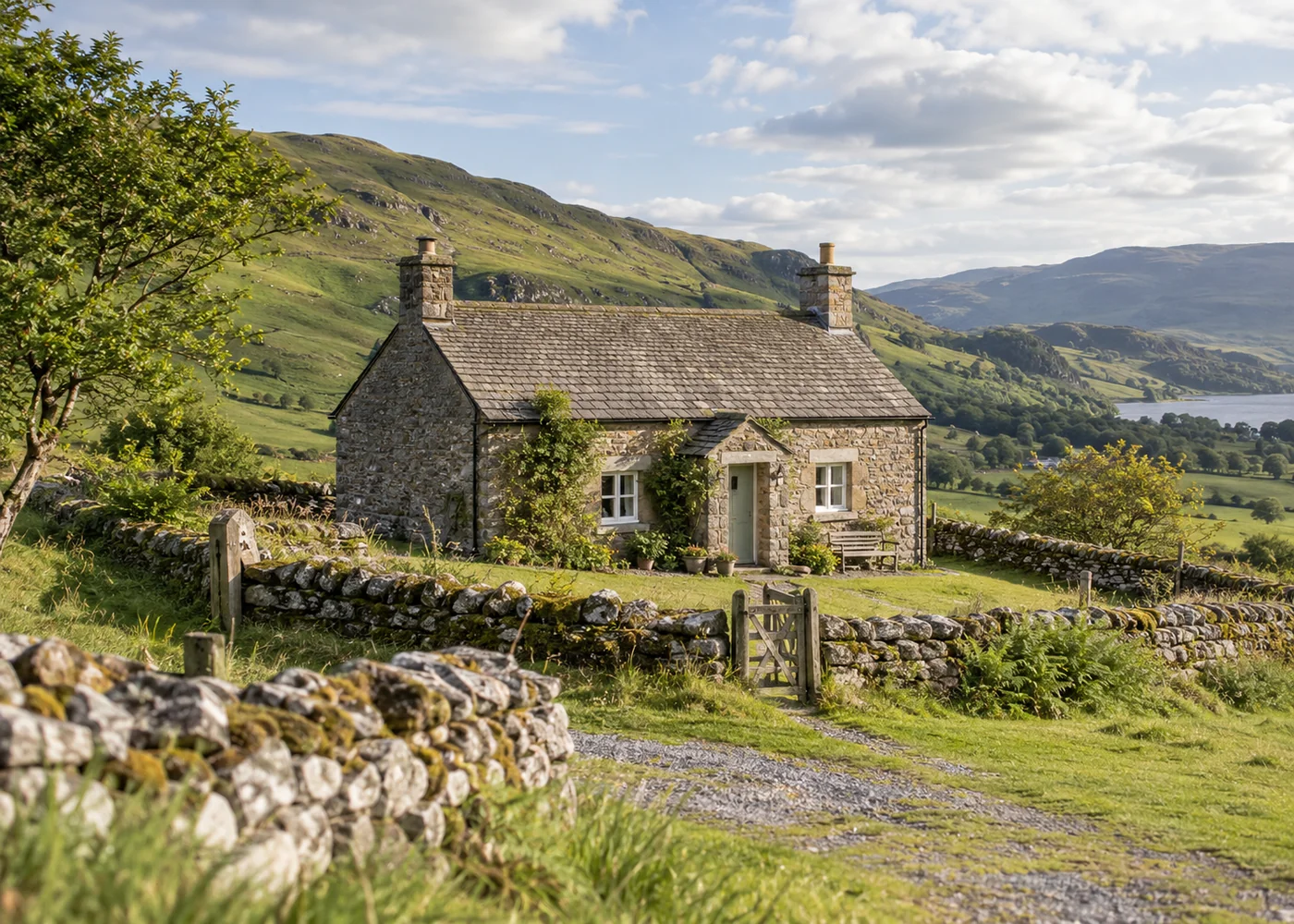
Picture an ordinary evening
The attraction of an isolated cottage is easy to understand. There may be no street outside, no passing conversation and no reason to close the curtains as soon as the lights go on. Breakfast can happen slowly. An afternoon can disappear into a book without the feeling that a village centre is waiting to be explored. For people whose normal days involve traffic and shared space, that distance can be part of the holiday itself.
It helps to picture the less photogenic hours as well. Imagine arriving after a long drive, discovering that you forgot breakfast supplies, or deciding at seven o'clock that nobody wants to cook. How far is the nearest useful shop or meal? More importantly, what is the journey like? A short distance along a winding single-track lane may take longer and require more attention than a larger distance on an ordinary road.
An isolated location is most comfortable when it matches the way you like to spend evenings. People who enjoy cooking, reading and remaining in one place may find very little to miss. Those who like a spontaneous choice of restaurants can feel constrained even when the cottage is lovely. Neither preference needs correcting; it just needs recognising before booking.
Understand the approach
Ask for the practical arrival information before travel, including the final turning and any unusual access arrangements. A navigation pin is not the same thing as clear directions. Rural properties can share a postcode, and an unmarked track may look less obvious in rain or darkness than it did in a bright photograph.
If the access is described as a track, find out what that means for an ordinary car and for the season of your visit. Avoid making assumptions from the word alone. Check whether gates need opening, whether other vehicles use the route and where you should stop while unloading. A first arrival in daylight makes unfamiliar details easier to understand.
Consider the driver's experience too. Someone who enjoys rural driving may regard the lane as part of the pleasure. Someone uncomfortable with reversing to passing places may not. It is better to choose a less remote base than to begin and end every outing with a journey that one person dreads.
Give the first day some margin
Bring enough familiar food for the first evening and morning, while leaving room to buy things locally later. This is not a suggestion to pack a week's worth of everything. It is a way to avoid making the opening hours of an unfamiliar shop the deciding factor in how the holiday begins. Include anything that would be genuinely difficult to replace quickly.
Download the information you need before leaving a reliable connection. Confirm how the host can be reached and keep the property address accessible to everyone in the group. A quiet location does not automatically have poor reception, but a particular network's performance should not be guessed from the landscape. Ask if connectivity is essential to your plans.
It is worth agreeing on a loose pattern for outings. One longer trip that includes groceries may be easier than several small drives. That leaves a day when staying at the cottage feels intentional rather than the result of running out of enthusiasm for the lane. Put books, a puzzle or other things you actually enjoy in the bag, instead of expecting the view to occupy every hour.
Agree what being away means
Different people can interpret remoteness differently. One may expect days without leaving the property, while another imagines long daily drives through the region. Talk about that before choosing the cottage. A shared car can become a point of friction if it is the only way for anyone to go anywhere. Agreeing on a couple of joint outings and a quieter day gives each person a clearer picture of the stay, without turning the week into a timetable.
Remoteness and solitude are different
A cottage can be far from shops yet close to a working farm, a public path or another holiday property. Read the description of its immediate surroundings as carefully as its distance from the nearest town. If privacy is central to the choice, ask where neighbouring windows, shared entrances or frequently used paths are positioned.
The best test is whether the location would still appeal on a grey afternoon when you choose to remain indoors. If the answer is yes, isolation may add something real to the break. If the main attraction is a photograph of the building against empty hills, consider a cottage nearer a village instead. A little less distance can make the whole stay more relaxed without taking away the country setting.