Making room for a market-town morning
A market-town outing works best when there is time to browse, buy something useful and enjoy the town around the stalls.
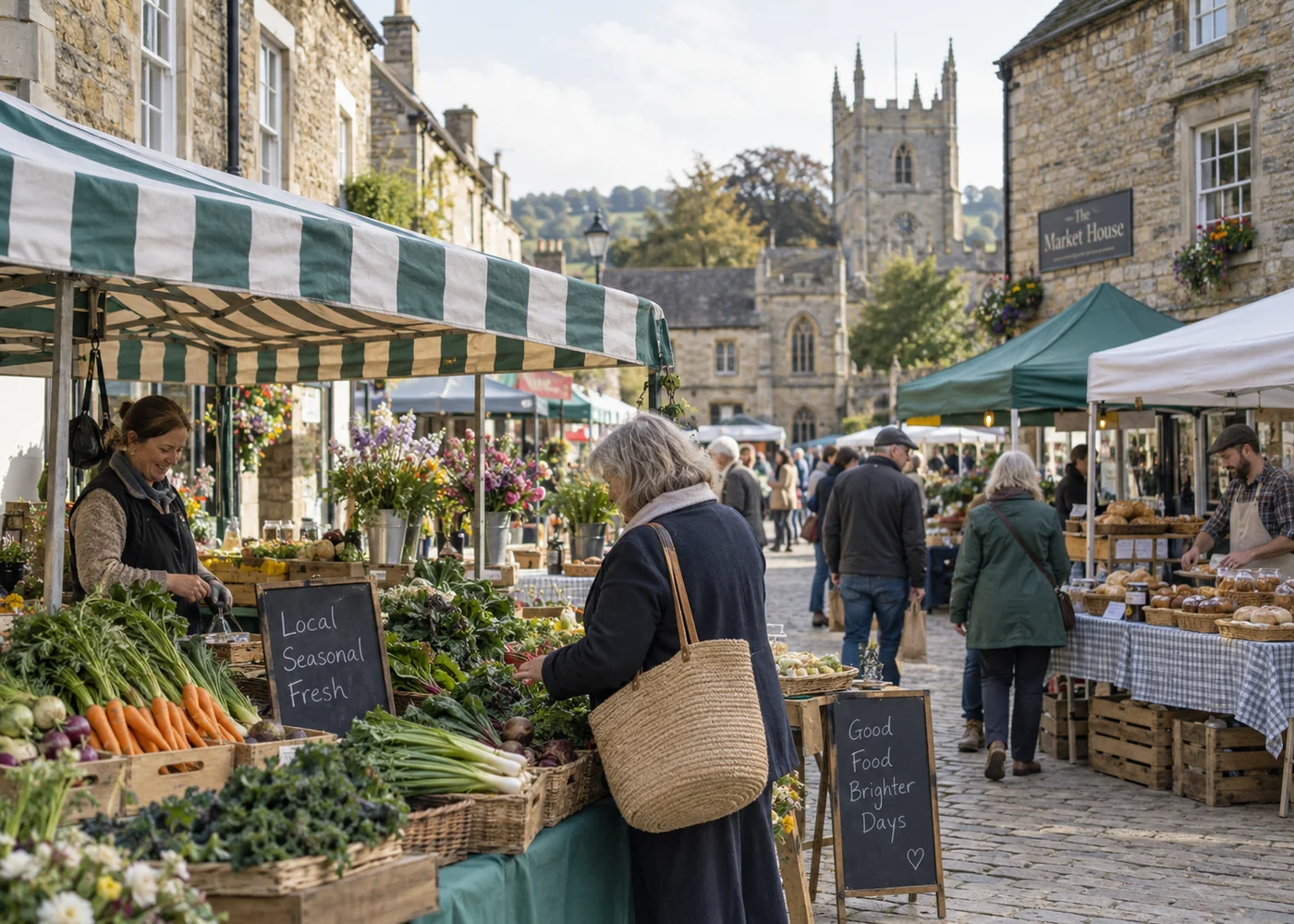
Give the market a real place in the day
A morning market can provide an easy change of pace during a cottage stay. Instead of travelling to a large attraction, you can spend an hour looking at produce, choose something for supper and explore a few streets. The outing has a purpose, but not one that requires a detailed schedule. It is particularly useful in the middle of a longer break, when supplies need topping up and everyone is ready for a different view.
Start by checking that the market actually runs on the date you plan to visit. Weekly markets, monthly food events and occasional craft fairs are different things, though a search result can make them look interchangeable. Use the organiser's current information rather than an old visitor photograph. Holiday periods, special events or bad weather can alter the arrangement.
Then decide what you hope to get from it. If fresh food is the priority, arriving with time to look around makes more sense than appearing shortly before packing-up time. If you mainly want to absorb the atmosphere, you may prefer a quieter part of the session. There is no universally perfect arrival time; the useful choice depends on the particular market and your own plans.
Shop for the cottage you are using
It is easy to come away with ingredients for an imagined kitchen. Before leaving, consider the cooking equipment and storage space at the cottage. A simple meal that uses a pan and an oven tray is less dependent on finding specialist tools. If you plan to buy something unfamiliar, ask the seller about preparation rather than assuming that an appealing display explains everything.
Buy quantities that fit the remaining nights. A beautiful large loaf can become an awkward leftover if you leave the next morning. Sharing a few purchases with the people staying with you often works better than everyone buying independently. Agree on the evening meal first, then leave room for one or two things that catch your eye.
Take suitable bags and think about how food will travel back. If purchases need to remain chilled, plan appropriate cold storage and avoid carrying them around town for hours. That may mean shopping towards the end of the visit or returning directly to the cottage. The practical arrangement should support the outing, rather than turn it into a race against the contents of a shopping bag.
Look beyond the stalls
Leave some time for the town itself. A covered arcade, a bookshop or a small local exhibition can make the morning feel rounded without adding a separate destination. Notice how the market connects to the ordinary shops. The butcher or greengrocer on a side street may be just as useful for the cottage supper as the busiest stall in the square.
Pause somewhere before everyone becomes tired of standing. A café stop is more enjoyable when it is part of the plan rather than an emergency response to shopping fatigue. If the market is crowded, move away from the main flow before discussing where to go next. People carrying hot drinks and full bags appreciate a clear route as much as you do.
For a group with different interests, agree on a meeting point and time, then allow some separate browsing. One person can look at plants while another visits a bookshop, without either having to perform enthusiasm for the other's choice. Keep the arrangement simple and make sure everyone knows where the car or return bus is.
Ask small, useful questions
A stallholder can often help you choose between products more effectively if you explain how you will use them. Saying that you want something for a simple supper tonight gives a clearer starting point than asking for the best thing on the table. Listen to the answer, decide within your budget and move aside when others are waiting. A brief practical exchange can be more valuable than searching for a supposedly essential regional purchase.
Bring the outing back with you
The best souvenir of a market morning may be lunch at the cottage. Fresh bread, something easy to serve and a relaxed table can extend the pleasure beyond the market itself. You do not need to turn every purchase into an elaborate regional feast. A few well-chosen ingredients are enough to make an ordinary meal feel connected to the place you are visiting.
Keep any useful opening details if you might return, but resist turning a pleasant discovery into an obligation to repeat it. A market is one good morning within a holiday, not a task to complete perfectly. Leave while you still have energy for the rest of the day, with purchases you will use and perhaps a street you would like to explore another time.