Planning a rural break around public transport
A rural break without a car begins with the last connection, not the main train journey. Build the stay around routes that genuinely work on your dates.
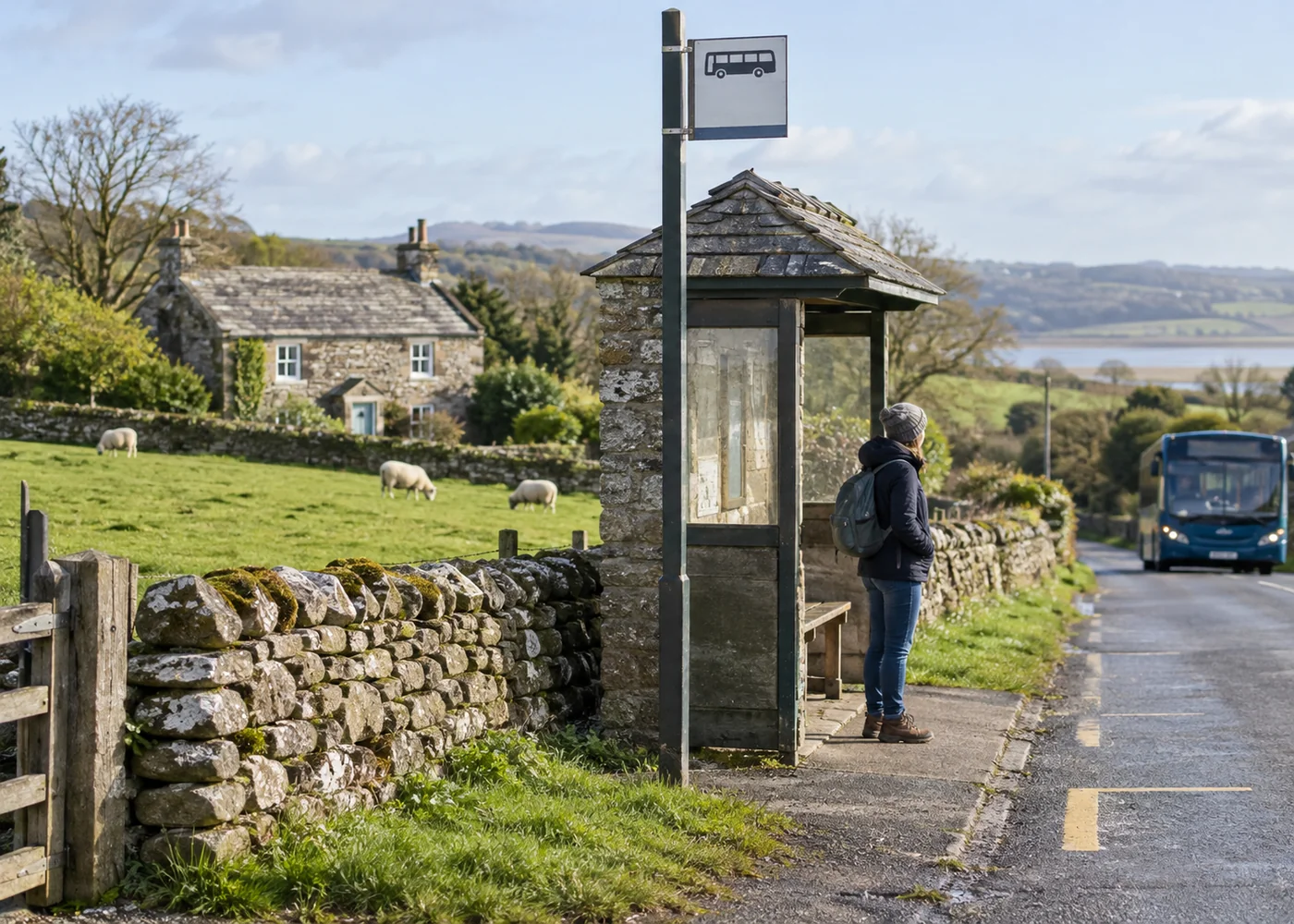
Plan backwards from the cottage
The train to the nearest town may be straightforward while the final few miles are not. Before booking accommodation, work out how you will reach the actual door with luggage. A bus stop bearing the village name might be outside the centre, and a short-looking walk may involve a steep hill or an unsuitable road. Ask for precise local information where the route is unclear.
Check the service for your arrival day and likely time, including any seasonal or weekend differences. A weekday timetable should not be used to plan a Sunday journey. Allow a realistic connection rather than assuming that a delayed train and the last rural bus will cooperate. If a taxi is the fallback, establish whether advance booking is needed and what happens if the train is late.
The return journey deserves the same attention. Cottage checkout and the first useful service may not align neatly. Ask about luggage arrangements only if you need them, and make a plan that does not depend on a favour being available on departure day. A comfortable journey home is part of choosing the right base.
Choose a place with a useful small radius
For a car-free break, the surroundings carry more weight than the number of attractions within driving distance. Look for somewhere to buy ordinary food, a few suitable walking routes and at least one enjoyable place to spend a wet afternoon. These do not all have to be on the same street, but the connections between them should work for everyone travelling.
A larger village or small town may be a better base than an isolated cottage, even if the latter looks more idyllic. You can still have country walks and quiet evenings without making every meal depend on a transport arrangement. Think about the holiday you want to live, rather than the building you most want to photograph.
Groceries need some thought. Carrying a week's supplies from a distant stop can be tiring, particularly alongside luggage. Consider a modest first-day shop and later top-ups, or check a delivery option directly if the property permits it. Do not assume that an address described as rural is covered by every service or easy for a driver to locate.
Build outings around the return
When planning a day trip, identify the return service first. That gives the outing a reliable boundary and helps you choose an appropriate walk or visit. A route that ends at a different stop can be enjoyable, but only when the connection is clear and there is room for slower progress.
Keep current timetable information available offline where possible, along with the name of the operator and the exact stop. A map app can be helpful, but the operator's notices may explain a diversion or temporary change more clearly. Recheck close to travel rather than treating an early plan as permanent.
Leave some days local. The freedom of a car-free holiday can be lost if every morning begins with an anxious connection. A walk from the cottage, lunch nearby and an afternoon indoors can provide a welcome contrast to a more structured excursion. You are not obliged to travel simply because a bus exists.
Pack for carrying, not just storing
Use luggage you can manage across the actual journey. Steps at a station, a gravel approach or a narrow pavement can make an oversized wheeled case less convenient than it appeared at home. Avoid packing duplicate items merely because there is room in the bag. Confirm what the cottage supplies, then bring what matters to your own routine.
For day outings, a comfortable bag with room for a layer and a small purchase is usually more useful than carrying the main travel bag. Keep tickets, route details and contact information easy to reach. Small organisational choices make waiting or changing services less frustrating.
If travelling with others, share the plan. One person should not be the only holder of every ticket, address and return time. A simple written note can be enough. It also allows people to spend part of the day separately without losing the means to get back.
Accept a different kind of freedom
Public transport does constrain some choices, but it can remove others: parking decisions, unfamiliar driving and the question of who will drive after dinner. The strongest plan uses those advantages while being honest about the timetable. Choose a base with enough nearby interest, keep connections generous and allow the holiday to have a smaller, more deliberate radius.
If the final link remains uncertain after checking, change the accommodation search rather than hoping the problem will disappear. A slightly less remote cottage with a dependable connection may make the whole break feel easier from the moment you arrive.