Two nearby villages can fill a whole day
Two neighbouring villages can make a varied day without a long drive. Give each a different role instead of trying to see everything in both.
Choose a contrast
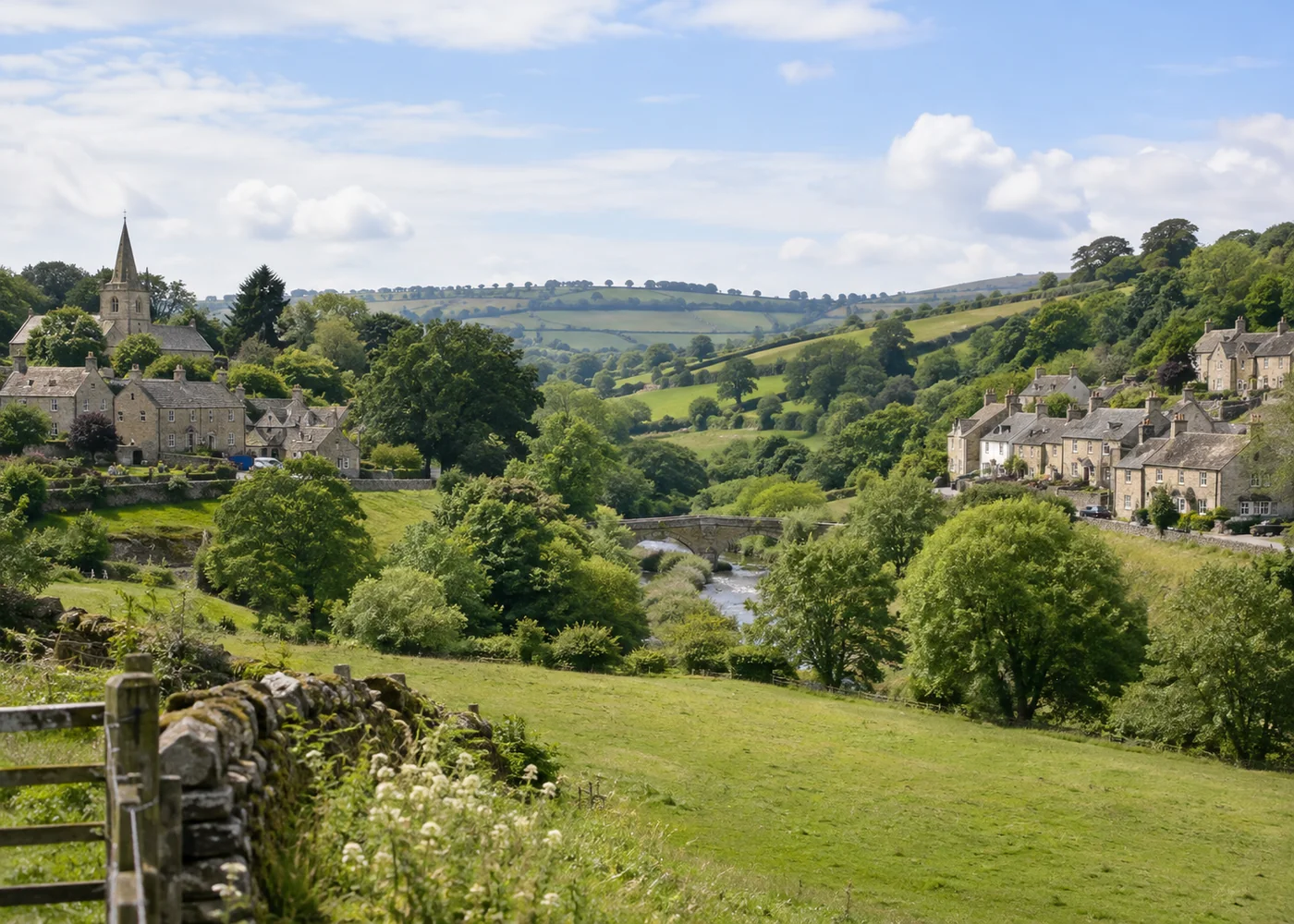
The distance between villages is less important than the difference between them. One might have a market square and useful shops; the other might be smaller, with a green and a short established walk. That contrast gives the day variety without requiring a major change of scenery or a complicated itinerary.
Avoid choosing two places simply because they appear on every list. Read enough to understand what you would actually do in each. A village can be attractive but offer little public space beyond a few streets. That may suit a brief stop, while a larger settlement deserves the longer part of the day.
Check the route between them before deciding to walk. Nearby on a map does not mean connected by a suitable footpath. A road can be narrow or busy, and a public walking route may take a much longer line. If the connection is uncertain, travel between the villages separately and explore each on foot.
Give the morning a purpose
Use the first village for the activity that depends most on opening hours. That could be a shop, a small museum or a café serving breakfast. Confirm current details, then arrive with time to enjoy it. A useful errand for the cottage can make the stop feel grounded rather than like a drive solely to take photographs.
Leave room around that one purpose. Walk a few streets, look at a noticeboard or sit somewhere appropriate. The village does not need to provide a succession of attractions. Everyday details often become clearer when there is no pressure to move on after fifteen minutes.
If the group has different interests, agree on a simple meeting arrangement. A bookshop visit and a short look around the churchyard can happen at the same time. Everyone need not follow the same path through a small place to share the day.
Let the second stop be lighter
The afternoon village can have a looser role: a walk, tea or a look at the green. Check that any essential facility will be open, but avoid constructing another full schedule. A slower second stop helps the day feel like a holiday rather than a sequence of errands.
Notice how the two places differ. The building materials, shape of the streets or position of the church may change over only a few miles. You do not need specialist historical knowledge to observe those distinctions. Public interpretation can add context where it is available.
Be considerate with parking and photographs in both villages. A quiet lane can still be someone's route to work, and an attractive doorway is often a private entrance. Stand where you are not obstructing others and avoid treating the whole settlement as a visitor attraction.
Avoid doubling the same purchases
If both villages have appealing shops, leave some room in the day's budget and bags. Buying heavily at the first stop can make the second feel like a repetition or a carrying exercise. A few purposeful purchases are easier to enjoy than two rounds of browsing followed by uncertainty about how to use everything.
Food shopping also affects the order. If something needs to stay chilled, arrange appropriate storage and a prompt return rather than extending the outing casually. You can visit the food shop near the end or choose shelf-stable items earlier. This is a small planning detail, but it keeps the village day from becoming a race back to the cottage.
For families, give the two stops different kinds of attention. One can include a small task, such as choosing bread, while the other is mainly a walk and a pause. A child who is tired of shop interiors may enjoy looking at a stream or green, where the setting permits. Variety does not require adding more destinations; it can come from doing different things in the two already chosen.
Know when the day is complete
If the first village turns out to be especially enjoyable, shorten or drop the second. The plan exists to give the day possibilities, not to enforce a quota. Likewise, if a stop is less interesting than expected, leave without trying to extract more from it than it offers.
Returning to the cottage with time for supper can be more satisfying than adding a third place because it is on the way. Two distinct impressions, a few useful purchases and a comfortable pace are enough to make a full day.