A valley base or a hillside view
A hillside view and a valley setting offer different daily experiences. Think about light, routes and the journey home as well as the photograph.
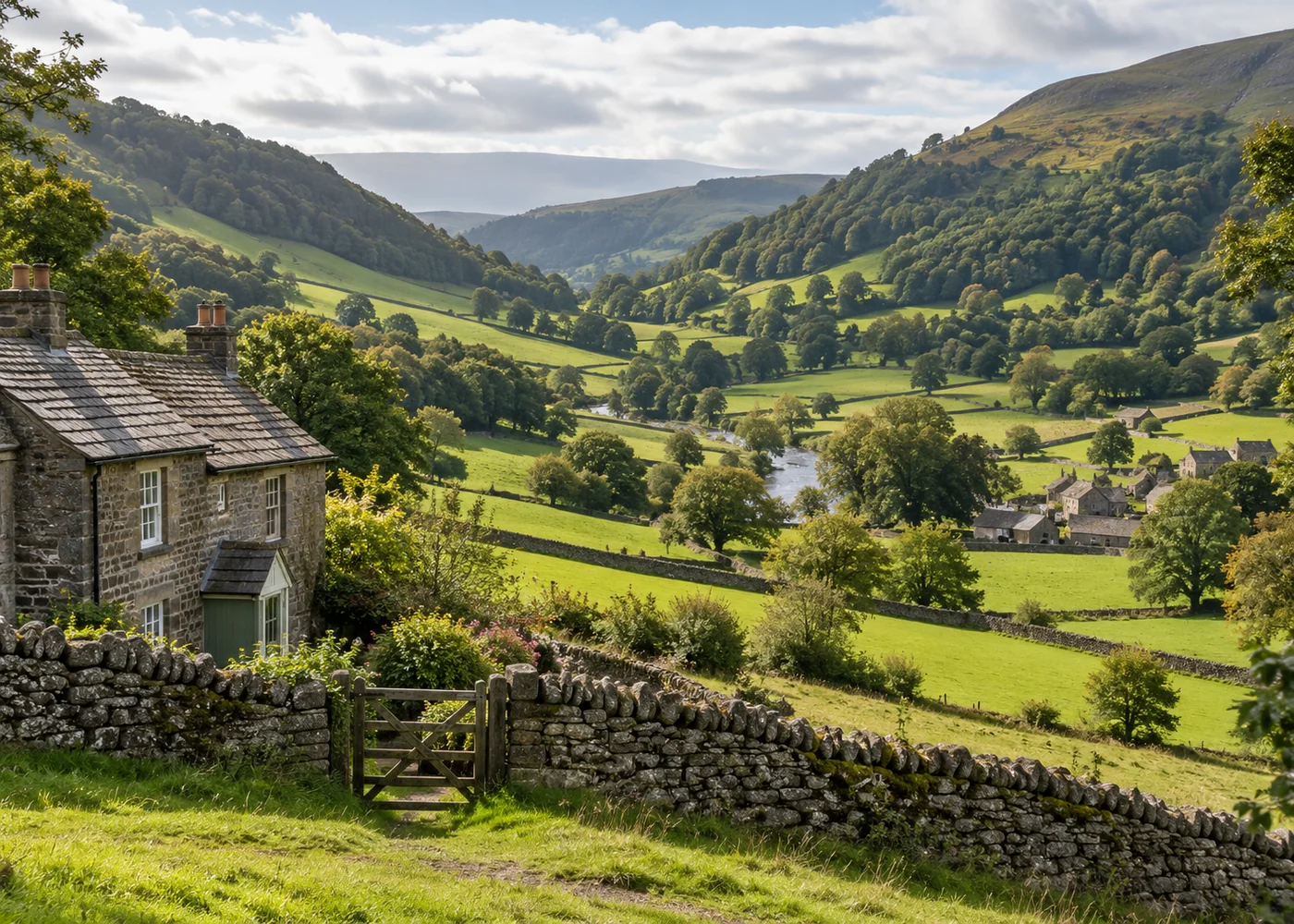
The view comes with a position
A hillside cottage may offer a wide outlook from breakfast to dusk. The same position can mean a climbing approach and an exposed outdoor space. A valley cottage may feel more enclosed, with a village or river nearby, but the surrounding slopes can limit the light at certain times. These are tendencies to investigate, not guarantees about every property.
Look at where you will actually sit. A panoramic exterior photograph does not show whether the main room faces the view. Conversely, a cottage without a sweeping horizon may have a sheltered courtyard that suits long lunches better. Ask practical questions if the setting is the main reason for choosing it.
Consider the season and your preferred routine. If mornings at the cottage matter, notice the orientation and how the surroundings might affect them. If you will spend most days out, a comfortable return route may matter more than the widest outlook.
Compare two ordinary mornings
Imagine breakfast at the hillside cottage on a grey day. Would the open outlook still please you, and would you want to drive down for a small errand? Then imagine breakfast in the valley, with buildings or slopes closer around you but a shop perhaps easier to reach. This comparison is more useful than comparing the two properties only at sunset.
Now picture returning after dinner. The walk that felt easy downhill in daylight may be less appealing in the opposite direction later. If evenings out are important, favour the connection that you are comfortable repeating. If evenings in are the main attraction, the view and room layout can take priority.
For a mixed group, talk about the trade-off before booking. A keen walker may barely notice a hill that determines whether another person goes out independently. The most generous choice may be a base that gives everyone some freedom, even if it has a less dramatic outlook.
Remember that you can visit the landscape you do not sleep in. Staying in the valley does not prevent a hilltop outing, and staying higher up does not require every walk to be strenuous. The base needs to support ordinary routines; the surrounding area can supply the contrasts.
Follow the journeys you will repeat
Trace the trip to the nearest useful shop or pub. A short downhill walk becomes an uphill return, which may be welcome exercise for some and an inconvenience for others. Check gradients and surfaces rather than relying solely on distance.
Driving access also deserves a look. A hillside lane can be perfectly manageable, but it is sensible to understand the approach before arriving in darkness. A valley road may be busier than expected if it carries the main traffic through the area. Neither setting automatically means quiet.
For walking holidays, compare the routes that begin nearby. You may prefer to drive to higher ground and return to an easier village base, or to stay above the village and spend more time at the cottage. The useful choice is the one that supports the days you want, not the one that wins a contest between two attractive landscape photographs.