Give a dog some space in a busy holiday house
When several people share a cottage, give the dog a predictable resting place and make the household rules clear to everyone.
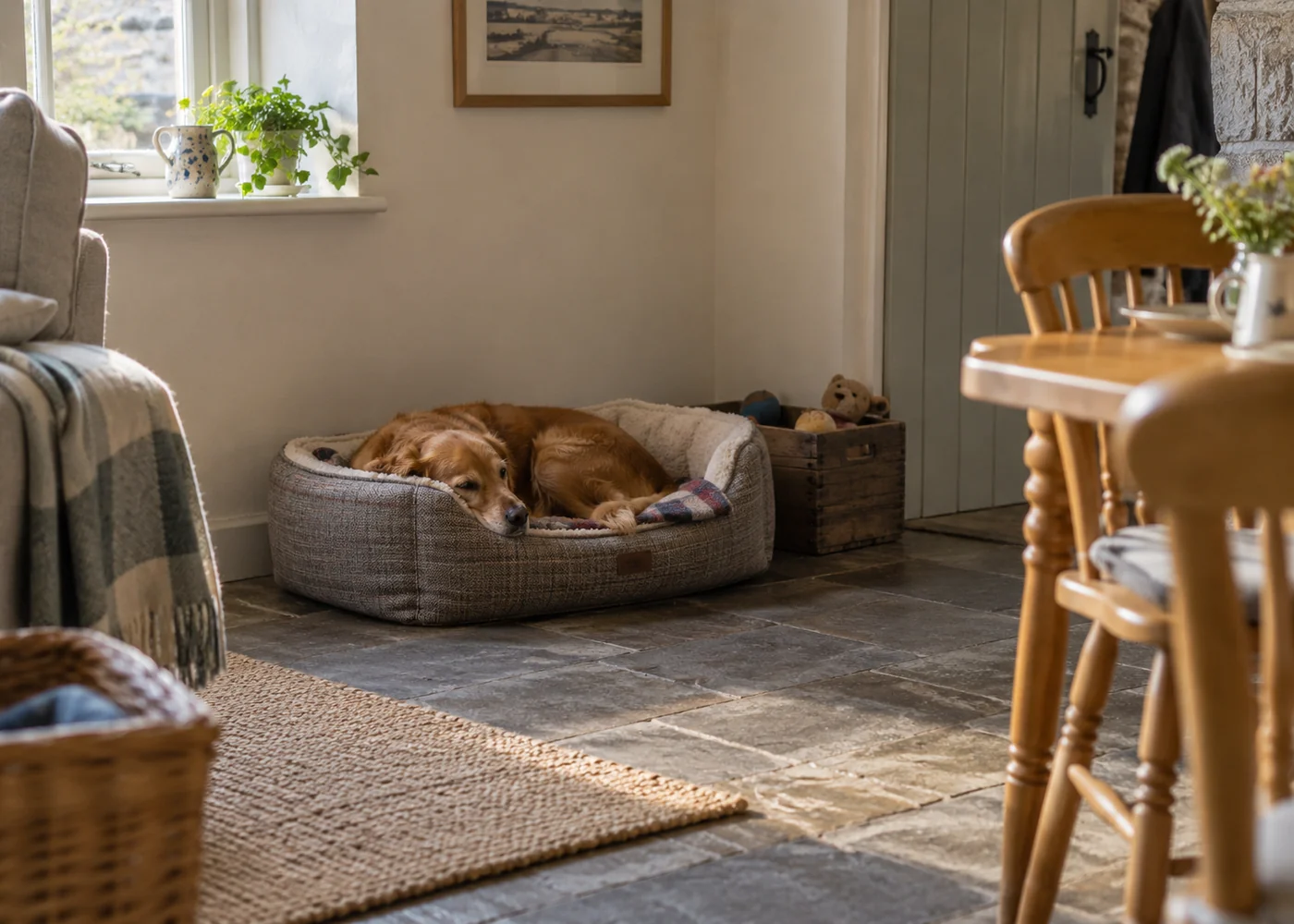
Choose a corner that will stay quiet
Look at how people move through the room rather than choosing the first empty patch of floor. The area beside the fridge may be calm at arrival and busy for the rest of the weekend. A permitted corner away from the main doorway is often more useful. Keep the bed clear of heaters, exits and the route to the bathroom, and avoid moving heavy furniture without asking the host.
Bring familiar bedding and leave it in place once the arrangement works. Constantly folding it away to create room for games can make the dog lose the one settled space in the house. If there is no suitable place without obstructing daily life, the cottage may be too small for the group and its equipment. This is worth considering from the photographs and floor plan before booking.
Consider visitors separately from overnight guests. Someone dropping in may not know the pet rules or recognise the dog's bedding as a space to leave alone. Ask the responsible adult to explain the arrangement when they arrive, especially if children or another dog are involved. Keep the introduction proportionate and follow the cottage's visitor conditions. The aim is to preserve a predictable household, not to rely on your dog tolerating every change because the visit is brief.
Explain the routine once
Tell every adult where the dog rests, where food is stored and who is handling outings. Children need a simple explanation that the bed is a place to leave the dog alone. Do not assume visiting friends know the same rules as the people staying overnight. A brief conversation is kinder than repeated corrections once the room has become noisy and everyone is distracted.
Keep doors and garden access part of that discussion. In a busy house, one person may be unloading shopping while another opens a second entrance for fresh air. Agree who has the dog when doors are in use. The plan should not depend on noticing every movement from across an open-plan kitchen.
Meals deserve a clear arrangement too. Put bowls where the dog can eat in the usual way without people stepping over them or offering food from several directions. Follow any established care instructions and avoid turning holiday meals into a collection of new treats. The practical aim is to keep the dog's ordinary routine understandable despite the different surroundings.
Let the group divide naturally
Not everyone needs to take part in every dog walk or spend every evening in the same room. A few people can go out while others read or cook at the cottage, as long as responsibility for the dog is agreed. Do not assume that the person who prefers a quiet afternoon has automatically volunteered to supervise everything.
If the house becomes too busy for the arrangement you expected, reduce the activity around the resting space or adjust the group plan. Do not introduce unfamiliar confinement or improvise behaviour treatment during the stay. Known difficulties are better discussed with a qualified professional beforehand. For an ordinary holiday gathering, a little space, consistent handling and fewer competing demands can make the cottage easier to share.