Give your dog an easy first evening
Unloading, dinner and an unfamiliar house can make arrival busy. A few familiar things help the evening settle into an ordinary routine.
Unpack the dog's essentials early
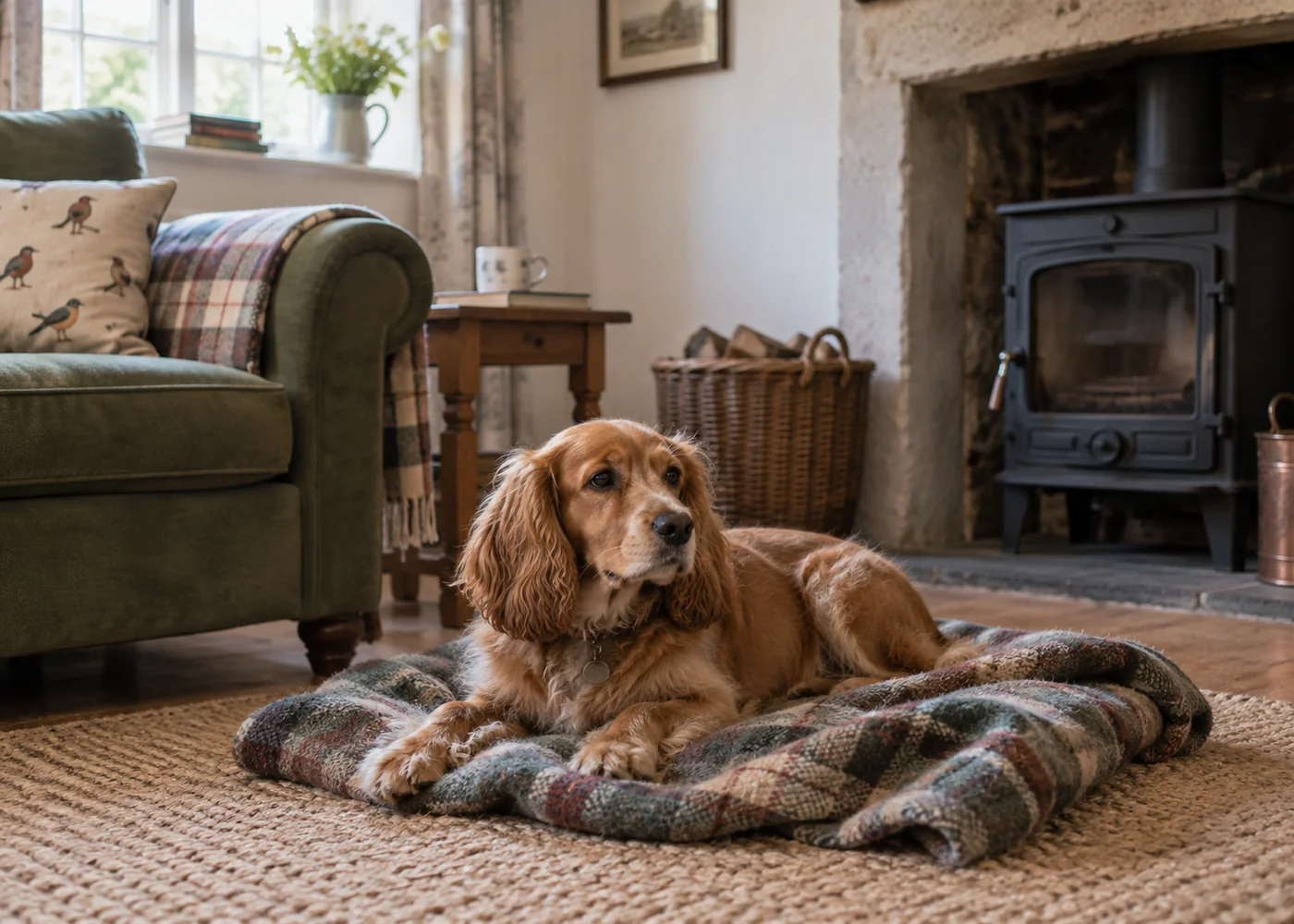
Keep the bed or blanket, bowl, food and lead near the top of the luggage. If they are buried beneath groceries, the first half-hour becomes a search through bags while doors repeatedly open. Put one person in charge of the dog during unloading, or complete the unloading in stages if travelling alone. The aim is simply to avoid asking the dog to navigate a new room and a stream of arrivals at the same time.
Before putting down the bed, read the house rules and choose a permitted place that is clear of the main route through the room. A corner beside a chair may work better than the centre of an open-plan kitchen. Use familiar bedding if possible. You need not introduce new equipment just because it is a holiday, particularly if the dog has never used it at home.
If the household arrives in stages, tell later guests where the dog's resting place is and which entrance they should use. This prevents the quiet corner becoming the temporary luggage area each time another car arrives. Keep greetings calm and let the dog remain with the responsible adult while the new arrivals find their rooms.
Let the evening stay small
Start with the practical things: an appropriate opportunity to go out, water and the usual meal arrangement. There is no obligation to turn arrival into the first big outing. A nearby walk that you have already checked can be enough, followed by time in the cottage. Leave a complicated restaurant visit or a busy village exploration for another day if either would make the evening harder to manage.
Take a moment to understand the doors and garden access before letting the rest of the household spread out. A child going to fetch a coat and an adult carrying food from the car may both assume someone else is watching the entrance. A simple shared agreement about who has the lead is more useful than repeated calls across the house. Keep it ordinary rather than making arrival feel like a drill.
It can be tempting to show the dog every room. Instead, begin with the areas they are allowed to use and stay nearby. A smaller settled space is easier to understand than the entire house at once. Do not move furniture or fit barriers without the host's agreement. If you brought a familiar crate and its use is permitted, arrange it as you would normally rather than treating it as permission to leave the dog unattended.
Decide bedtime before everyone is tired
Check that the planned sleeping place matches the property rules. If dogs are not allowed upstairs, that should already have formed part of the booking decision. Set out bedding and the evening's final lead before you become absorbed in dinner. Knowing which door and outdoor route you will use after dark avoids searching for unfamiliar switches and shoes at the last moment.
Watch how the arrangement works without expecting instant holiday behaviour. Keep voices and activity unhurried, and give the dog somewhere to rest away from constant attention. If your dog has a known difficulty with travel or unfamiliar places, seek advice from the relevant qualified professional before the trip rather than experimenting with a remedy on arrival. For an ordinary first evening, familiarity and fewer demands are usually the most useful things you can bring.
Keep the last practical check brief: the lead is available, the permitted sleeping place is ready and the route outside is understood. Then stop rearranging the room simply because it is unfamiliar. A settled evening is easier when the people also relax into an ordinary activity. If something genuinely does not work, adjust the specific detail rather than repeatedly changing the whole arrangement and asking the dog to follow another new plan.