Read the pet rules before you commit
Pet conditions affect the whole stay, from sleeping arrangements to lunch plans. Read them as practical instructions rather than small print to revisit later.
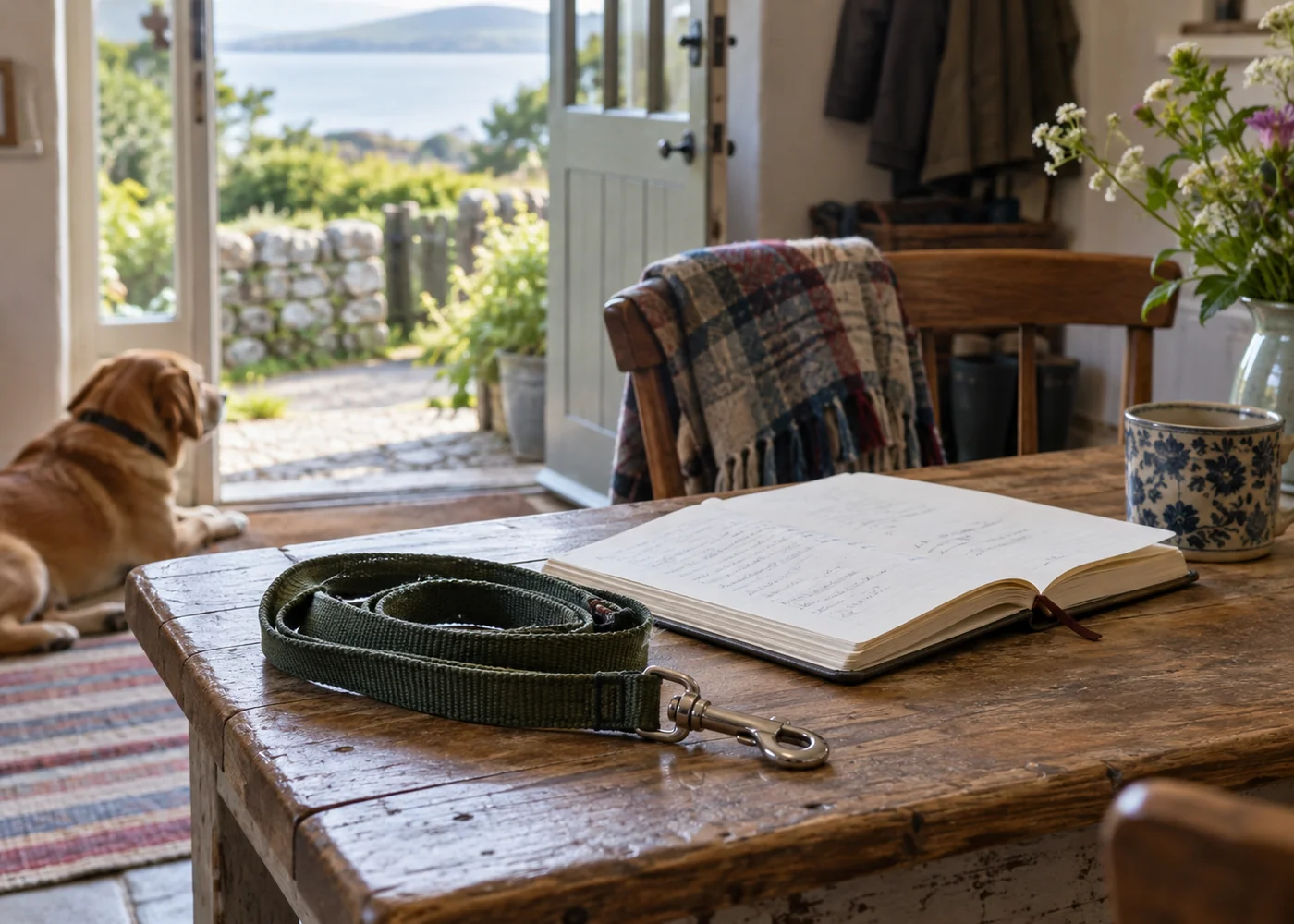
Find the rules that belong to this property
Start with the listing for the exact cottage and dates you are considering. A booking website's general pet policy may not describe every owner's conditions. Look for linked terms, house information and any note beside the pet charge. If the wording differs in two places, ask which applies before paying. Saving the relevant reply with your confirmation is easier than trying to reconstruct a conversation when you arrive.
Check the allowed number of dogs and whether permission must be requested separately. Do not assume that an optional pet fee automatically covers every dog in the group. If someone plans to join you with a dog for a day, ask about visitors as well as overnight guests. A booking that appears straightforward can become awkward simply because the host and the group are counting different animals or different kinds of visit.
Work through a normal day
The rule about leaving dogs alone deserves particular attention. It affects supermarket trips, restaurant reservations and attractions that do not admit pets. Ask what the condition means if it is vague, rather than deciding that a short absence will probably be acceptable. A dog accustomed to being alone at home is still subject to the booking conditions. Familiar equipment does not automatically change those conditions either.
Next consider the rooms the dog may use. A downstairs-only rule can be entirely workable for one household and unsuitable for another. Look at where bedrooms are situated and whether the permitted area has an appropriate sleeping space. If the arrangement would mean an abrupt change to your dog's established routine, take that seriously at the planning stage. Another property may suit better without anyone needing to negotiate an exception.
Furniture rules need the same straightforward reading. Ask whether covers are supplied or expected, and whether a cover changes the rule at all. In some houses it will; in others dogs must remain off furniture regardless. Pack familiar floor bedding rather than assuming household throws are intended for pets. An attractive photograph showing a dog near a sofa does not tell you what the booking conditions allow.
Clarify shared areas and cleaning
Find out which outside spaces you may use and whether leads are required in shared grounds. A cottage can have a private interior while its driveway, lawn or entrance passage serves several properties. Agree within your group how doors and gates will be managed. Do not make changes to fences or add temporary fittings without permission, even when the intention is to make the stay easier.
Read the departure instructions for pet hair, bedding and waste. They may identify a particular vacuum attachment, outdoor bin or washing arrangement. Bring your own dog towels unless the listing explicitly supplies them, and ask before washing bulky pet bedding in household machines. Clear instructions are useful to both guest and host because they turn a vague expectation of tidiness into a few tasks you can actually complete.
Consider noise and neighbours without assuming the property is isolated. A rural address can still mean an adjoining cottage or a shared courtyard. Ask about the setting if frequent passing activity is likely to matter to your dog. It is better to select a quieter arrangement than to arrive expecting the surroundings to be changed. The host can describe what is there; you decide how well that fits your plans.
Check whether the rules distinguish the private cottage from facilities on a larger site. Permission inside your accommodation may not extend to a shared lounge, pool area or another garden. You do not need to use every facility, but knowing the boundary helps the group make plans. Keep the answer attached to the actual place you booked rather than applying a general site description to every building.
Get a clear answer, then make the choice
A useful enquiry is short and specific: explain the point in the rules, ask the practical question and request confirmation. Avoid sending a long description of how well behaved your dog is when the real issue is whether a bedroom door can remain open. Keep written agreement to any exception with the booking. If the host cannot accommodate it, treat that as helpful information rather than a challenge to overcome.
Once booked, share the pet conditions with every adult who will handle the dog. One person knowing the rules is not enough if another plans an evening out on the assumption that the dog can stay behind. A brief conversation before departure lets you adjust the itinerary while choices are still easy. The aim is a holiday whose everyday arrangements are clear, leaving less to negotiate when everyone wants to relax.