Plan dog walks around working farmland
A cottage near fields may be close to working livestock. Choose dog walks with the land use in mind and consult the current countryside guidance for your destination.
Ask about the setting before the route
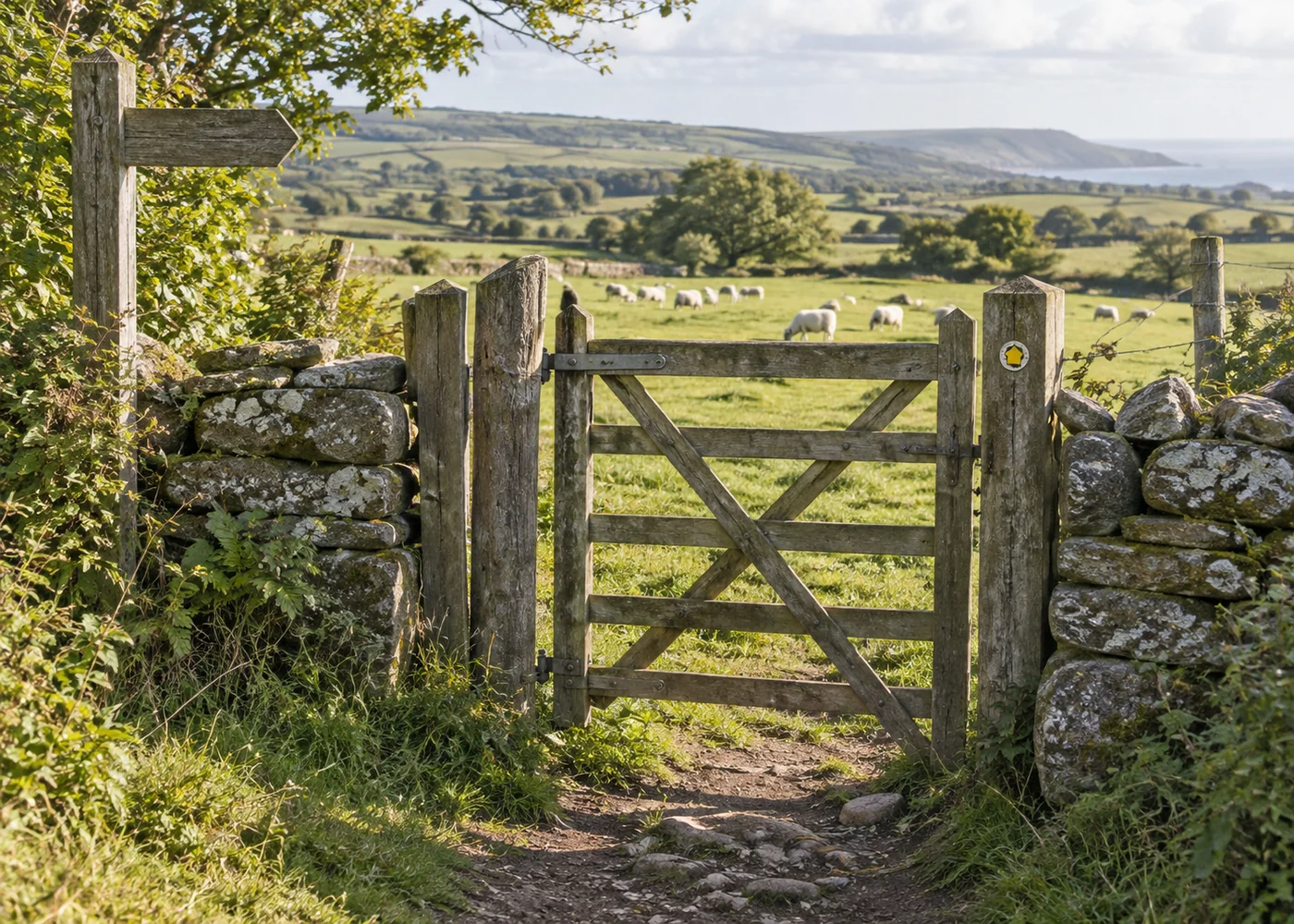
Photographs of open fields can hide the most relevant detail: the land is a workplace, and its use may change. Ask whether the cottage sits beside grazing fields, whether animals use the approach and whether public paths cross farmland nearby. The host may know the normal pattern, but should not be expected to guarantee that a particular field will be empty throughout your stay.
Look for alternatives that do not depend on crossing the same field every morning. A village route or another permitted path can make the holiday more flexible. Avoid describing private tracks as available walks unless access is confirmed. An entrance used by farm vehicles is not automatically a public route, even if it appears convenient on a satellite image.
Plan around the dog you have, including how it responds to unfamiliar animals and busy environments. If farmland is likely to make routine outings difficult, choose a different setting rather than expecting the dog to adapt on arrival. A holiday is not the moment to experiment with a difficult situation simply because a route has good views. Professional advice belongs before the booking when you already know there is a concern.
Give the morning and evening routes their own attention. A field path that is part of a longer daytime outing may not be the best choice for a brief trip when visibility is reduced or you are still learning the surroundings. Ask about an appropriate alternative and inspect it at a suitable time. This reduces the pressure to keep using a familiar-looking shortcut simply because everyone has become accustomed to leaving by the same door.
Read the relevant official guidance
The Countryside Code for England and Wales advises keeping dogs under effective control and giving animals space. Its detailed guidance covers livestock encounters and situations in which lead requirements apply. Read the current source before travelling rather than relying on a remembered rule from a previous holiday. Scotland and Northern Ireland have their own access guidance, so do not assume one national summary covers the whole UK.
Follow local signs and any instructions from people moving animals. A route may remain a public path while its immediate surroundings require more care than usual. The purpose of planning is to reduce avoidable encounters, not to find a technical reason to continue with an outing that no longer feels suitable. Turning back or choosing another route can be the simplest decision.
Avoid putting children in charge of interpreting an unfamiliar situation. Adults should understand the route and current guidance, and know who is handling the dog. If you are walking in a group, stay attentive rather than assuming the person at the front has assessed everything for everyone. A conversation at the cottage is easier than trying to agree a plan beside a gate.
Make gates and paths part of the plan
Check whether the route contains stiles or other barriers that will be awkward for your dog. Do not rely on being able to lift a large dog over an obstacle, and do not dismantle fencing to get through. Seek a more suitable route where necessary. A walk described as short can still include a single feature that makes it impractical for your household.
Keep to the route you are entitled to use and leave gates as directed or as found. Do not feed livestock, approach young animals for photographs or allow a dog to investigate a boundary while you study the map. These are not attractions arranged for holidaymakers. Treat the presence of working animals as part of the place you are visiting, with the space and attention that requires.
Keep the first outing modest
Use an initial daylight outing to understand the immediate area rather than setting off on the longest available circuit. Take the map and the equipment you normally need, and leave time to choose another direction. Current conditions matter more than a saved route title. If a path is unsuitable, the successful outcome is finding a better plan, not completing the original line at any cost.
Back at the cottage, tell the rest of the group what you found so nobody repeats the same assumptions the next morning. Keep a second walk available for days when animals are being moved or access conditions differ. This small amount of shared knowledge can make a rural dog-friendly stay more relaxed while respecting the people and animals who use the land every day.