Find the everyday walk before the big outing
The route you use before breakfast matters as much as the scenic outing. Check what is genuinely available from the cottage door.
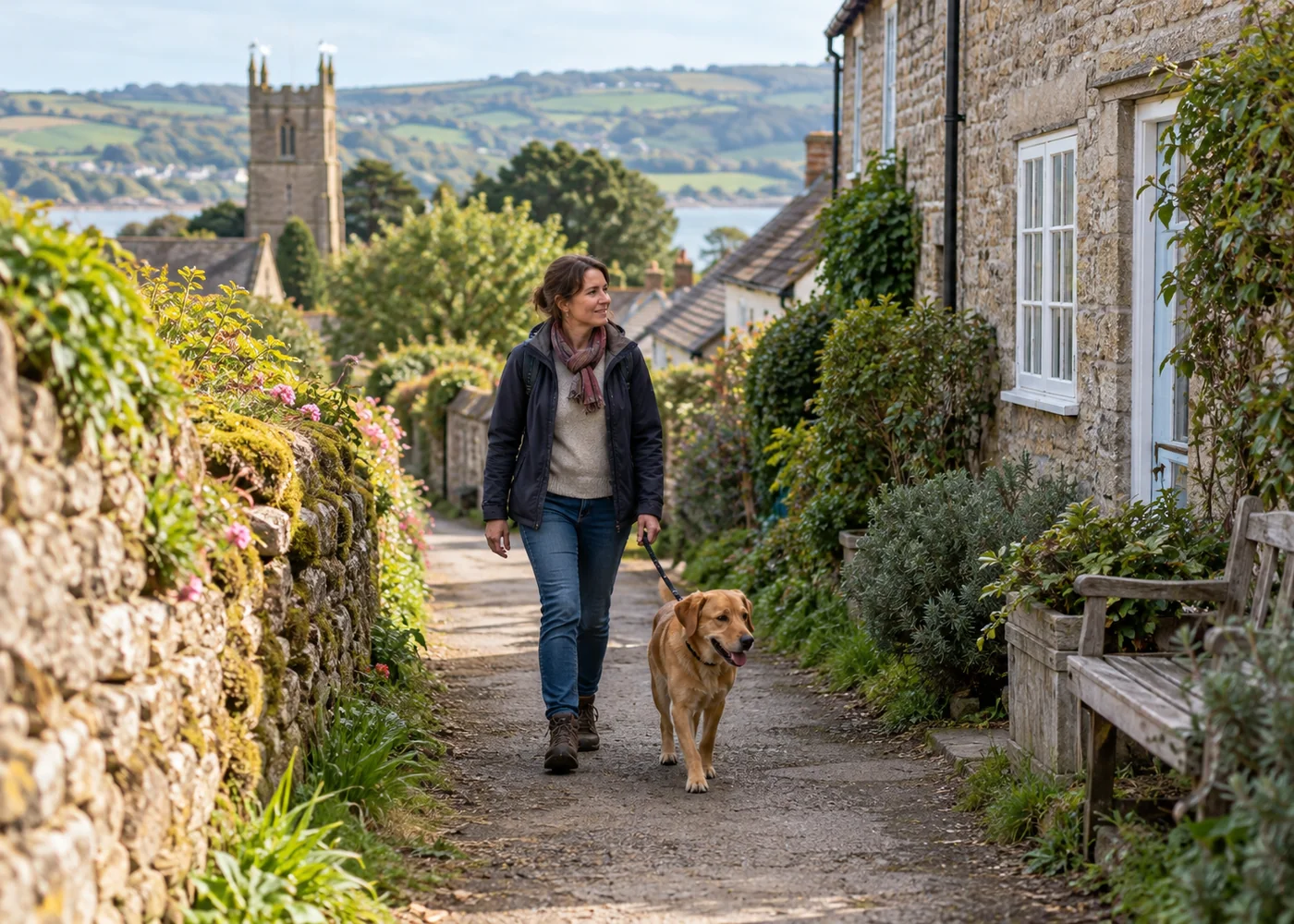
Follow the first few hundred metres
Start with the entrance. Does it open onto a pavement, a lane, a farmyard or a busy road? A listing may describe excellent walking nearby while requiring a drive to reach it. Ask the host how guests usually manage a short dog walk and look at current maps for the route itself. The point is not to find the most impressive walk, but one you can use comfortably several times.
Check how the route connects. A footpath symbol on a map does not show every gate, stile or steep section in enough detail for your dog or group. If an obstacle matters, ask a specific question or seek a recent route description. Do not assume that a field edge is available simply because it appears quiet or well worn in a photograph.
Ask where the route begins in relation to the cottage entrance, not just the nearest named place. A host may recommend a path that is excellent once reached but involves a road section you would rather avoid with your dog. If the answer includes driving, check the parking arrangement and current access information. That does not make it a bad option; it simply makes it a different kind of everyday walk from one you can start directly at the door.
Make it useful in ordinary conditions
Think about the time you will use the walk. A pleasant afternoon route may feel less practical before breakfast or after dark, particularly if it includes unfamiliar road sections. You do not need a separate scenic expedition at those times. A shorter permitted route that is easy to understand may be the better choice, with longer outings saved for daylight and suitable weather.
Look for current local restrictions and follow signs on arrival. Keep the dog under control, respect other people and take waste away or use an appropriate bin. Avoid building the plan around the assumption that there will be bins at every turning point. Pack what you need before leaving rather than treating the morning walk as too small to prepare for.
If the surroundings include livestock or working farm access, choose the route with that in mind and consult the relevant countryside guidance for the part of the UK you are visiting. A nearby lane may sometimes be easier than the most direct field path. Local conditions can change during the stay, so have another sensible option rather than relying on one route for every outing.
Keep the cottage decision honest
If every short walk requires the car, decide whether you are happy with that before booking. It may be an acceptable trade for a property you love, but it should be a deliberate choice. Factor in who will drive, where the dog's equipment will be kept and how this fits mornings when the rest of the group has other plans.
Once you have found a workable everyday route, keep the essentials ready by the agreed entrance. There is a particular ease in knowing where you are going without reopening maps or discussing the whole day's itinerary. That small certainty can make an unfamiliar cottage feel settled much sooner.