Choose a gentler cottage routine for an older dog
For an older dog, the most useful holiday feature may be an easy doorway or a familiar daily pace. Choose the stay around the dog rather than a list of outings.
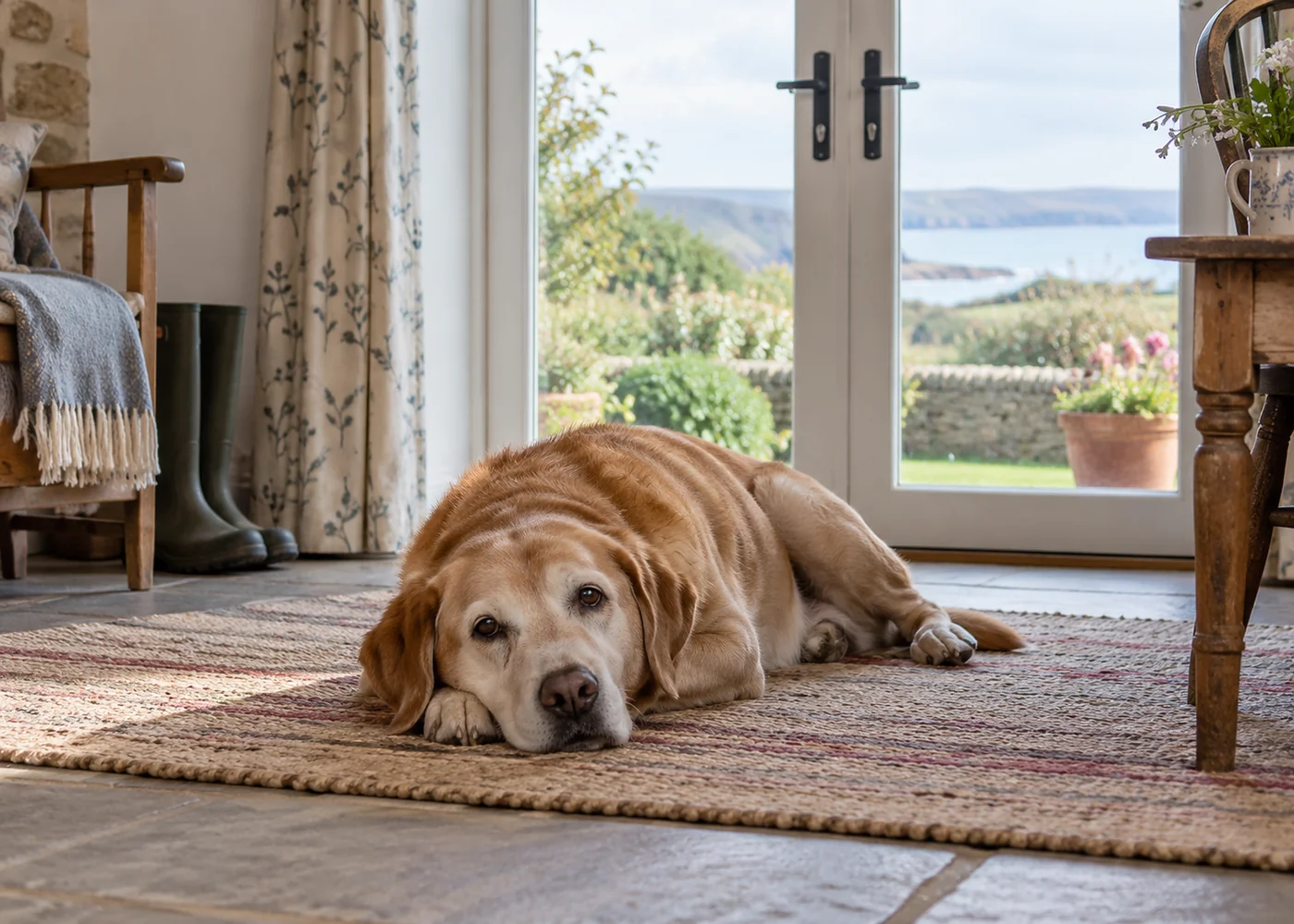
Begin with the routine you already know
Write down the ordinary parts of the day that make life comfortable at home: where the dog rests, how meals are arranged, the usual length and frequency of outings, and any established care instructions. These details help you compare cottages without making age itself the only consideration. Two older dogs can have very different needs, so a generic senior-friendly description will not answer the practical questions for yours.
Blue Cross advises considering whether a pet will be happy with the journey and destination, including whether staying with someone at home might suit better. If health or mobility questions affect that decision, speak to your vet before committing. A holiday guide cannot determine fitness to travel, change medication or prescribe exercise. Use professional advice where needed, then organise the accommodation around the resulting plan.
Think about the journey as part of the break, including how arrival will feel after time on the road. A shorter trip to a suitable cottage may offer more enjoyment than a distant destination reached late in the evening. Keep the first day light and avoid booking an activity that turns arrival into a deadline. The freedom to settle in slowly can be more valuable than another attraction nearby.
Ask about the route through the house
Check the entrance, thresholds, flooring and position of the rooms you expect to use. Ground-floor accommodation may still involve steps between the parking space and door, or a change of level inside. Ask for photographs and measurements where they matter rather than relying on a broad description. Explain the feature you need to understand without asking the host to judge your dog's ability.
Look at where the dog can sleep under the property rules. If bedrooms are upstairs and dogs must remain below, decide whether that matches the established routine. A familiar bed is helpful, but it does not solve an unsuitable separation or a difficult route to the outside. Choose a layout that works without rearranging heavy furniture or blocking access through the cottage.
Consider the garden and immediate surroundings as daily practical space. Direct access may reduce unnecessary movement through the house, but the boundary still needs checking and supervision. A steep lawn, loose surface or shared entrance may be less useful than a modest level area. Ask about the ordinary route for short outings, including whether a road or gate comes before any suitable space.
Keep days adjustable
Plan outings around the routine and advice relevant to your dog rather than an itinerary made for the rest of the group. Others can take longer excursions separately if that suits everyone. Make this clear before travelling so the person staying with the dog is not unexpectedly left out of plans. Sharing time at the cottage can be part of the holiday, not an obligation passed to one person by default.
Keep meal and rest arrangements familiar where possible. Bring the normal bedding, bowls and any equipment already used as instructed, rather than trying several new accessories at once. Confirm any essential storage requirements before booking. If something has a prescribed use, follow that guidance rather than adapting it to an unfamiliar cupboard or appliance without checking.
Leave open space around the dog's resting place. Holiday bags, games and visiting children can turn a quiet corner into a busy route. Tell the group which space is for rest and choose a location that does not require constant intervention. A smaller, calmer gathering may suit better than a house full of people arriving and leaving throughout the day.
Prepare useful information, then enjoy the stay
Keep your usual vet's details and a verified local veterinary contact available, along with the cottage's full address. This is ordinary preparation rather than a prediction that something will go wrong. If you notice a health concern, contact a professional rather than relying on a change of scenery to resolve it or searching for a home remedy in the cottage kitchen.
At the end of each day, let the next one remain flexible. You do not need to complete a route because it was bookmarked before the trip. A garden sit, a familiar meal and a comfortable evening can be enough. The measure of a successful break is whether the arrangement suits the dog and the people caring for it, with the practical details quiet enough to leave room for enjoyment.