Make a pub stop work for everyone
A pub can be a pleasant part of a dog-friendly day when you know where the dog may sit and keep the visit suited to the space.
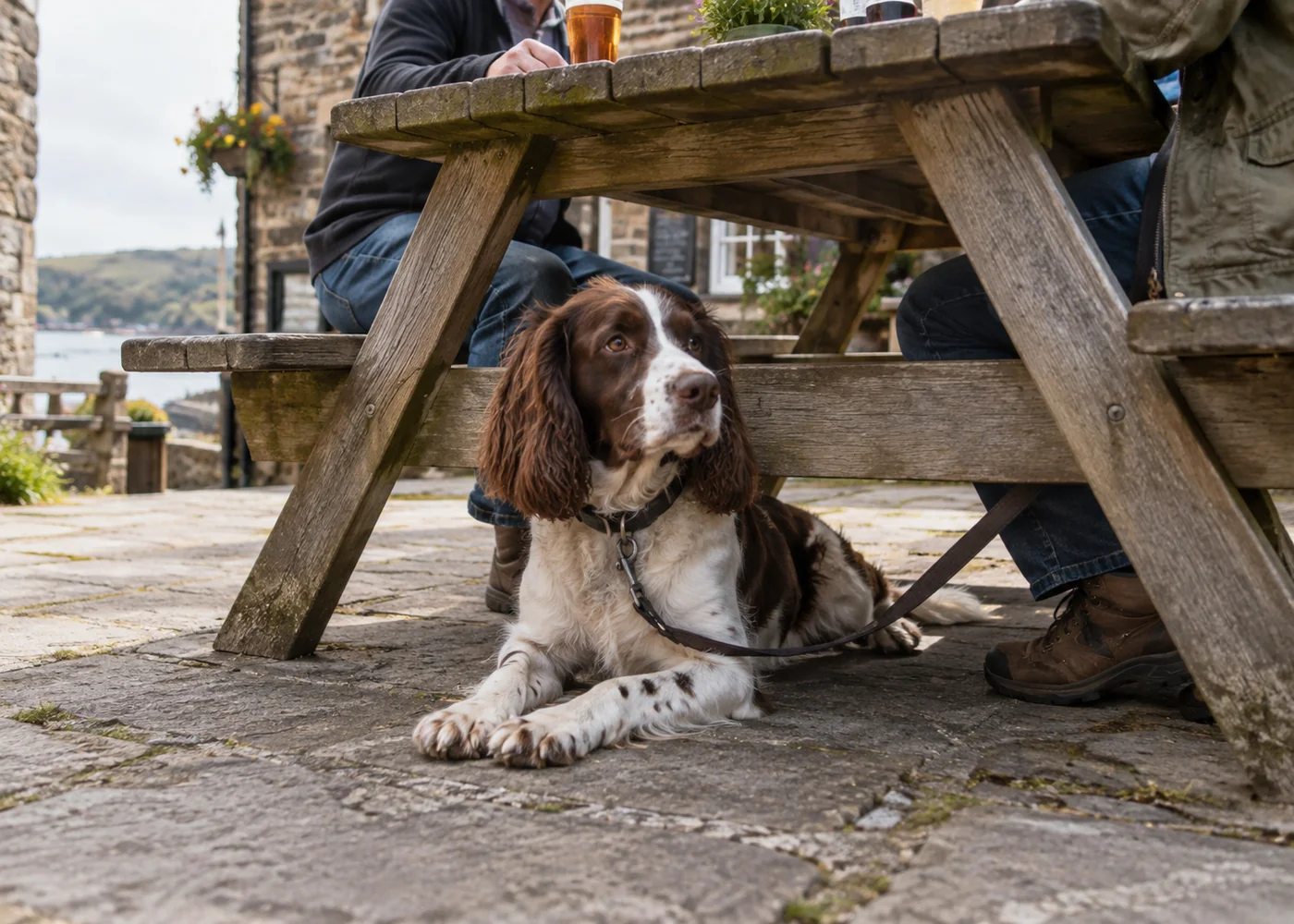
Ask about the table you need
Confirm the pet policy with the venue itself, especially if you are booking a meal. Some pubs allow dogs in the bar but not the dining room; others have a limited number of suitable tables. Say how many people and dogs are coming and ask whether the proposed area will work. A reservation for six people does not automatically describe the space needed beneath and around the table.
If the plan depends on sitting outside, have a realistic alternative for poor weather. A covered terrace may still be exposed or full when you arrive. Do not assume that an indoor table can be found at short notice just because dogs are admitted somewhere on the premises. Eating at the cottage can be a useful fallback, particularly on a short break when there is no need to fit every meal into a different venue.
Think about the room from floor level
A table near a busy doorway, serving route or narrow passage can be awkward even when it looks convenient for people. Ask for a quieter position if available, without expecting the pub to reorganise its service. Keep the dog close and out of the path used by staff and other guests. Chairs being moved, bags placed on the floor and people passing with hot food all need room.
Bring the ordinary equipment your dog uses comfortably, including a suitable lead and water bowl if needed. A familiar mat may be useful where the venue permits it, but do not spread belongings across a walkway. Keep possessions compact and avoid attaching equipment to furniture in a way that could move or obstruct it. The goal is an unremarkable corner where the dog can settle, not a miniature camp around the table.
Consider whether the setting suits your dog at all. A busy Friday evening with music and several other dogs may be a poor match even though the venue is welcoming. Choose another time, shorten the visit or make a different meal plan. There is no obligation to turn a pub outing into a training exercise, and no need to remain simply because a booking was made.
Keep the visit suited to the length of time your dog is comfortable settling in that environment. Ordering a quick meal and leaving may suit better than planning to remain through the whole afternoon. Tell companions the intended shape of the stop before they add another course or round, so changing the plan does not become an awkward negotiation at the table.
Keep the stop part of the day
Allow enough time that you do not arrive immediately before the kitchen closes, hurried and carrying wet kit. Check current food service times rather than treating the pub's opening hours as the meal schedule. If the dog is wet or muddy, deal with that appropriately before entering and follow the staff's direction about where to sit.
Leave space in the itinerary to head back to the cottage afterwards. A relaxed meal should not force a rushed walk in worsening conditions or a late return that disrupts the dog's routine. Pay attention to how the visit is going, thank staff for practical help and leave the area tidy. The best pub stop is one that fits naturally into the day for your group, the dog and everyone sharing the room.