Staying with a dog when the garden is shared
A shared garden can work well, provided you understand who uses it and do not treat it as a private exercise space for your dog.
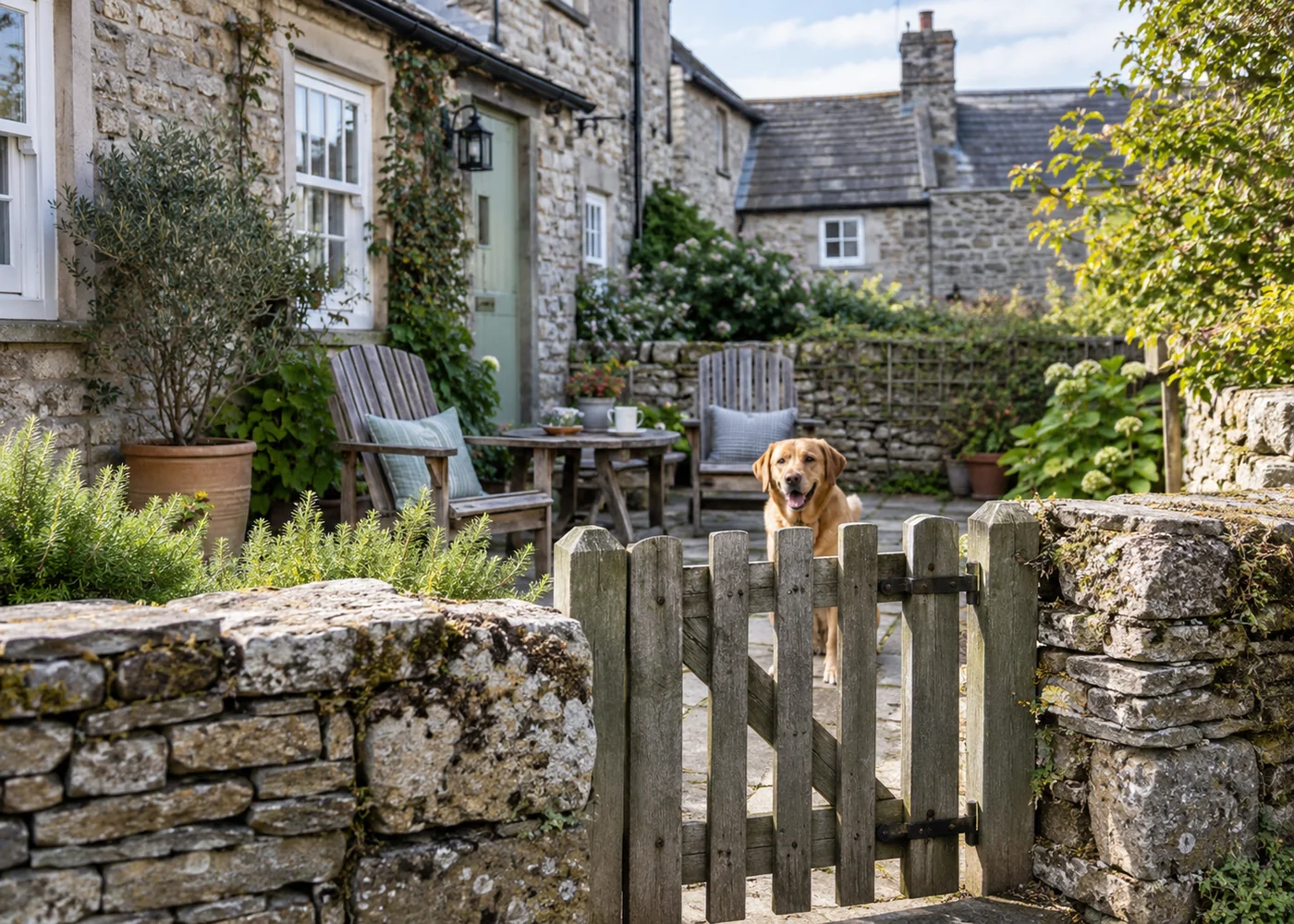
Establish what shared means here
The word covers several arrangements. It might mean a courtyard used by two cottages, a lawn crossed on the way to parking or extensive grounds serving a group of holiday homes. Ask the host to describe the space and the route through it. A photograph with no people in it will not tell you how often a door opens or who needs access to the gate.
Confirm the rules for dogs in that area, including leads and any parts they must not enter. Ask whether there is a separate place for routine outings and how guests should dispose of waste. You do not need to negotiate a private garden into existence; you need to decide whether the available arrangement will suit the stay. If unrestricted use is essential to your plans, look for a property that offers it explicitly.
Check whether outdoor tables are allocated or shared. A patio immediately outside the cottage may feel private while still forming part of a common route. Knowing this helps you place chairs and equipment without obstructing other guests. It also avoids the awkward assumption that a dog can occupy an area simply because your family arrived first and put a picnic bag on the table.
Think about doors and passing activity
Find out whether neighbouring dogs, children or maintenance staff are likely to use the same space. The host can describe normal arrangements but cannot promise who every future guest will be. Consider your dog's response to passing activity and whether a quieter property would be more comfortable. A large garden is not necessarily useful if you spend the visit trying to avoid everyone who has an equal right to use it.
On arrival, keep the dog controlled while you learn the layout. Locate all the gates and note where people emerge from buildings. Do not assume that another guest will close a gate behind them in the way your dog requires. Shared access works best when your plan does not depend on strangers understanding an unspoken household rule.
Explain the arrangement to everyone travelling with you. A family member may see a lawn and open the back door without realising it is shared. Decide who handles the dog while luggage, shopping or outdoor meals are carried through. This matters especially when the cottage has several exterior doors, because people tend to use whichever looks nearest once they have settled in.
Use the space considerately
Keep leads, bowls and toys with you rather than leaving them across a common route. Give other guests room and ask before allowing the dog to approach them or their animals. Someone enjoying a quiet cup of tea may not want a greeting, even in pet-friendly accommodation. Keeping interactions optional makes the setting easier for everyone without requiring a long discussion each time.
Clear waste promptly and use the designated disposal arrangement. Do not leave bags beside a gate to collect later or assume that a decorative outdoor bin is intended for them. If you are unsure, ask the host early in the stay. Keep washing and drying of pet equipment to permitted areas rather than using shared furniture as a drying rack.
Treat garden furniture as shared property with an ordinary purpose. Do not attach lines to it, move heavy items to create a barrier or use chairs to block a passage. If you need a different arrangement for the dog, discuss it with the host before travelling. Improvised solutions can inconvenience other guests and may not provide the control you hoped for.
Have a daily plan beyond the lawn
A shared garden is often best used as somewhere to sit together rather than the centre of the dog's exercise routine. Identify a suitable nearby walk and keep the lead ready for ordinary outings. That way, a busy garden does not dictate the whole morning. Your family can still enjoy the outdoor seating when it is comfortable to do so, without expecting exclusive use.
If the arrangement is different from the description, contact the host with a clear account of the practical problem. Avoid trying to settle it by directing other guests, who may be following the same booking information in good faith. A useful resolution might be clarification, another permitted area or a different routine. For a future booking, the experience can help you identify whether shared grounds are a reasonable compromise or a feature you would rather avoid.