Choose a sleeping place before bedtime
The best sleeping spot fits the cottage rules, your dog's familiar routine and the way everyone else moves through the house.
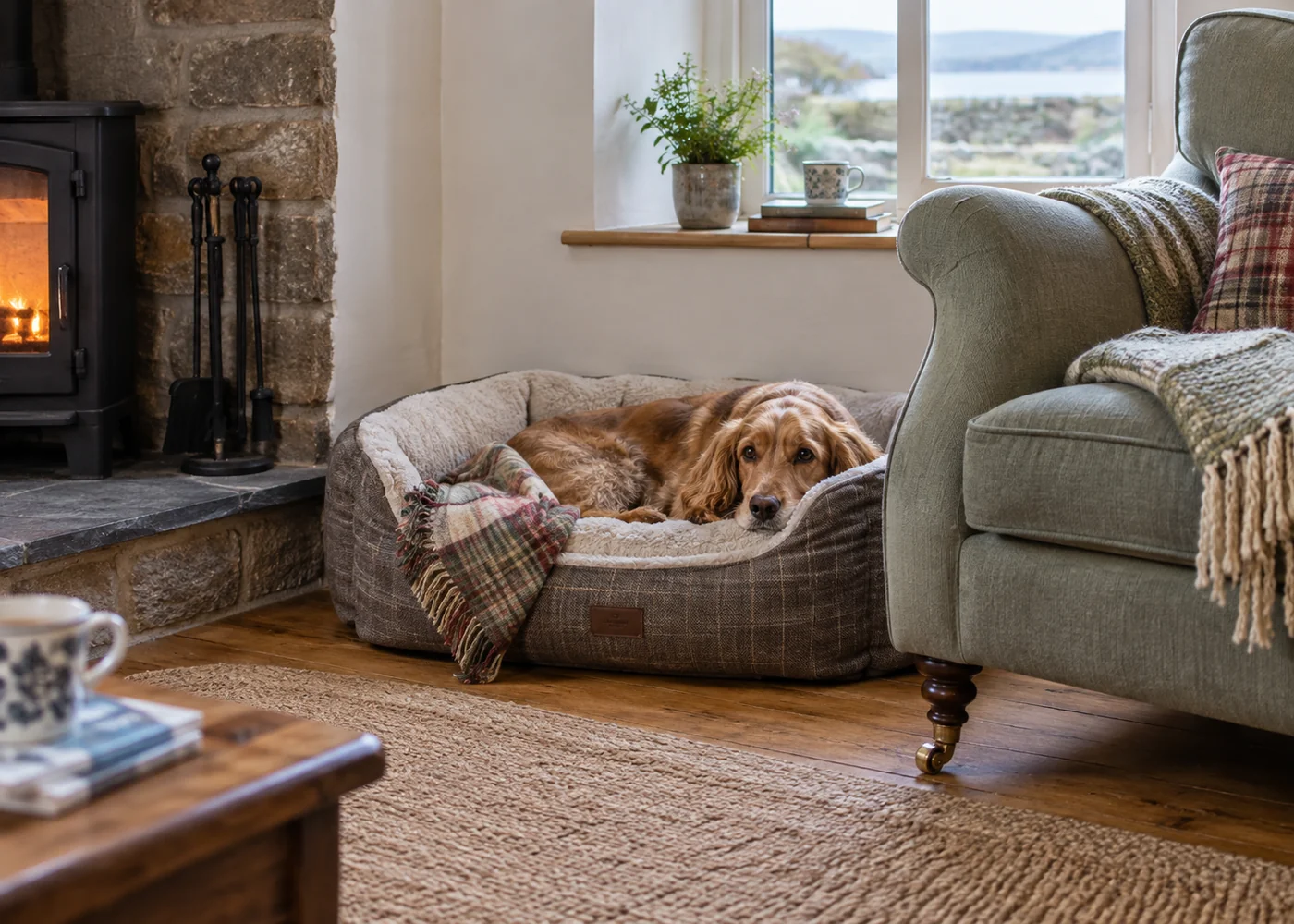
Read the layout with bedtime in mind
A sitting room can look quiet during the afternoon and become the main route to the bathroom overnight. Look at doors, stairs and passageways before choosing a corner. If the dog normally rests away from traffic, avoid placing the bed beside the kitchen entrance simply because that is where the luggage landed. A small adjustment early in the evening is easier than rearranging the room once everyone is tired.
Check the permitted areas before booking, especially if the dog usually sleeps in your room. Do not assume that a portable bed makes an upstairs restriction irrelevant. Ask a precise question and decide whether the answer will work for your household. An arrangement that depends on changing a well-established habit during a two-night stay may make the holiday unnecessarily difficult.
A bedroom door left open can change the route through the house, especially where dogs are restricted to certain areas. Make sure your plan can be followed by people going to the bathroom at night or getting up early. If it depends on several doors remaining in a particular position, explain that clearly and consider whether a simpler permitted location would be easier. Choose consistency over a spot that looks ideal only while everyone remains seated.
Bring familiarity without taking over the room
Use bedding your dog already knows, in a size that fits the available space. Place it where it does not block an exit, heater or ordinary walkway. If furniture needs moving, ask first rather than rearranging heavy pieces around the dog. Some cottages have fragile floors or fitted items that are not obvious from a photograph.
Consider how the rest of the household will use the evening. A bed directly in front of the television may attract constant feet, while a quiet corner still allows the dog to be near people. Let children know that the bed is a resting place rather than an invitation to play. This is a shared household arrangement, so explain it once clearly instead of relying on the dog to find a different corner every time activity increases.
If you use a crate at home, confirm that there is space and that its use is permitted. Familiar equipment is not a reason to ignore the host's rules about unattended pets. Nor should a holiday be the first time the dog is expected to sleep in unfamiliar confinement. Plan around what is already comfortable and seek qualified advice in advance if sleeping away presents an established problem.
Think about what happens when the first person gets up. A bed beside the kettle may be disturbed well before the rest of the house wakes. If that matters, choose another permitted corner or agree a quieter route for early breakfast. This small detail can make the same sleeping arrangement work across both night and morning, without asking everyone to tiptoe indefinitely.
Test the practical details before lights out
Find the route for the final outdoor trip and put the lead where it can be reached quietly. Check that any doors you need will remain accessible after others go to bed. A bathroom light shining straight into the sleeping corner or a frequently used connecting door may suggest a better position while there is still time to change it.
Leave the bed in a consistent place once you have found a workable arrangement. Constantly folding it away to make the room photograph-ready can remove the one familiar spot the dog has. At departure, lift it carefully and check underneath for hair or small belongings. The goal is a comfortable stay that respects the property, not a bedroom arrangement that looks impressive in a holiday picture.