Share dog walks without losing the holiday rhythm
A light agreement about the first and last walks prevents a shared holiday from quietly becoming one person's set of chores.
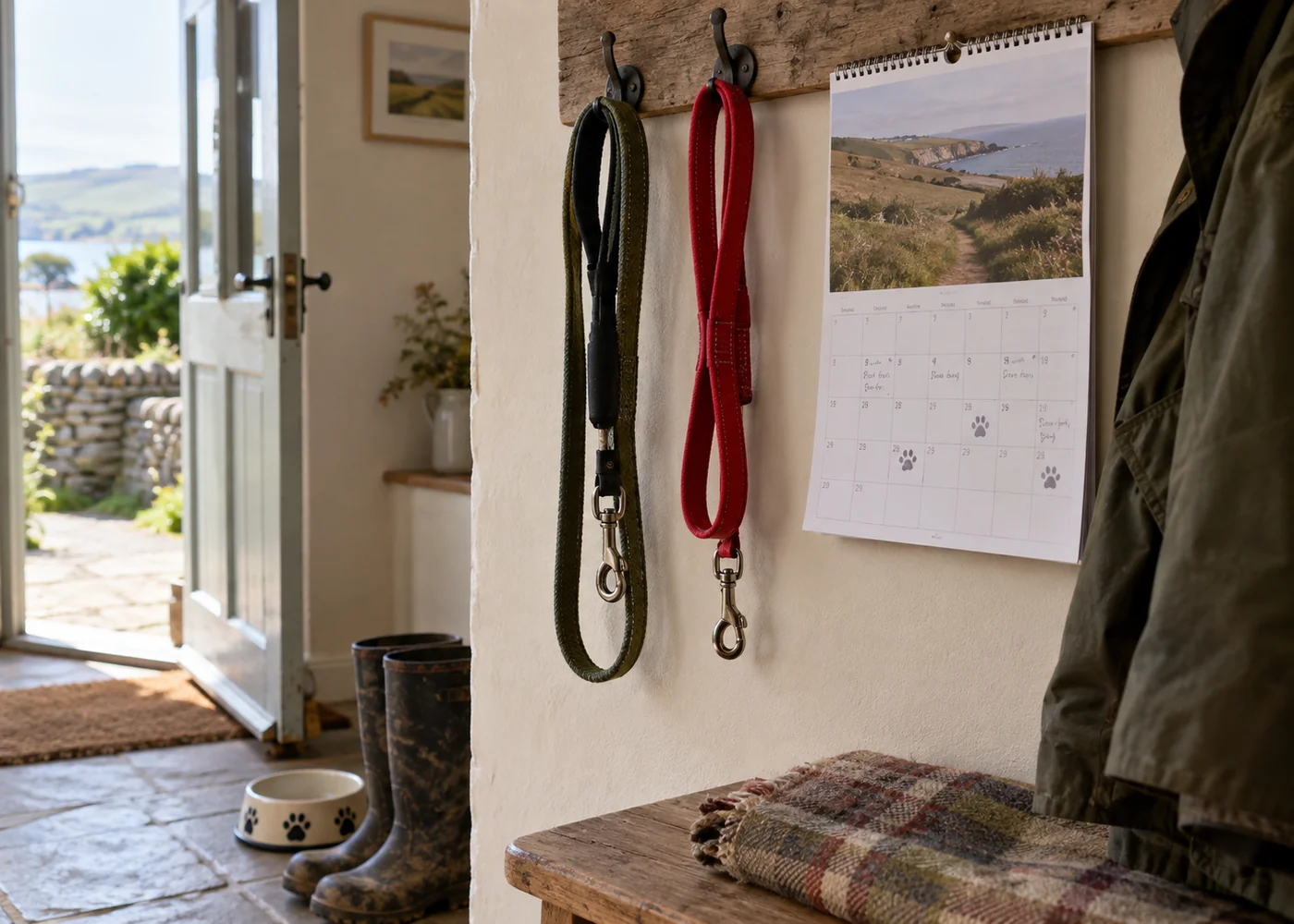
Name the everyday jobs
Start with the routines that must happen regardless of the day's outing: the early trip outside, meals, the final walk and keeping equipment ready. Agree who is responsible rather than saying everyone will help. Shared goodwill is valuable, but a dog still needs one person to know that a task has actually been done.
Fit the arrangement to the people and the dog. Someone unfamiliar with handling the dog should not automatically take a turn alone. Nor should the person who wakes earliest become responsible every morning without a conversation. Keep established care instructions clear and leave professional matters to the relevant guidance rather than changing the routine for convenience.
Keep the plan small
For two adults and a weekend, a spoken agreement may be enough. A larger group might prefer a short note beside the holiday plan or in a shared message. Avoid a timetable so detailed that it becomes another job. The useful information is who has responsibility now and who takes over next, especially when some people leave the cottage for separate activities.
Put the lead, bags and towel in a consistent place. Sharing a task is easier when the next person does not need to search every room for equipment. Let others know if something is wet or needs replacing. Small resets after a walk prevent the following person inheriting a bag with no waste bags or a towel hidden behind a door.
Include the final evening and departure morning in the agreement. Those are the moments when people become absorbed in packing and presume somebody else has kept the routine going. The person doing the last walk may need the towel left out and the car loading delayed briefly. Naming that arrangement early prevents equipment being packed just before it is needed.
Change it openly
If someone wants an early outing or a lie-in, swap the responsibility explicitly. Do not assume that another person will notice the change in plans and fill the gap. A brief check over dinner can settle the next morning. The point is to leave more room for a relaxed holiday, with the dog's normal needs reliably covered and nobody repeatedly giving up their own plans by default.