What makes an early spring cottage stay work
An early spring break can be about fresh light, quiet mornings and a comfortable base, with plans that do not depend on the season having fully arrived.
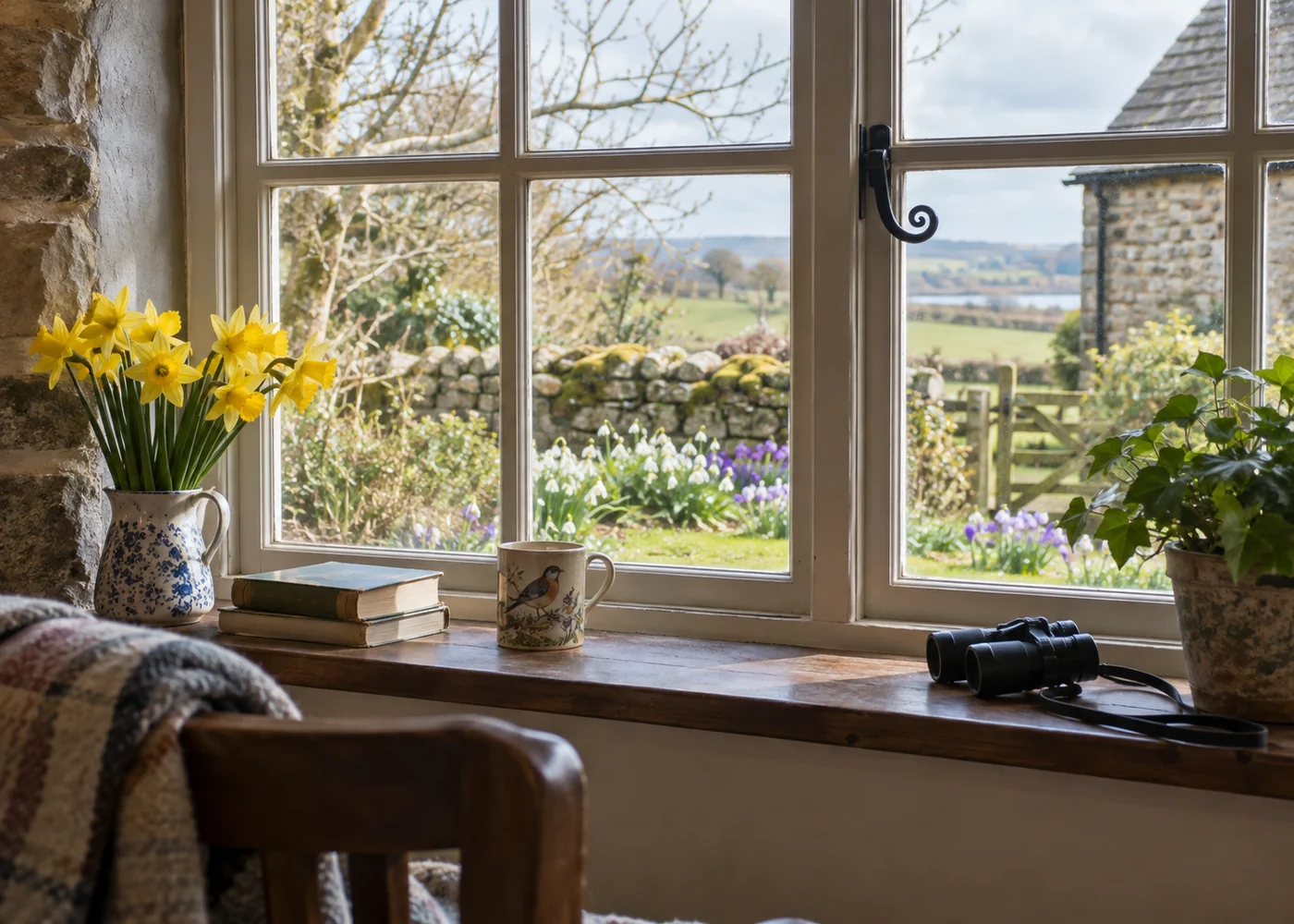
Choose the cottage for the whole day
Look closely at the indoor space as well as the garden photograph. You may spend more time reading, cooking or sitting together than you would on a summer trip. Comfortable seating, useful lighting and a dining table that suits the group are worth noticing. A beautiful terrace is an extra, not a substitute for a room you will enjoy when the weather encourages you inside.
Confirm how heating works and whether any facilities are seasonal. Ask a specific question if the listing leaves this unclear rather than assuming that a photograph of a stove describes the everyday heating arrangement. You should know how the occupied rooms are intended to be kept comfortable. Follow the host's instructions and raise a problem rather than improvising with an appliance or bringing equipment the property has not approved.
Consider the entrance and drying space. Spring outings can leave shoes and outerwear needing attention, and a small cottage can become crowded if everything is placed beside the sofa. A modest utility area or suitable hooks may be more useful than another decorative feature. If there is limited space, pack accordingly and choose a routine that leaves the main room available for living.
Keep seasonal expectations loose
Avoid booking the whole trip around a particular stage of blossom, a perfectly warm afternoon or a photograph taken in a different week. Natural timing varies, and a general seasonal description cannot promise what will be happening during your stay. Choose a destination and cottage you would still enjoy if the visual details are quieter than expected. Then an unexpectedly lovely day becomes a pleasure rather than a requirement.
Check current opening times for any attraction, café or shop important to the plan. Some places may operate differently outside their busiest period, and a general search result can conceal date-specific information. Use the venue's own current information where available. It is better to know that lunch needs another arrangement than to discover this after a walk chosen around a closed stop.
Keep at least one useful indoor or cottage-based option, but do not create a second full itinerary for every possible forecast. A book, a manageable meal and one nearby place you genuinely want to visit may cover the purpose. An alternative that requires a long drive and another set of bookings can make the break feel busier than the original plan.
Let the usable hours shape the outing
Look up the current forecast and daylight for the location and date when planning outdoor time. Do not borrow summer timings simply because the trip is labelled spring. Leave a comfortable margin for returning and dealing with wet equipment. Where an activity has specific safety considerations, use the relevant current guidance rather than assuming a short route is automatically straightforward.
Choose one main outing for a day and keep the rest modest. A slower breakfast followed by a local visit can be enough, particularly on a two-night stay. If conditions improve, you can extend the ordinary time outside appropriately; if they worsen, returning to the cottage should not feel like abandoning the holiday. The base is part of what you have chosen to enjoy.
Share the plan in a way that allows different preferences. Some guests may want a longer outdoor day, while others prefer a shorter visit and time indoors. Agree transport and any care responsibilities before splitting up. A cottage can accommodate several rhythms when nobody is unexpectedly left with all the domestic work while others follow their chosen plan.
Keep the evenings simple
Bring food for an easy arrival meal and check what the kitchen supplies. A long search for dinner after travelling can consume the most restful part of a short break. Later in the stay, leave room to buy something locally if that appeals, without assuming every shop will be open at the time you reach it. Modest planning gives you choices rather than a rigid menu.
Use the evening for the things the house supports: conversation, reading, a game or a meal at the table. There is no need to fill darker or cooler hours with extra driving. If you use supplied entertainment or appliances, follow the instructions and keep personal accounts secure. The pleasure of the stay may be that everything needed for a comfortable evening is already in one place.
Before leaving, note which features mattered most. The useful discovery may be that direct garden access, a good reading chair or a proper drying area made the trip easier. Those observations are more helpful for the next booking than deciding that early spring is always quiet, wet or warm. Each stay has its own conditions; a well-chosen cottage gives you room to enjoy them without needing a particular version of the season.