Give the family holiday a slower first morning
The first morning can be a chance to understand the cottage and settle the family before starting the main holiday plan.
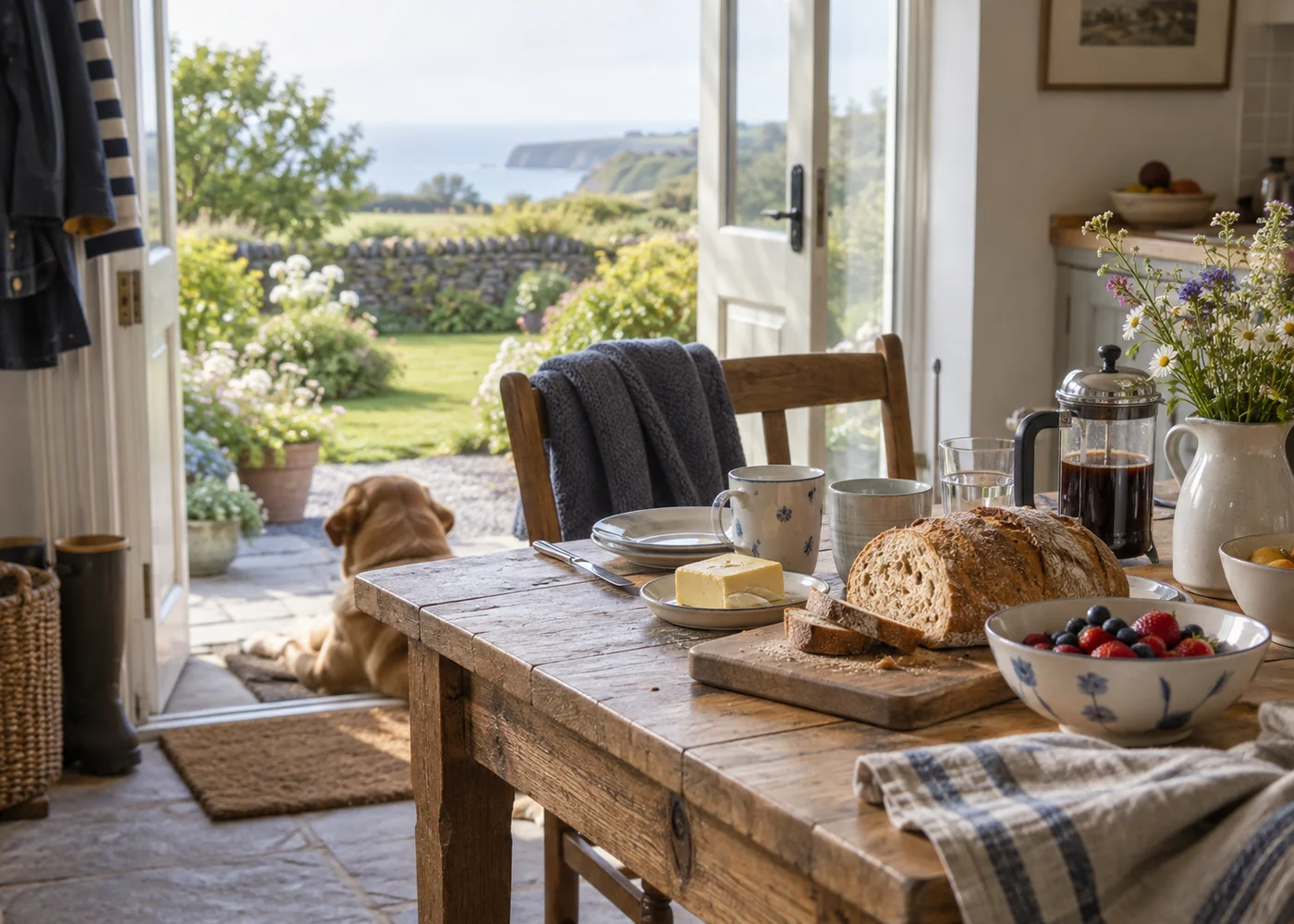
Bring breakfast into the arrival plan
Have a straightforward breakfast available so nobody needs to search for an open shop immediately after waking. Check the kitchen equipment and bring suitable basics for your family's needs. You do not need a full week's menu, only enough to make the first morning feel manageable. If a delivery is planned, ensure it fits the host's arrival arrangements and have an ordinary fallback if timing changes.
Keep essential belongings easy to find. Put washbags, everyday clothes and the children's familiar items where they belong before the first night, rather than leaving every suitcase in the hall. A little unpacking helps the morning begin without a repeated search through bags. Save the decorative or non-essential settling-in for later.
Learn the house at an ordinary pace
After breakfast, find the useful things together: the permitted garden route, waste arrangements, coat storage and the information left by the host. Explain any relevant house rules simply. Children do not need a formal tour of every cupboard, but they should know the boundaries of the spaces they will use and which doors lead outside.
Let each adult handle a clear task rather than one person answering every question. Someone can organise the day's food while another checks the planned route or helps children put belongings away. The purpose is to make the house usable, not to complete a domestic checklist before anyone is allowed to enjoy the stay.
If the journey was tiring, leave the first outing modest. A nearby visit or a short suitable walk may be enough to begin with. Do not assume the family will want the most ambitious activity immediately because everyone is technically on holiday. A slower start can make later plans easier to enjoy without turning the whole day into a recovery period.
If the cottage has a garden, learn its boundaries and access arrangement before treating it as the morning's play space. Follow the host's information and the supervision needs of your family. A photograph cannot show every feature or current condition. Taking a little time to understand the space now is more useful than assuming a rural setting makes every part of it suitable for unsupervised use.
Choose one next step
Offer a small number of realistic options rather than asking the group to design the whole week over breakfast. Check current opening times or conditions where relevant, then choose what fits the morning. If children have a say, make the options ones you are genuinely willing to do. This avoids a discussion that ends with every suggestion being rejected for reasons they could not have known.
Keep lunch in mind so the outing does not become longer simply because nobody has decided where to eat. Bring or plan food appropriately, and allow a return to the cottage if that suits the group. Familiar meal timing can be a useful anchor in an unfamiliar place without requiring every day to resemble home.
There will be time to use the guidebooks and saved ideas later. The first morning has a simpler job: turn the property from a place full of luggage into somewhere the family can live comfortably for a few days. Once that happens, the holiday choices tend to feel less like another set of tasks.
For a longer stay, use this first morning to notice one or two supplies that are genuinely missing, then make a modest shopping list. Avoid an immediate large shop based on what you imagine every day will require. The fridge, cupboard space and family's appetite may differ from home. Buying what supports the next day or two can keep the kitchen easier to use while you learn how the week is likely to unfold.