Use up the food before the journey home
The last food shop should look different from the first. A quick review can reduce waste and simplify departure.
Look before buying
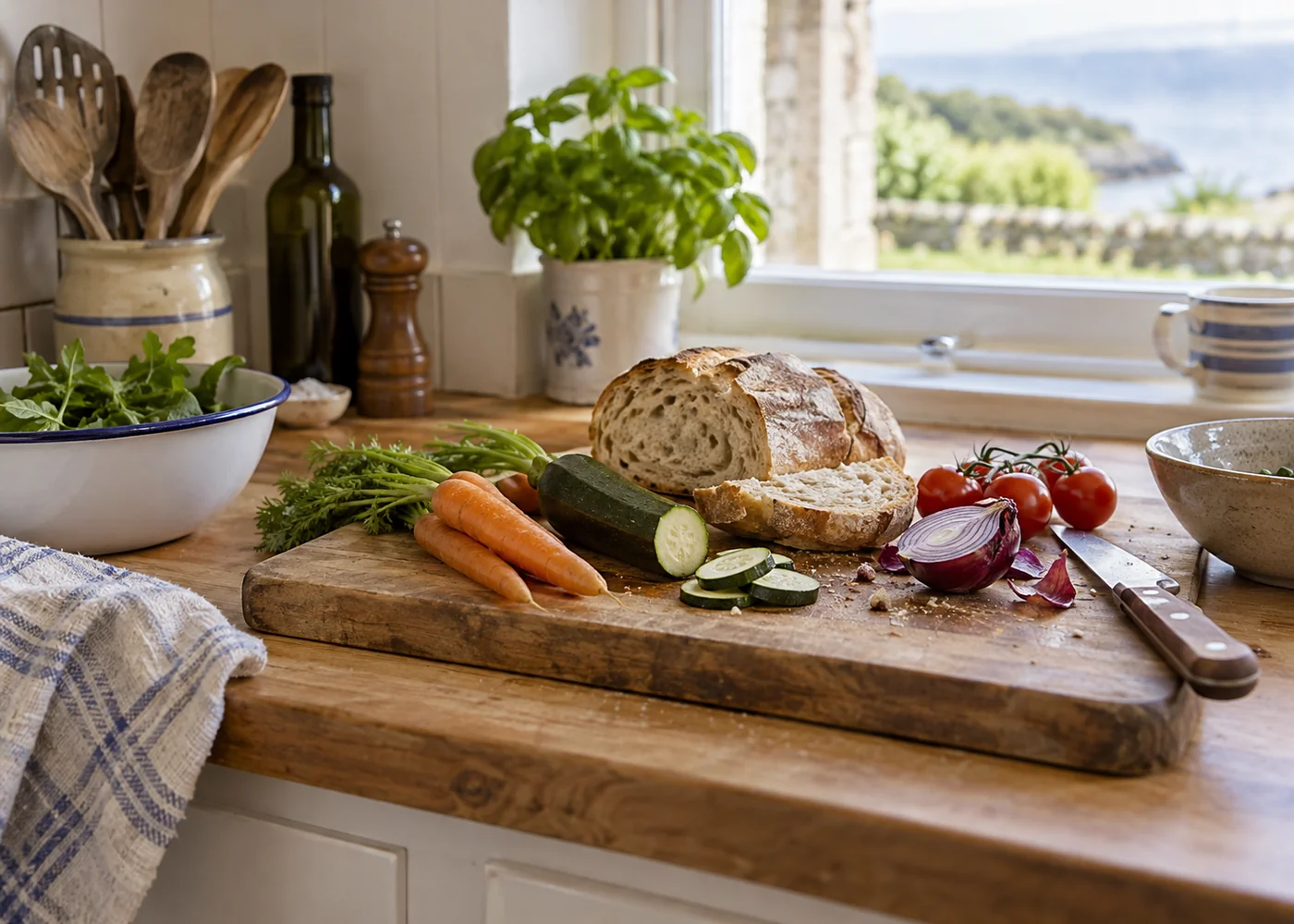
Keep a visible note of the next meal's ingredients if several people shop. It can be as simple as naming the vegetables and bread already available. This gives everyone a shared picture without requiring access to someone else's phone or a detailed inventory. Update it when food is used so the note does not become another misleading assumption.
A couple of days before leaving, check the fridge, freezer and cupboards you have used. Group the food mentally into what can form a meal, what can travel and what needs dealing with before checkout.
Read labels and storage instructions rather than judging safety by appearance alone. If food has not been stored appropriately or you are uncertain about its suitability, do not make using it up the priority. This is a planning exercise, not a way to rescue everything.
Tell the group what is already available before anyone shops independently. Duplicate bread, milk or vegetables often accumulate because each person is being helpful without seeing the whole supply.
Build one simple meal
Choose a meal around suitable remaining ingredients, adding only what is needed to make it work. A flexible dish is easier than buying several new items for a recipe intended to clear the fridge.
Keep established dietary requirements in view. Mixing everything together is not helpful if it prevents someone from eating or obscures ingredients they need to avoid.
Do not rely on the cottage having containers for prepared food. If you intend to take any away, use appropriate containers and a transport arrangement suited to the food and journey.
Decide what can go home
Shelf-stable items that remain properly sealed or stored may be straightforward to pack. Chilled and frozen foods need appropriate temperature control throughout travel; an ordinary bag in a warm car is not a substitute.
Consider the actual length of the journey and any stops. Sometimes it is more sensible to buy less in the first place than to organise transport for several perishable leftovers.
Keep food separate from cleaning products and other unsuitable luggage contents. Label or retain packaging where it provides important instructions or ingredient information.
Leave nothing by assumption
Ask before leaving food for the owner or future guests. Even unopened items may not be wanted or may conflict with the property's cleaning routine. A note saying “help yourself” does not replace permission.
Dispose of unsuitable or unwanted food according to the cottage's local waste arrangements, and clear the storage areas you used. Check small freezer compartments and cupboards away from the main worktop.
The most effective way to avoid waste is to adjust the last few days while there is still time to eat normally. Departure morning is a poor moment to discover that a generous first shop never matched the meals the group actually wanted.