Agree on bedrooms before a friends' weekend
Agree who sleeps where while the booking is still a plan, not when the first person walks through the door with a suitcase.
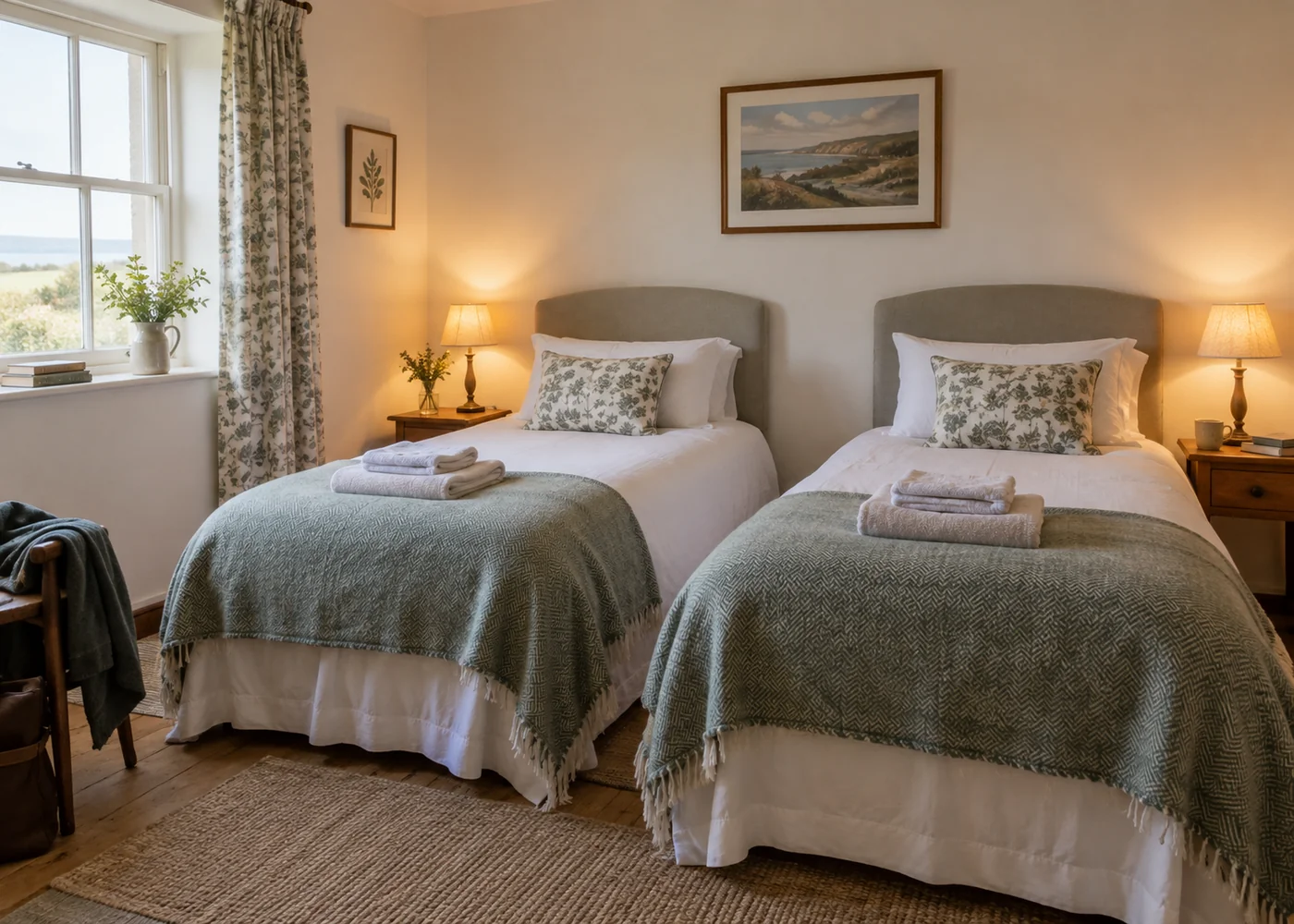
Look beyond the bedroom count
Read the bed configurations and floor plan together. A cottage with four bedrooms may include a small single, a bunk room or a room reached through another. Those differences affect privacy and comfort. Share the actual listing with everyone and avoid reducing it to a message saying there are enough beds. People need to know what they are agreeing to, especially on a longer stay.
Ask whether twin beds can be separated or a double configuration changed, and confirm any request with the host. Do not assume a photograph shows all available options. If a sofa bed forms part of the capacity, discuss what that means for the sitting room in the evening and morning. The person using it should not discover that they are effectively sharing a room with every late-night conversation.
Use clear reasons for the choice
Consider practical needs first: access, proximity to a bathroom, privacy or a suitable bed. Then discuss preferences. A first-come system can favour the person with the easiest journey rather than produce a fair result. Equally, an organiser should not have to pretend every room is identical. Naming the differences calmly makes it easier to agree a sensible allocation.
Where rooms differ substantially, decide whether that affects contributions. There is no single correct formula for friends, but there should be an agreed one. Some groups share equally because they value the trip as a whole; others adjust for a smaller room or a shorter stay. Settle this before booking rather than attaching a surprise price to a bedroom on arrival.
Avoid promises based on incomplete information. If somebody says they are happy anywhere, check that they have seen the actual options. They may mean either of two double rooms, not a sofa bed beside the kitchen. A simple confirmation prevents a generous phrase from being interpreted more widely than intended.
Consider the length of the stay when judging a compromise. A smaller room without much storage may be easy for two nights and less comfortable for a week. Likewise, a room beside the kitchen may suit the earliest riser better than someone hoping to sleep late. Discuss these ordinary details without treating one room as a prize and another as a punishment. A practical match can feel fairer than drawing names from a hat while ignoring information the group already has.
Leave space for the luggage too
Think about storage and the route around each bed. Two friends sharing a small twin room may need to keep large cases elsewhere if that is permitted and does not obstruct the house. Encourage compact packing for a short stay. The aim is not to police luggage, but to avoid turning a workable bedroom into a narrow course between open bags.
Send the final allocation with the arrival information so nobody needs to negotiate at the door. If a genuine problem appears when you arrive, discuss it with the group and contact the host where relevant. Do not move furniture or change the booking capacity to solve it. Most stays need only a clear decision in advance, leaving the first evening for food and conversation rather than an awkward tour of the bedrooms.
If people arrive on different days, make sure the allocation still works throughout the booking. A room used temporarily by one guest may be needed later, and moving bedding and belongings halfway through can be more awkward than expected. Agree any swap explicitly and check that it stays within the booking conditions. It may be simpler to leave the later guest's room ready from the start rather than use every available bed immediately.