Look closely at garden edges and gates
A garden photograph can show a lovely sitting area while leaving the edges almost entirely unexplained.
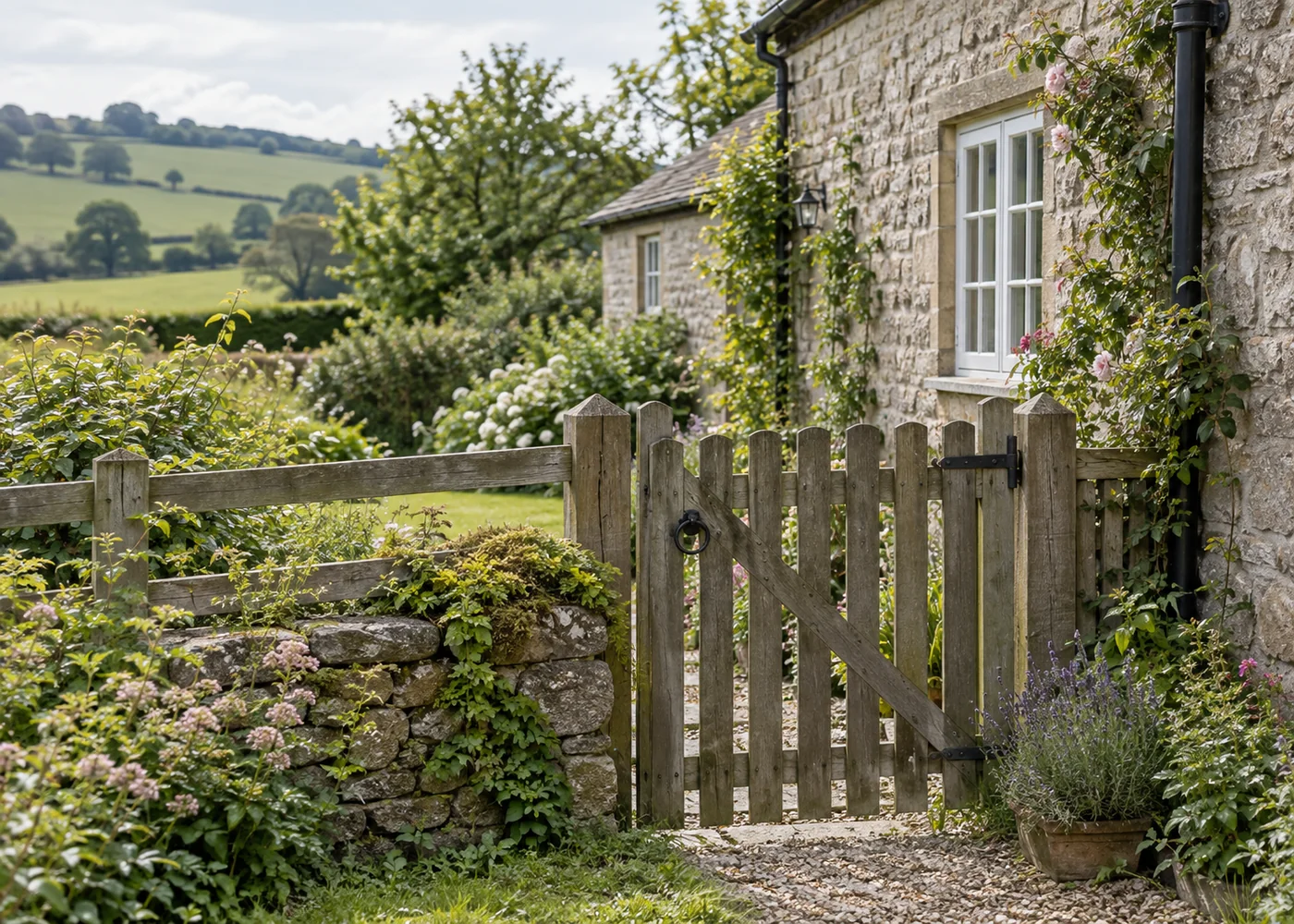
Walk the boundary on paper
Ask what encloses the space: walls, fences, hedges, gates or a combination. “Enclosed” can describe a visual boundary without answering whether there are gaps underneath, open sections or shared entrances. The details needed depend on how you intend to use the garden.
For a dog, explain the relevant concern to the owner and ask for factual information about the whole perimeter. No description can guarantee that every dog will remain within it. Supervision and your own assessment on arrival remain important.
For children, consider nearby roads, water, changes in level and routes into shared areas. A gate at the front does not describe what happens at the back. Ask about the features that could affect your group's use rather than relying on a general “family garden” label.
Notice who uses the gates
Find out whether another household, gardener or service provider needs access through the space. A private-use garden may still have an occasional access arrangement. Knowing that in advance helps you understand why a gate might be opened and how to manage pets or belongings.
Ask how gates should be left. In rural settings, do not change the position of gates beyond the property's instructions or assume neighbouring land is part of the accommodation. A field visible from the garden is not automatically a place guests may enter.
Check whether the garden connects directly to the cottage or requires crossing a shared area. That changes how easily you can supervise and how spontaneous outdoor use will feel.
Examine the useful part of the garden
Boundaries are only one feature. Steps, raised terraces and planting can affect where people sit or move. Request wider photographs if the listing focuses entirely on a single attractive corner.
Think about visibility from indoors. A garden may be large without the whole area being visible from the kitchen or sitting room. Do not assume you can supervise activity from a window simply because the door opens onto the lawn.
Look at the surface near the entrance too. Muddy patches or gravel may be manageable, but they influence footwear and the route back inside.
Make a fresh check on arrival
Before allowing a dog off lead or using the garden with children, inspect the actual space and apply the supervision appropriate to your circumstances. Report a damaged gate or unexpected opening to the manager.
If the boundary does not meet an essential need, do not improvise a repair or move furniture into a barrier without permission. Use another safe arrangement and discuss the issue with the owner.
The aim of asking early is not to obtain an absolute promise. It is to avoid choosing a property whose basic layout conflicts with the way your household needs to use the outside space.