Look at the kitchen before inviting everyone
A kitchen can look generous in photographs and still struggle with a large group's dinner. Check work space, equipment and storage against the meals you intend to make.
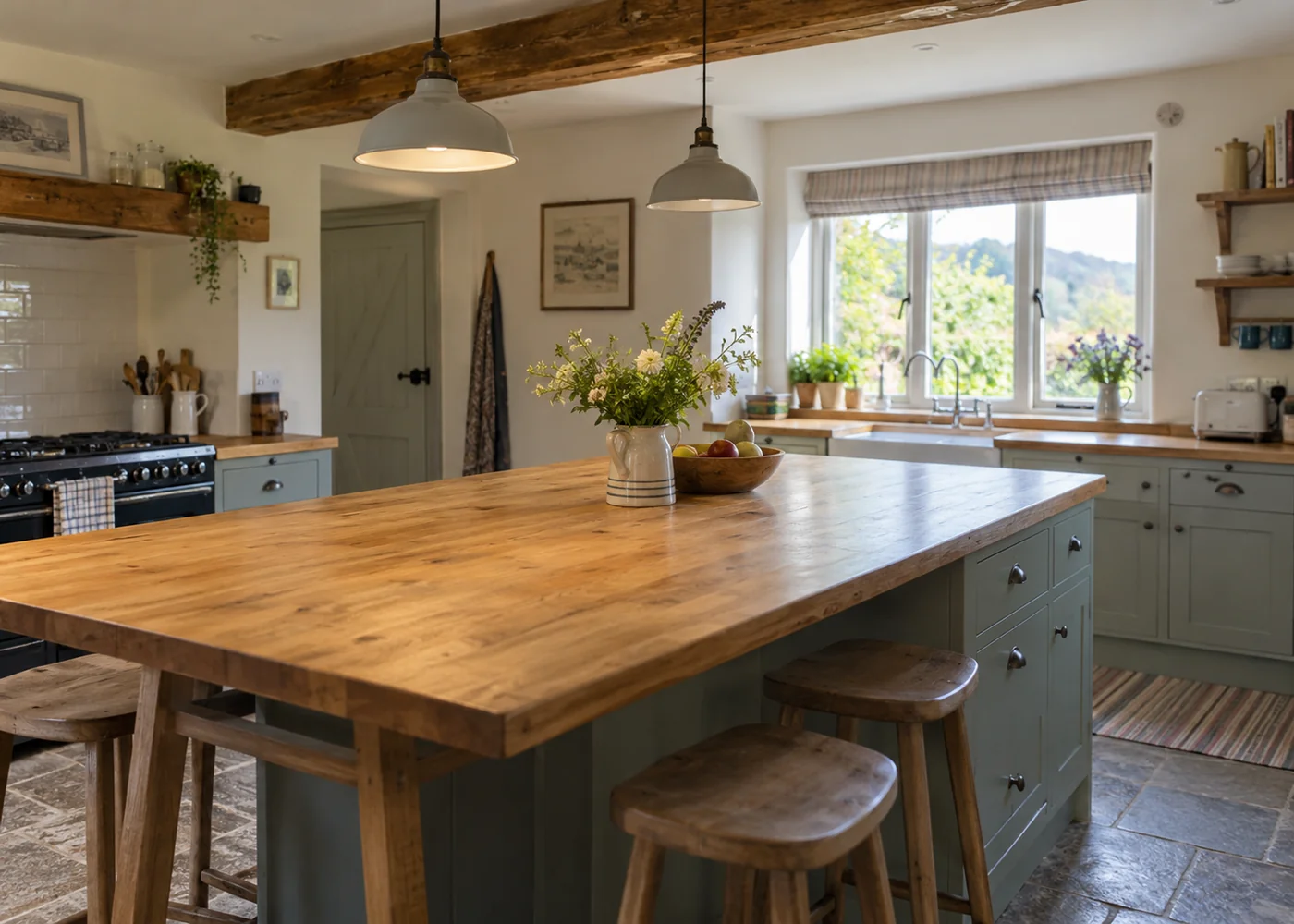
Count the practical capacity
Start with the number of people who will eat together, not just the number of bedrooms. Look for dining places, suitable crockery and enough space to serve a meal without balancing dishes on windowsills. A property may accommodate a large group comfortably while expecting guests to eat out frequently. Ask what is supplied if the listing does not make the kitchen's capacity clear.
Check the oven and hob arrangement when a particular meal depends on them. One large oven is different from two smaller cavities, and the number of rings does not tell you how many large pans fit together. You do not need a professional kitchen for a holiday, but you do need to avoid promising a meal whose equipment requirements exceed what is there. Adjust the menu before shopping.
Ask about any item that is essential rather than sending a request for an entire inventory. A large roasting tin, a suitable pan or enough baking trays may matter; a preferred style of serving spoon probably does not. Hosts can answer useful questions more easily when you explain the actual cooking plan. Be prepared to choose a simpler dish if the kitchen is not designed for it.
Follow the movement through the room
Look at where people stand while preparing food, opening the fridge and reaching the sink. A narrow kitchen can work well with one cook and someone setting the table elsewhere, but become frustrating with five people trying to help. Decide how to share tasks without crowding the same patch of worktop. More hands do not always produce a meal faster.
Notice whether the kitchen is a route to the garden, bathroom or another room. People carrying plates should not have to negotiate a stream of boots and coats. Keep luggage and general holiday equipment out of the food preparation area. If the house is open-plan, choose a separate place for games and paperwork so the dining surface remains available when it is needed.
Consider the evening as well as preparation. Can everyone sit down while food is still being finished? Is there somewhere to put used pans without occupying the table? A modest clear surface beside the cooker can matter more than a decorative island that mainly displays the welcome basket. Look for the spaces you will use, including the less photogenic ones.
Shop to fit the storage
Coordinate groceries across households. Several cool bags arriving at once can fill a fridge before anyone has opened them properly. Ask about fridge and freezer capacity where this is important, and plan purchases accordingly. Follow appropriate food-storage guidance rather than treating every free corner as an acceptable place for another container.
Buy for the first part of a longer stay rather than assuming the cottage can hold a week's food for a large group. Check local shopping options and delivery arrangements if you intend to use them, including the host's arrival timing. Do not arrange a delivery before you are entitled to occupy the property or expect the owner to receive and store it without agreement.
Leave some cupboard and worktop space unfilled. Large multipacks may be economical at home but awkward for a short break when only a small quantity is needed. Coordinate basics such as oil, tea and breakfast items so they are not duplicated by every household. A kitchen that remains usable is worth more than a collection of bargains taking up its only preparation surface.
Make the clean-up fit too
Check the dishwasher arrangement and supplied instructions, but do not assume every item can go in it. Identify where recycling and other waste belong before cooking begins. If several people are helping, give them separate tasks so nobody is repeatedly moving another person's pile of dishes. A quick clear during preparation can leave much less work after dinner.
Plan the last evening's meal with departure in mind. A complicated feast may leave cookware, leftovers and shopping to manage during checkout. Something straightforward can still feel like a shared occasion while allowing you to return the kitchen to the condition required. Follow the host's instructions rather than inventing extra cleaning tasks or leaving unfinished appliance cycles.
The best test is simple: can you imagine making an ordinary meal here without borrowing equipment, moving furniture or asking half the group to stand outside? If so, the kitchen probably supports the holiday you are planning. If not, change the menu, the number of cooked meals or the property before the shopping list makes those decisions harder.