Getting comfortable in a chilly cottage
A chilly first impression calls for the property's instructions, a little patience and a clear report if something is not working.
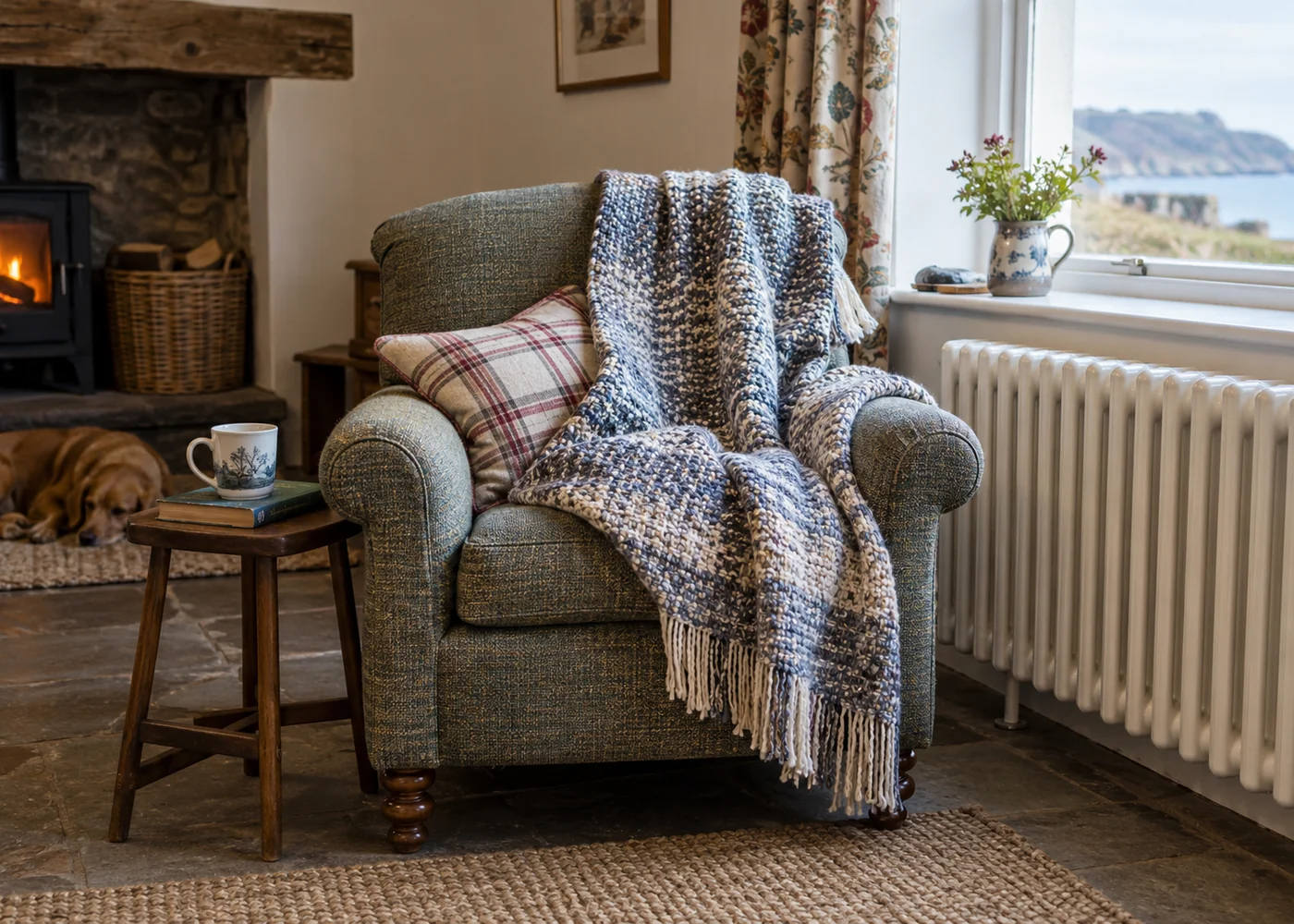
Establish the normal arrangement
Find the heating guidance before changing controls. Check which rooms have which system and what guests are allowed to adjust. A thermostat, timer and individual radiator control may play different roles.
Look for a simple explanation of how the cottage is normally prepared for arrival. If the expected heat is absent, contact the manager and describe the situation. They may be able to clarify the setting without anyone experimenting.
Do not open service cupboards, reset unfamiliar systems repeatedly or attempt repairs. The booking contact should explain the appropriate next step for a problem.
Make ordinary comfort adjustments
Use the supplied blankets and your normal indoor layers while the situation is clarified. Close doors or windows only as appropriate to the property's guidance, and do not block required ventilation.
If the cottage has a stove, use it only with the owner's permission and the correct instructions. It should not become an improvised answer to another heating problem if nobody understands the appliance.
Do not bring in or plug in an extra heater without an appropriate, authorised arrangement. Keep belongings away from heat sources and use designated drying spaces rather than covering equipment with damp clothes.
Give a useful description
Explain which rooms feel affected, what the controls show and whether the situation changes after following the instructions. A clear account helps more than saying only that the cottage is cold.
If someone in the group has an essential comfort requirement, make that known promptly. Avoid waiting until the final evening to raise a problem that affects the whole stay.
Keep communication through the stated contact route and save relevant replies. For an immediate safety concern, use appropriate emergency assistance rather than waiting for ordinary correspondence.
Review the evening plan
While a non-urgent issue is being addressed, simplify dinner and unpack only what is useful. A warm drink or a different activity may make the wait easier, but should not be presented as a substitute for resolving a genuine accommodation problem.
Once the system is working as described, avoid constant adjustment. Learn the intended routine and let the room settle.
For future bookings, use the experience to ask more specific questions about the whole cottage's heating. A clear understanding before arrival is more reliable than expecting a fireplace photograph to explain how every room will feel.