A cottage layout for people with different routines
For a group, the best cottage is often the one that lets people do different things without getting in each other's way.
Count people through a whole day
Advertised capacity usually begins with sleeping places, but a group also needs to eat, sit, wash and move around. Look at those shared functions together. A house can contain enough beds while offering a single compact dining table or limited comfortable seating.
Make a provisional room allocation and check it with the people concerned. Separate households may have different preferences about sharing bathrooms or being near children. Resolve the important points before booking rather than expecting everyone to adapt silently on arrival.
Identify any sofa beds or rooms reached through another room. These arrangements can be workable when agreed, but they change privacy and daytime use. Do not count a converted sitting room as both a fully available lounge and an occupied bedroom at the same time.
Find the pinch points
Morning routines often reveal the most useful questions. How many people want a shower before leaving? Can someone make breakfast while another prepares packed lunches? Is the entrance large enough for several people putting on shoes?
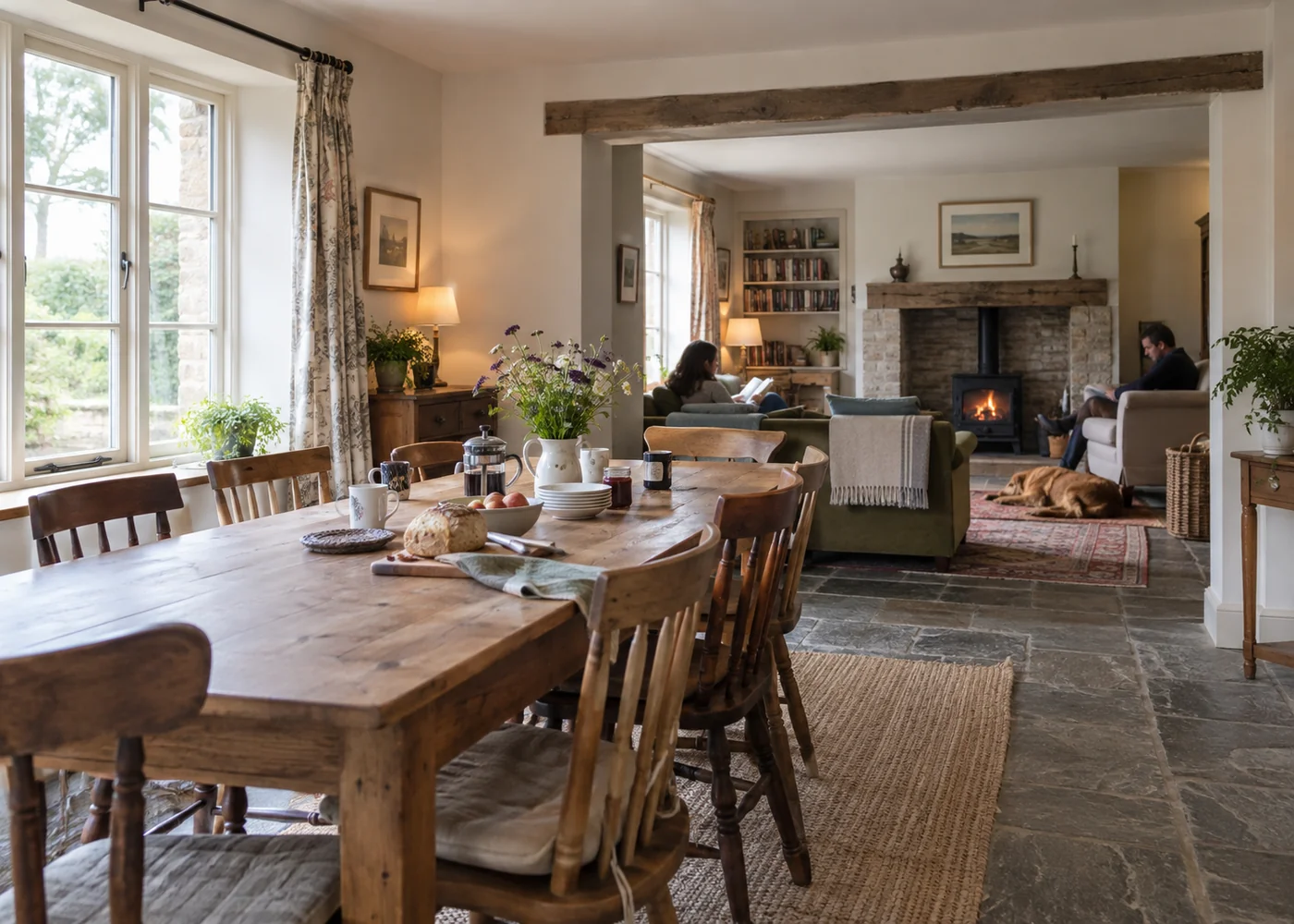
Look at the kitchen's working area and the dining table when fully used. Extra chairs may solve seating numbers while narrowing the main route. Ask for a photograph of the full arrangement if the gallery only shows a few place settings.
Storage also scales with the group. Coats, groceries and bags need somewhere to go. A utility room or clear entrance area can be more valuable than an additional decorative feature in the lounge.
Give different routines somewhere to happen
Early risers and late sleepers do not need a complicated agreement if the layout provides some separation. A kitchen away from bedrooms or a second sitting room can reduce the need for everyone to keep the same hours.
For people who want to read while others watch television, look for a quieter corner with a useful chair and light. An impressive open-plan room may be sociable, but it shares sound. Decide whether that suits the group rather than assuming bigger always means more flexible.
If someone needs a work call or a daytime rest, consider where that would happen without taking over another person's bedroom. A separate room is useful only if it is actually available for that purpose.
Plan shared work lightly
A suitable layout reduces chores but does not remove them. Discuss a simple approach to meals and clearing up so that one person does not become the default organiser. A couple of shared dinners may be easier than trying to coordinate every meal.
Check the size of pans, fridge and dishwasher if cooking for the full group is important. The answer may influence the menu rather than the booking. Simple meals can work well in a modest kitchen when expectations are realistic.
Think about departure as well. Several cars, bags and simultaneous cleaning tasks can crowd an entrance. Clear parking and a little staging make the final morning easier, especially where vehicles are arranged in tandem.
Include the surroundings
A large garden is useful only if its boundaries, access and seating fit the group. Ask about shared spaces and neighbours, and make sure everyone understands the property's use rules. More people can generate more sound without anyone intending to be disruptive.
Parking needs should be counted by vehicles, not households. Confirm the permitted number and arrangement. If some guests arrive by public transport, check the last part of their journey rather than assuming someone can always collect them at short notice.
The group should also share a realistic idea of the location: whether shops require a drive, whether walks begin at the door and how secluded the setting feels.
Choose enough room to be yourselves
The ideal group cottage does not force constant togetherness. It gives people an easy way to join in and an acceptable place to step away. That may come from several modest rooms rather than one enormous communal area.
When comparing properties, ask whose needs are being compromised and how often. A room that inconveniences one person every night deserves more attention than an extra few minutes on a shared outing.
Once the arrangement works, leave the stay flexible. Good planning should make the house easier to live in, not turn it into a timetable. The layout's job is to support the group's different rhythms so the time spent together remains enjoyable.