Spend a holiday together at different speeds
A shared cottage does not require a shared speed. Build the stay around a few common moments and let the rest of the day hold different preferences.
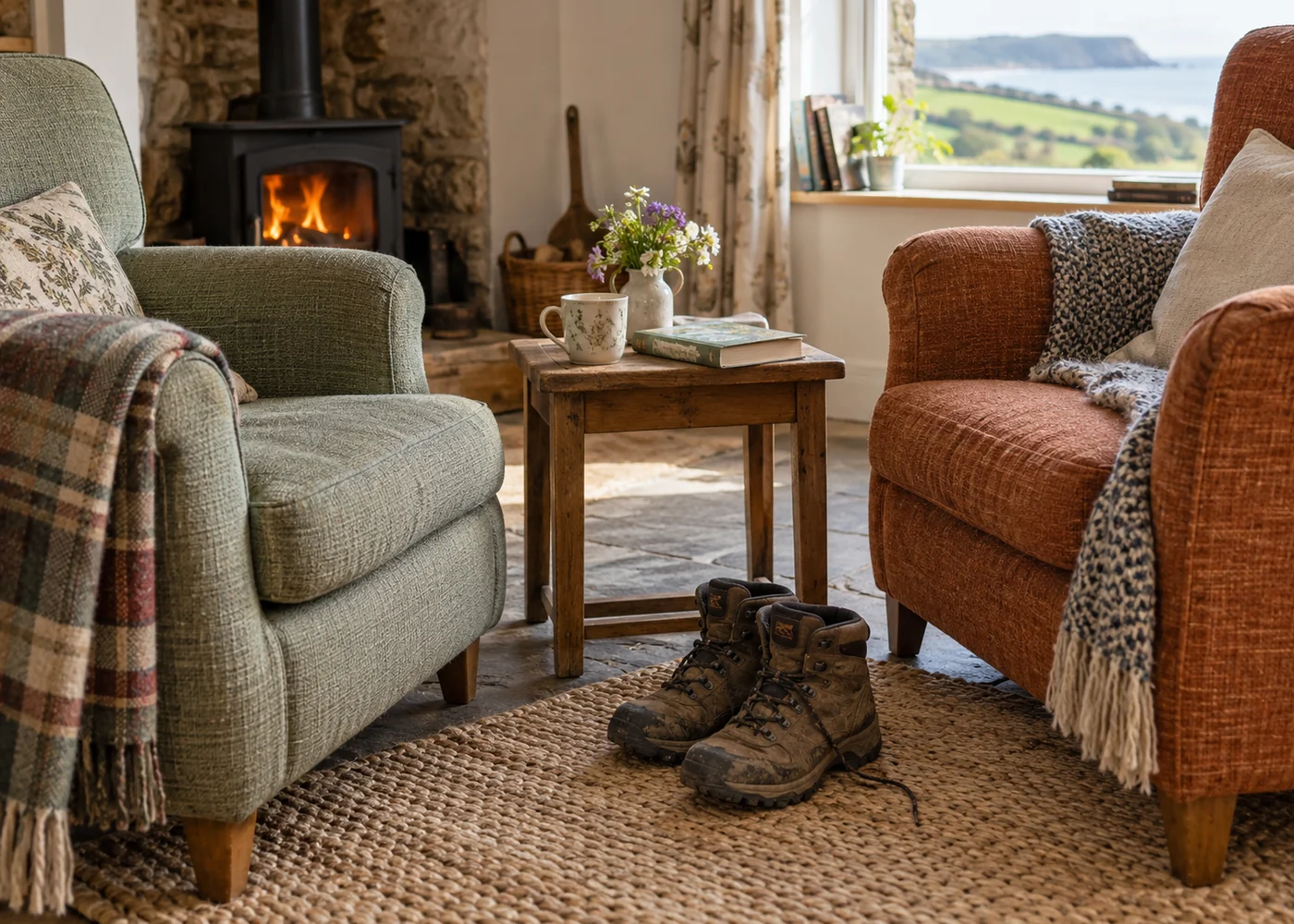
Describe the holiday each person wants
Ask people what a satisfying day would look like before making a list of attractions. Some may want a long walk, others a slow breakfast and a book, and some a mixture. These are not levels of commitment to the group. Treating one pace as the proper holiday can make everyone else feel they must justify how they use time they have also paid to enjoy.
Identify any practical needs that affect the plan, allowing private conversations where appropriate. A person may want fewer outings because of fatigue, access requirements, caring responsibilities or simply preference. You do not need to rank the reasons. The useful question is what arrangement will let them participate comfortably and which parts of the day they would genuinely like to share.
Choose accommodation that supports more than one activity. A separate sitting area or a useful outdoor space can help, but only if the indoor layout also works in poor weather. A single open room may be lively for a weekend and tiring for a week when television, cooking and quiet reading compete. Look at the spaces people will use during the day, not just the number of beds.
Give the day a few meeting points
A shared breakfast, a late lunch or dinner can provide enough structure. Agree a time that fits the main plans, then let smaller groups organise themselves around it. Do not turn every meal into a compulsory meeting if that makes a longer outing impossible. You can choose different shared moments on different days rather than following one timetable throughout the stay.
Be clear about which arrangements are fixed and which are suggestions. A message saying people might visit the village can be read as an invitation or as a plan everyone is expected to join. Simple wording prevents a surprising amount of friction. Say when you are leaving, whether a booking is involved and whether others can decide later.
Allow someone to stay at the cottage without assigning them jobs. Being present does not automatically mean providing lunch, supervising children, waiting for a delivery or doing the washing up. Ask if help is needed and make the choice real. Quiet time should not become the group's spare capacity simply because it happens in the same building.
Solve the transport before splitting up
Separate plans are only practical if people can reach them. Count cars, drivers and realistic return times. A person who depends on the group's only car may not have the freedom the itinerary appears to offer. Consider whether an outing can start from the cottage, whether a lift is workable or whether the day should be arranged differently.
Avoid elaborate chains of collections that leave everybody watching the clock. A modest local plan can be more enjoyable than several distant activities linked by one overworked driver. If a group splits, agree how people will communicate and what happens if a return is delayed. Keep the arrangement suitable for the location rather than assuming a phone signal or transport option will always be available.
Check the needs of children, dogs and anyone requiring assistance explicitly. They cannot be left as an unspoken responsibility between two groups departing in different directions. Name the responsible adult and make sure the plan has been agreed. Once that is clear, everyone can enjoy their chosen part of the day without repeatedly checking who was supposed to be doing what.
Rejoin without comparing achievements
At the evening meal, let different days be equally interesting. A long route does not outrank an afternoon reading, and a quiet day does not make someone responsible for entertaining the walkers when they return. Ask about what people enjoyed rather than how much they fitted in. This keeps the shared conversation open instead of turning it into a report of who used the destination best.
Review the next day lightly. If one plan was too ambitious or the house felt crowded, adjust it without treating the original choice as a mistake. A cottage stay offers the flexibility to change pace, especially when not every hour has been booked. Preserve that advantage rather than rebuilding a timetable each night.
You may find that the most memorable parts are the common edges of the day: coffee before people leave, cooking alongside someone later, or a conversation after dinner. Those moments are easier to enjoy when nobody has had to spend the whole day at someone else's speed to earn them.