Find a cottage that works across generations
A stay across generations works best when access, privacy and daily pace are discussed together, before the most enthusiastic person chooses the house.
Ask each household what matters
Begin with the practical needs people are comfortable sharing. Someone may require a bedroom near a bathroom, another may need a quiet place to rest, and a family with young children may prioritise how rooms connect. Do not infer these needs from age alone. An older relative may be the keenest walker in the group, while a younger adult may need the easiest route through the house.
Give people a way to raise a requirement privately with the organiser if they prefer. A group message is not always the right place for personal details. The organiser can turn the requirement into a property question without explaining its medical or personal background to everyone. What matters for the booking is the feature needed, such as a particular doorway width or an appropriate bathroom arrangement.
Separate essentials from preferences before viewing properties. Otherwise an attractive garden can distract the group from a layout that will not work. A short shared brief might specify the number of proper beds, necessary access features and a comfortable dining space, then leave décor and extras open. This prevents each new listing reopening the whole discussion.
Read the house as a set of routes
Trace the route from parking to the entrance, then to bedrooms, bathrooms, kitchen and sitting areas. A ground-floor bedroom is less useful if the only suitable bathroom is elsewhere or the entrance involves steps. Request measurements and photographs where needed. VisitScotland describes accessibility guides as factual information about access to and within a building; that level of detail is more useful than a general claim that a property suits everybody.
Ask about the specific rooms you expect to allocate. A downstairs bedroom may be small, a garden room may be separate from the house, and a bathroom described as nearby may involve a change of level. Let the person with the requirement judge the information rather than having the organiser decide what is manageable on their behalf. If the host cannot confirm a critical feature, continue looking.
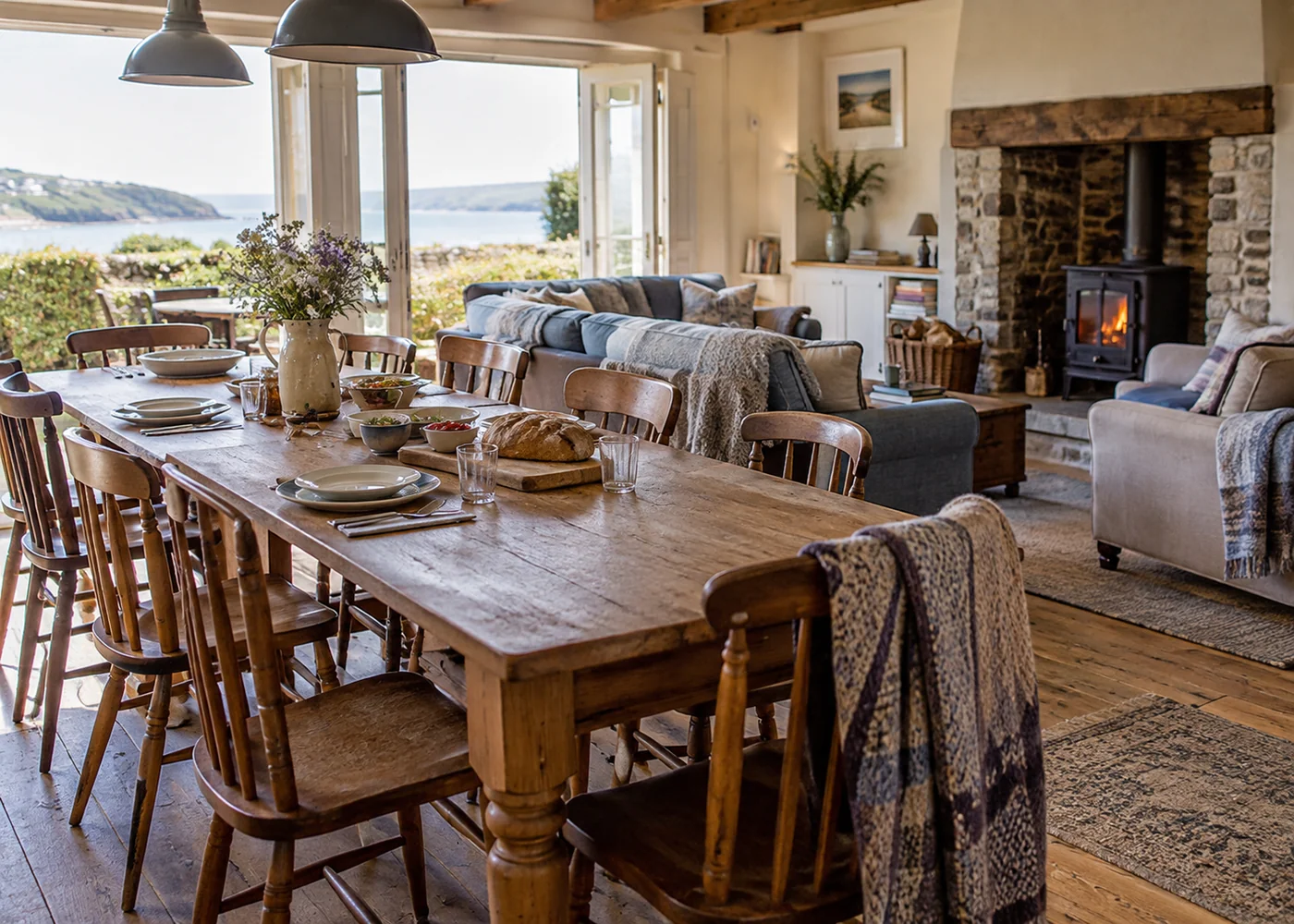
Look for comfortable everyday seating as well as the advertised bed count. A house sleeping ten may not have ten seats that suit your group for an evening conversation. Dining chairs, low sofas and benches serve different purposes. Ask for clarification if photographs do not show the full arrangement, and think about whether people can sit together without anyone repeatedly bringing furniture from another room.
Allow several versions of the same day
Plan a few shared moments instead of insisting on a single itinerary. Breakfast, a meal together or an easy visit can anchor the day while different groups do other things. Some may want a longer walk; others may prefer a shop, a garden or time at the cottage. These choices need not be treated as competing levels of enthusiasm.
Make transport explicit. If everyone depends on one car, separate plans may not be as flexible as they sound. Discuss who needs a lift and whether an outing can be shortened or split. Do not assume that the person staying behind will automatically provide childcare, cook dinner or wait for a delivery. Quiet time is still holiday time and should be agreed on its own terms.
Keep one room or corner available for rest if the property allows. A busy kitchen, television and children's game can make an open-plan house feel lively all day. A second sitting area may be more useful than another decorative bedroom. This is particularly relevant on a longer stay or when the weather encourages everyone indoors at once.
Share the work without a rigid timetable
Agree how meals, shopping and clearing up will happen. You might rotate simple dinners, pair households for cooking or decide that several meals will be bought. Choose an arrangement that reflects what people can and want to do rather than dividing every task mechanically. Someone who enjoys cooking can still need help with shopping, setting the table and washing up.
Keep costs transparent, including any difference between bedrooms or length of stay. Discuss contributions before money is committed, and confirm the approach in a short message. The point is not to turn family time into an invoice, but to avoid an unspoken arrangement becoming a source of discomfort halfway through the holiday.
Leave room for the trip to be ordinary. There will be different waking times, conversations and preferences, just as there are at home. A well-chosen cottage gives those differences enough space to coexist. When the essentials are understood in advance, shared meals and unhurried time together can happen without requiring everyone to move at the same pace.