Quiet countryside does not always mean silence
A rural address can be peaceful without being silent. The surroundings tell you what kind of quiet to expect.
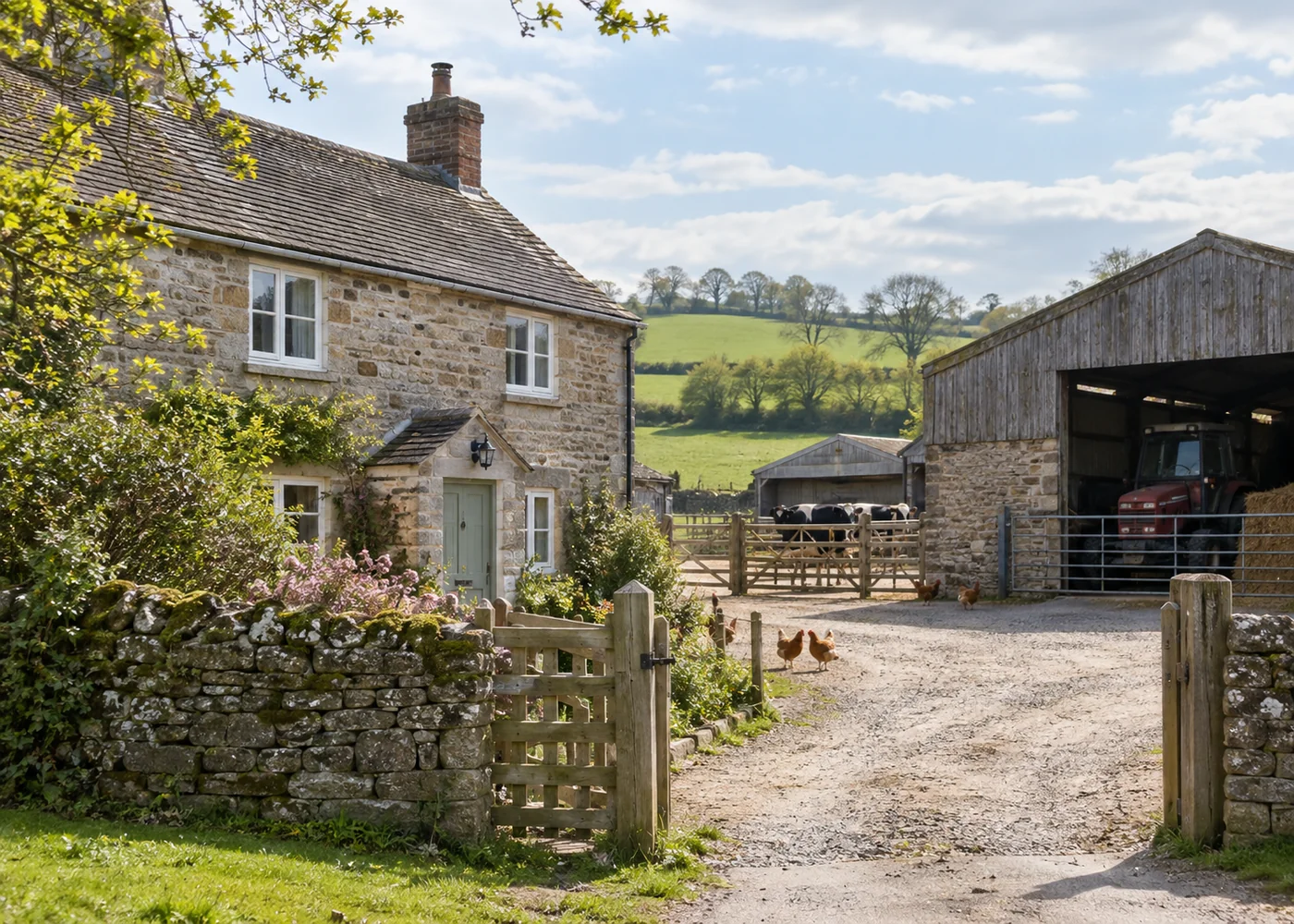
Identify the neighbours
Look at the property's position in relation to roads, other cottages, farm buildings and shared facilities. A working farm stay may include early activity that is part of the setting. A village cottage may hear deliveries or people passing the window. Neither makes the property a poor choice; it changes the experience.
Ask factual questions if noise strongly affects your plans. “Is the bedroom beside the road?” is easier to answer than “Is it completely quiet?” An owner cannot control every neighbour or passing vehicle, but can describe the immediate layout and usual activity.
Read recent guest comments for context rather than treating one person's description as a measurement. “Very peaceful” may mean something different to someone from a city than to a light sleeper accustomed to a detached home.
Locate the quiet space
The position of bedrooms can matter more than the sound level in the garden. Check whether they face a road, courtyard or shared entrance. If one room sits above the kitchen, early breakfast preparation may be audible to someone sleeping there.
Within the cottage, consider open-plan areas, hard floors and the placement of appliances. A washing machine beside the sitting room is not necessarily a problem, but running it during a film may be less pleasant. A separate lounge can offer useful flexibility for people with different routines.
Ask about adjoining accommodation when the building contains more than one unit. You are seeking a clear description, not a promise that ordinary household sound will never travel.
Choose expectations that fit
If the holiday centres on very early nights, daytime sleep or quiet work, make that part of your selection rather than hoping the setting will adapt. A detached property away from shared spaces may be worth prioritising, although even then weather, wildlife and local activity remain part of rural life.
For a sociable group, consider the reverse question: how might your own routine affect others? Follow the property's stated quiet hours and outdoor-use instructions. A private garden does not make sound private.
Leave room for the normal character of the place while being honest about essential needs. The goal is not to find an impossible guarantee of silence. It is to understand whether the sounds likely to accompany the cottage fit the holiday you want, and whether there is somewhere comfortable to retreat when different members of the group want different things.