A private garden can mean several different things
Private, enclosed and secluded describe different things. Decide what you want to do outside before comparing gardens.
Start with the use
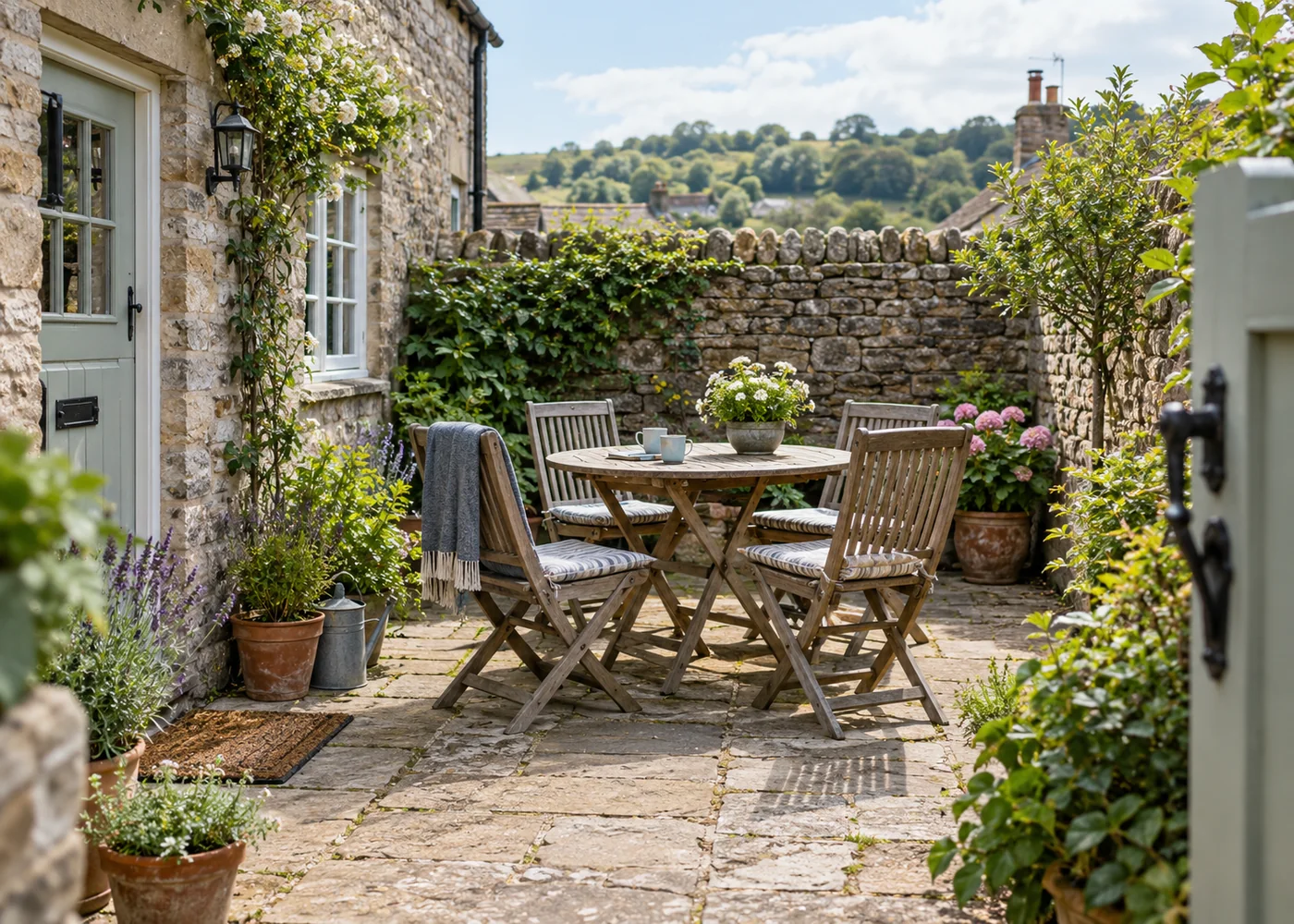
A sheltered table for breakfast needs less space than outdoor games. A sunny bench may be all a couple wants, while a group expecting to eat together needs enough seating and a practical route from the kitchen. Look at the supplied furniture, not simply the apparent size of the lawn.
Check whether the outside space belongs exclusively to the cottage or forms part of a shared garden. “Private patio” may mean a dedicated seating area within larger communal grounds. That can be pleasant, but it is different from having the whole garden to yourselves.
Seclusion is another question. A garden can be exclusive yet overlooked by neighbouring windows or a footpath. If privacy matters, ask what is next to it and whether other people need to pass through. A carefully angled photograph may show the best view while leaving those relationships unclear.
Follow the route from indoors
Look at how you reach the garden. A door from the kitchen makes outdoor meals straightforward. A route through a bedroom, down several steps or around the outside of the building changes how often you are likely to use it.
Ask about the surface and any changes in level if they matter to your group. Gravel paths, raised terraces and uneven paving can be part of an attractive setting without suiting everyone's needs. Request factual descriptions and dimensions rather than asking whether the garden is generally accessible.
Consider where wet shoes and outdoor items go when you return. If the only entrance opens directly into a small sitting room, a garden used heavily on rainy days may require a little more organisation. The listing should not need to promise perfect weather for the layout to work.
Read the boundaries separately
An enclosed garden is not automatically secure for every dog or suitable for unsupervised children. Check the specific boundary, gate and any gaps that matter, and supervise appropriately. Nearby water, roads and shared access deserve their own questions.
If a barbecue is listed, confirm what is provided and whether its use is currently allowed. Do not assume fuel, utensils or permission for your own equipment. Follow the owner's instructions and any applicable local restrictions.
A smaller outdoor area that meets your actual plans can be more useful than extensive grounds you barely use. Choose the place where you can picture an ordinary moment comfortably: taking off boots, drinking tea, sharing lunch or sitting with a book. That is a better test than the amount of green visible in a wide-angle photograph.